Von Mensch zu Mensch (text: Mascha Kaléko) for voice and piano (1965)
Instrumentation
Voice, piano
Duration: 2,5 minutes
Premiere
15 December 2025,
University of Music
Katharina Schneider | Andrea Marie Baiocchi
Publisher
Free download
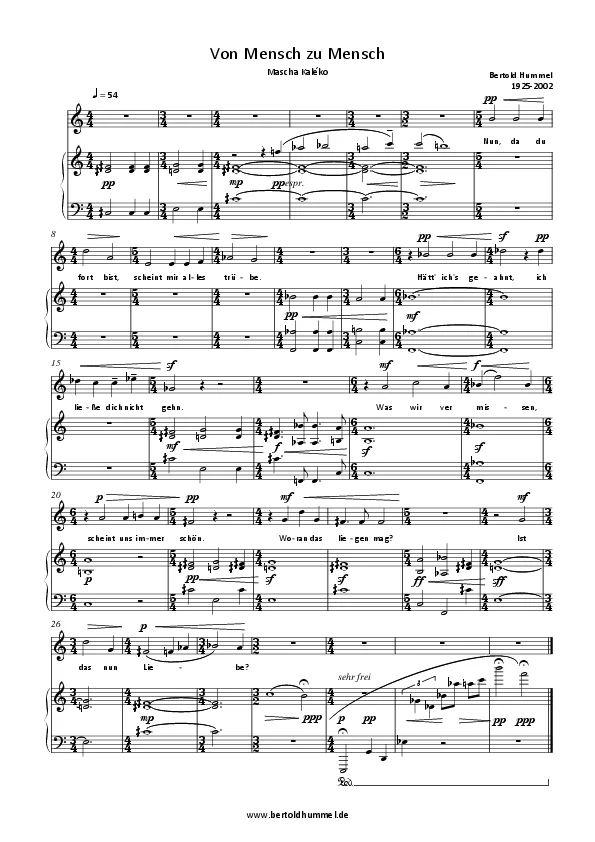
Full score
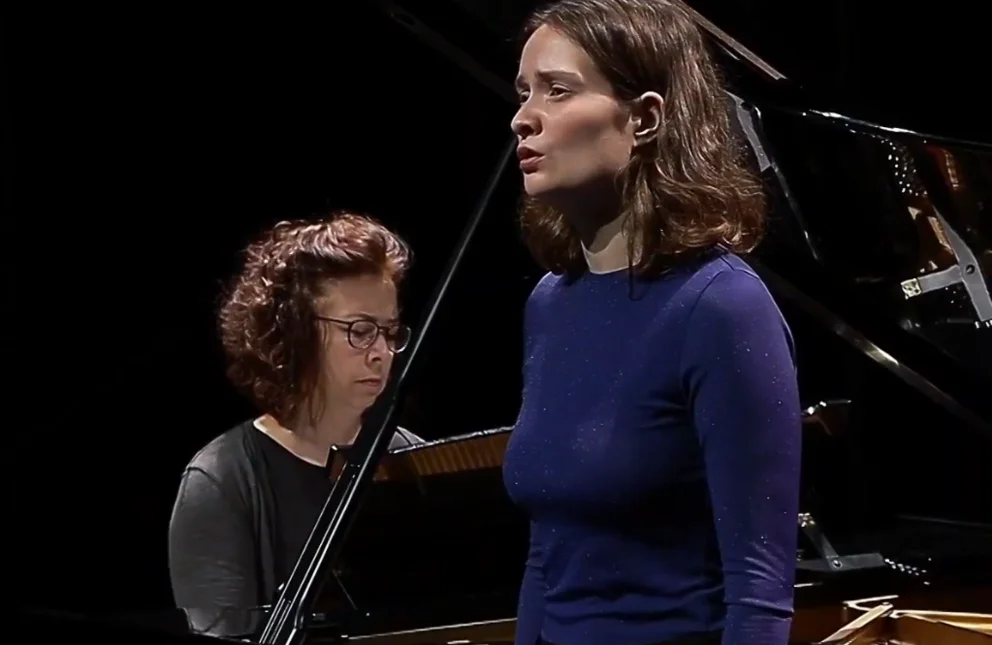
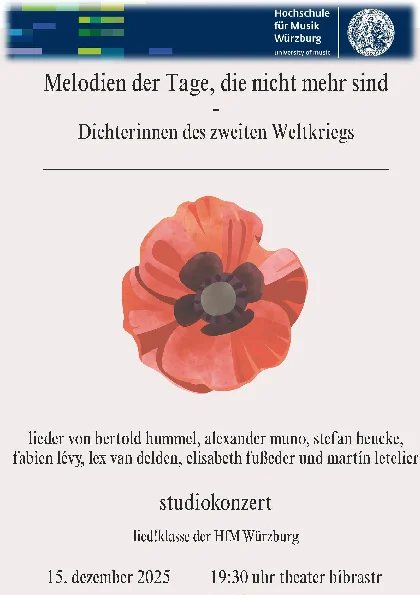
Programme for the world premiere




In February 1956, Rowohlt Verlag published a new edition of Mascha Kaléko’s book *Das Lyrische Stenogrammheft* – which had been so successful before the war – thereby ushering in a renaissance of the Jewish poet’s works in Germany. The popularity of the melancholic yet cheerful verses of the ‘Berlin city lark’ had not escaped the attention of publisher Bernhard Bosse either, and in 1959 he commissioned Bertold Hummel to set some of these poems to music for his newly founded publishing series ‘Chanson, Lied und Song’ (see: Kaléko Chansons).
Bertold Hummel had been familiar with this book since at least that time. It is unclear when he set the opening poem of this collection, entitled *Von Mensch zu Mensch*, to music. However, in his work *Ludi a tre* for oboe, percussion and piano, Op. 29, composed in 1965, it forms the centrepiece of the second movement, ‘Notturno’. Here, the expressive melody is played by the oboe.