Biographical notes on Bertold Hummel

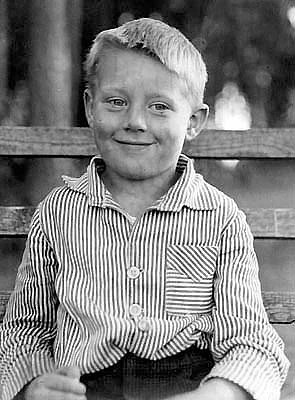






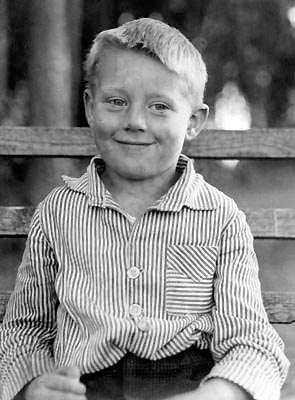
Bertold Hummel was born on 27 November 1925 in Hüfingen near Donaueschingen in Baden, the fourth child of primary school teacher Gustav Hummel and his wife Cleopha, née Bernhard. Both parents were true Black Forest natives. His father came from a family of clockmakers from Schonach near Triberg and his mother was a miller's daughter from Schönenbach near Furtwangen. As the training to become a teacher in the years before the First World War also included intensive musical training, in which piano, organ and violin playing as well as choral conducting, harmony and counterpoint were compulsory subjects, the father's musical talents were encouraged to such an extent that he was later only ever referred to as the teacher, choirmaster and organist. His mother was also very fond of music and, with her humorous and warm-hearted hospitality, turned the teacher's house into a popular meeting place where music was played, sung and celebrated over good food. Teachers, priests, doctors and pharmacists were still the cultural pillars of the small, idealised urban society and met regularly to play quartets. So it is only natural that the son also comes into contact with good classical music at an early age. On Sundays, he sits next to his father on the organ bench and quickly familiarises himself with the staves and stop buttons. Naturally, he also hears Gregorian chant, which will make a strong impression on him throughout his life. The spectrum of choral music he hears as a boy ranges from Palestrina to contemporaries such as Hilber, Lemacher and Schroeder. When Weber's "Freischütz" is performed in the Festhalle Hüfingen, he is an enthusiastic listener. (Photo: 1927)
While Bertold Hummel had already absorbed all the valuable impressions of the countryside in his early years, his artistic development received new impetus when the family moved to Merzhausen near Freiburg in 1932. The boy, now seven years old, grew into the lively musical life of a medium-sized town steeped in history and eventually became an active part of it. His father, now a headmaster, gives him piano lessons. The boy imperceptibly sheds the harsh tone of his birthplace on the Baar and grows into the more sing-song diction of the Alemannic Breisgau. He was still young (photo: 1929) when the episcopal town at the foot of the Black Forest was "seized" by the National Socialist rulers, but he quickly realised that his parents were sceptical of the brown ideology. It was here that his world view, characterised by a high ethos of humanitarianism and freedom, grew, which he would later express frequently as a composer. Hummel remembers that the purchase of a radio set in 1934 and the era of listening to concerts and music broadcasts that this heralded was one of the important milestones in his development. This was and still is one of the most important sources of information for him when it comes to new music.
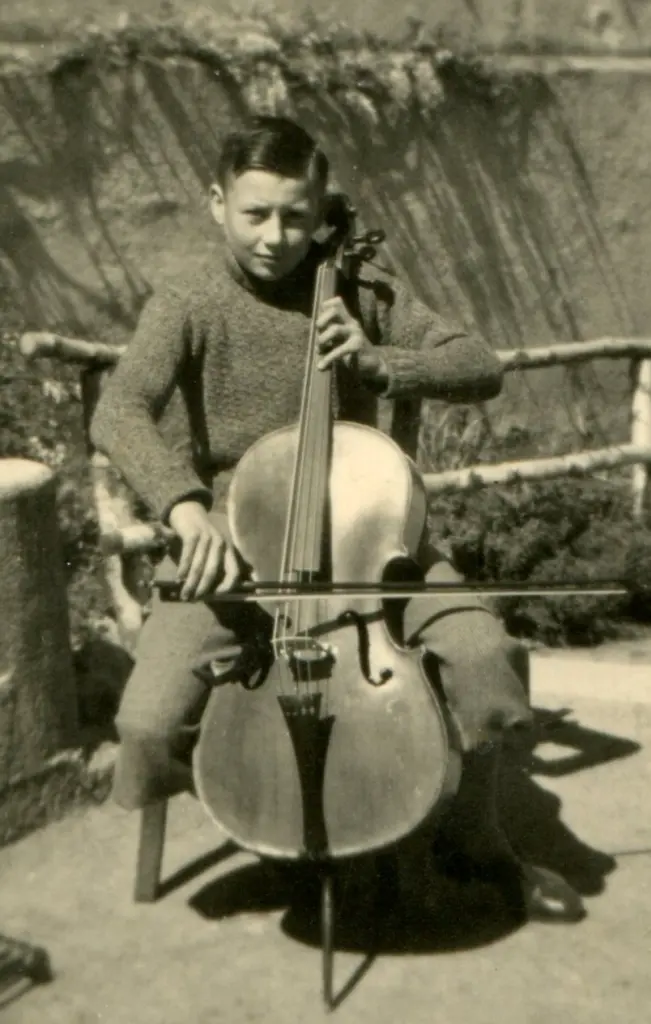
A new phase in his life began when he entered the Rotteck-Oberrealschule in Freiburg in 1936. The music teacher Wilhelm Weis immediately recognised the sixth-former's special talent and ensured that Bertold Hummel received lessons on the violoncello; (photo: 1936) he himself gave him private lessons in harmony and composition. A visit to a symphony concert, which the pupil had bought from his parents, became a key experience. Bruckner's "Third" was on the programme. His enthusiasm is boundless and he decides to become a composer! This decision is fuelled when he regularly sings in the boys' choir in Wagner's "Parsifal" in a performance at the Freiburg Municipal Theatre. Wagner and Bruckner were the first of the fixed stars in the sky that have not yet died out for the young schoolboy. In the meantime, several compositions had been written, some of which had been tried out at school concerts and presented to a small audience, so that the decision was made to present some of them to the Freiburg-based composer Julius Weismann for appraisal. Weismann agreed without hesitation to take over the composition lessons, but the circumstances of the war put an all too early end to the pupil's instruction. The budding musician had to accept personal detriment when his long-standing involvement in the domestic music of a respected Jewish family in Freiburg was denounced. At the age of eighteen, he was drafted into the "Reich Labour Service" and, six months later, into military service. Further musical training was out of the question.
He was later taken prisoner of war in France and saw his first opportunities to make music and actively helped to form a camp band (photo: 1945-46), consisting of a string quartet, woodwinds, trombone, trumpet, saxophone, accordion, piano and drums. His first string quartet and popular works from Wagner's "Grail Tale" to classical overtures and light music are performed here. According to him, fellow prisoners built the missing double bass in the camp carpentry workshop, and, oh wonder: it "sounds"! After five adventurous escape attempts, he managed to return to his homeland via Belgium and Luxembourg in 1947, where he first completed his schooling in a homecoming course at the University of Freiburg with his A-levels (photo: 1947).
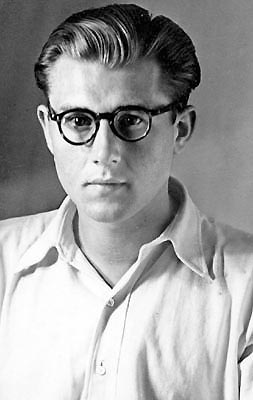
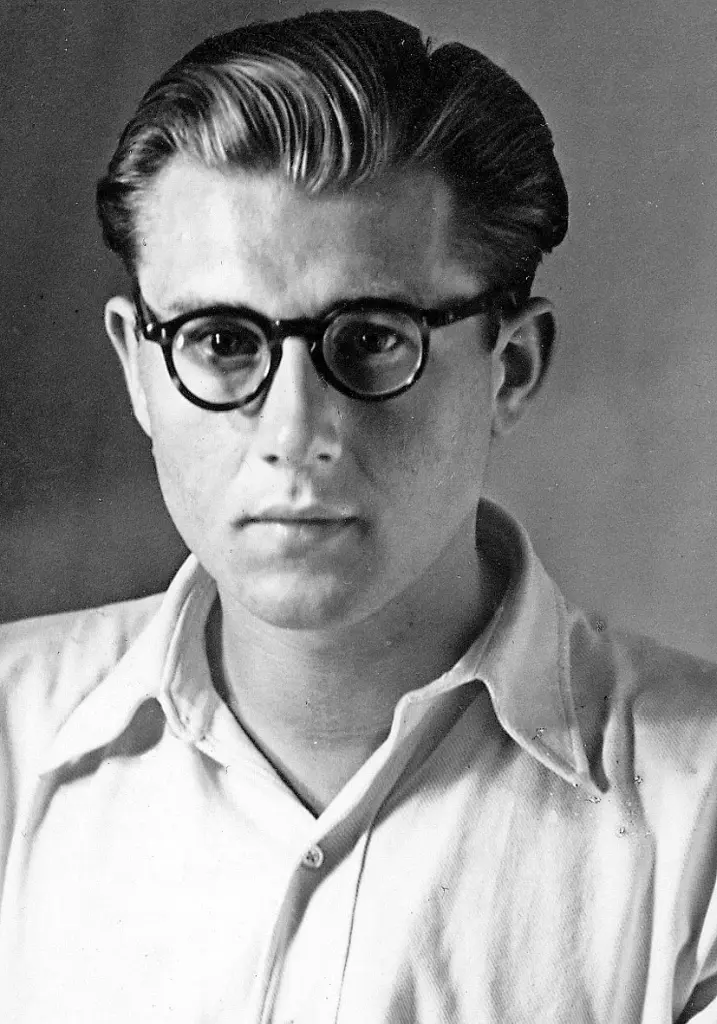
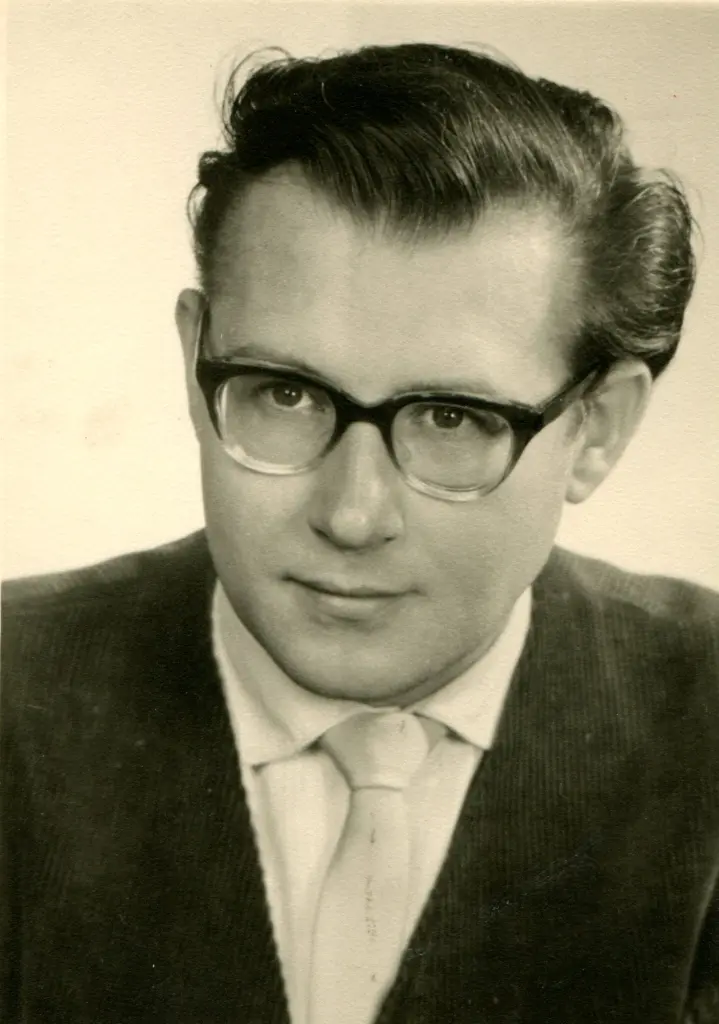
After the obligatory labour assignment in the reconstruction of the city, Hummel finally took up music studies at the newly founded Freiburg University of Music and from 1947 studied composition with Harald Genzmer, violoncello with Atis Teichmanis, chamber music with Emil Seiler and conducting with Konrad Lechner. Hummel's fellow student Dieter Weiss remembers these early student years as a “unique time of awakening" (photo: 1951), and Bertold Hummel speaks of a "catch-up euphoria of the homecoming generation". Paintings by Chagall, Braque, Léger, Picasso and Rouault were shown thanks to funding from the French military government. Paul Hindemith was a guest. Four professors played Messiaen's brand new "Quatuor pour la fin du temps" in the stairwell of the Wenzinger-Haus on Münsterplatz, the main building of the conservatory: The foundation for Hummel's never-ending enthusiasm for Messiaen was laid! The lessons with Genzmer, whose rich fund of universal education provided Hummel with the basis for an aesthetic orientated towards craftsmanship, had a lasting effect. He learnt the whole spectrum of Western music from him. Coming from Hindemith, Genzmer developed in the young composer a way of thinking about sound that was to combine seamlessly and organically with the completely different harmonies of Messiaen and Schoenberg a little later to form a thoroughly independent tonal language. Genzmer's thoughts and ideas on formal language were also of such a nature that in the years following his studies they could be effortlessly combined by Hummel with Stravinsky's formal thinking. The inquisitive young composer received important impulses at the Darmstadt Summer Courses in Kranichstein, where it was Messiaen in particular who made a deep impression on him as a personality and artist. It goes without saying that he was also influenced by the spirit of optimism and that Hummel was introduced to the music of the Schönberg school by Leibowitz and Nono. In 1952, his name appears on the programme of the Donaueschingen Music Festival, where the "Missa brevis" op. 5 is premiered.
After seven years of intensive study, the twenty-nine-year-old was drawn to a foreign country. Together with a group of young artists, he accepts an invitation from the South West African Cultural Association and embarks on a ten-month concert tour of the South African Union as a cellist. He writes several compositions for this trip - they are among the first that Hummel leaves in his catalogue of works as valid! The violinist Inken Steffen, born on Sylt in 1927, whom he marries in Swakopmund (photo: 1954-55), is also on the tour.
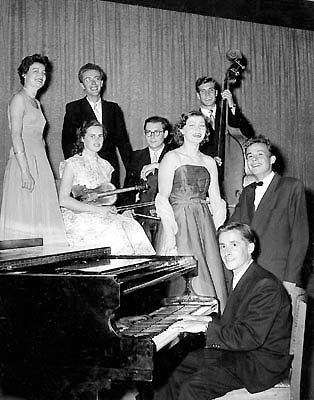
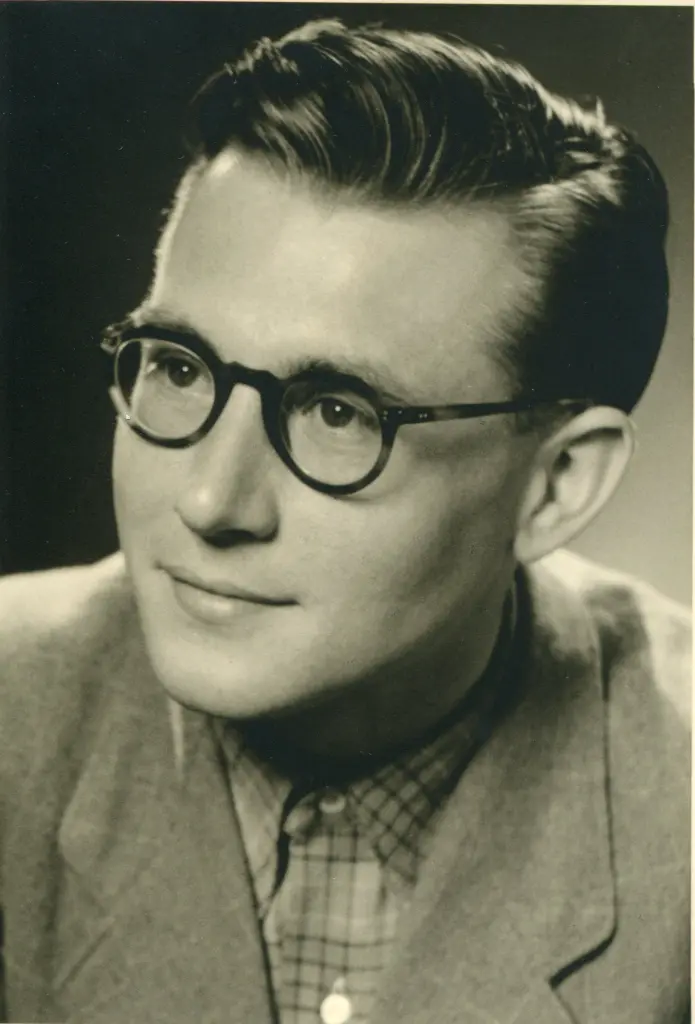
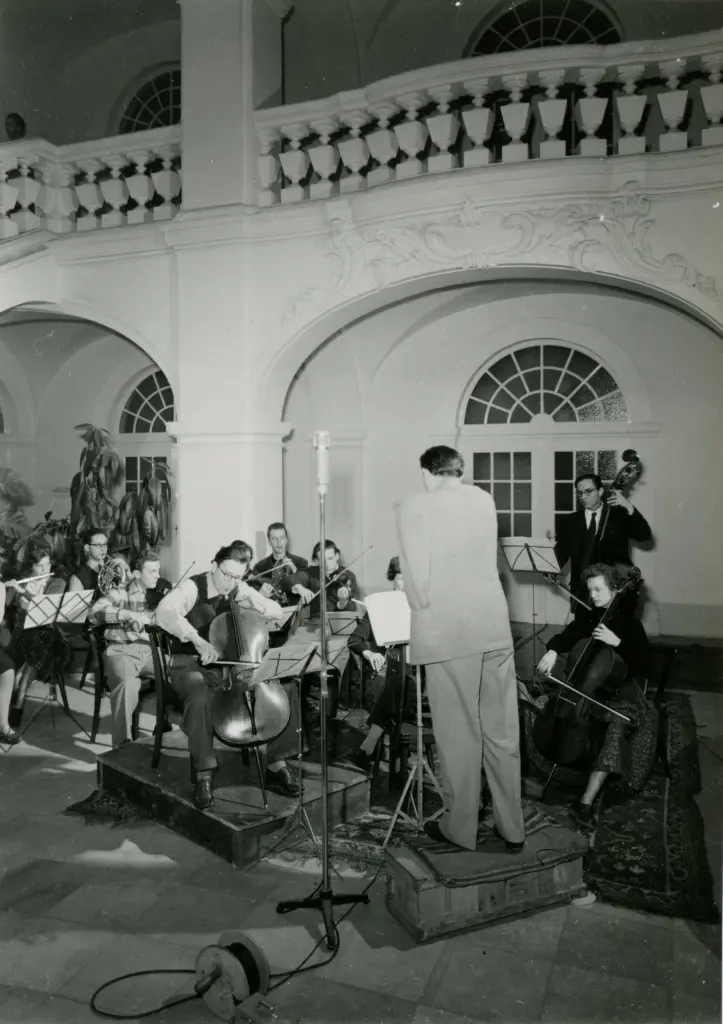
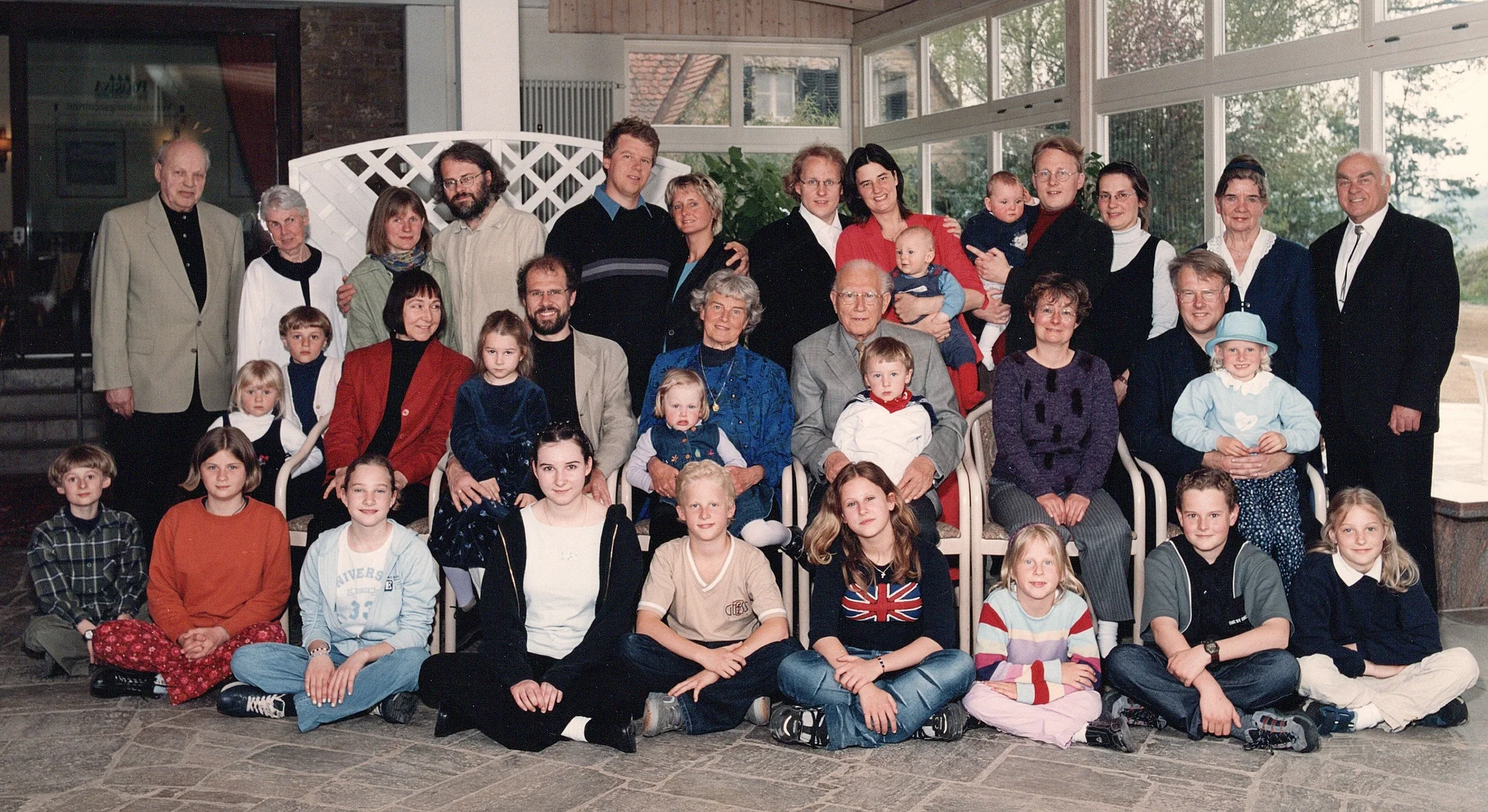
Back in Germany, the now married musician takes up a position as cantor at St Konrad's in Freiburg and is regularly in demand as a cellist (photo: 1951) for larger ensembles in the symphony orchestra of the Südwestfunk Baden-Baden and at the Städtische Bühnen Freiburg. It almost goes without saying that his skills as a composer and arranger also come into play here. In the meantime, the first of his six sons (photo: Hummel family) were born, and the cost of living increased. His wife Inken successfully pursued her profession as a violin teacher - until well into the nineties, by the way! - successfully pursued her profession as a violin teacher (photo: 1961), enabling her husband to concentrate more on composing. This resulted in the chamber opera "The Emperor's New Clothes", a ballet for the Oldenburg State Theatre and no less than 50 organ movements for the new organ book of the Archdiocese of Freiburg. First honours such as the Culture Prize of the Federation of German Industry (1956), the Composition Prize of the City of Stuttgart (1960) or the Robert Schumann Prize of the City of Düsseldorf (1961) mark the upward curve.
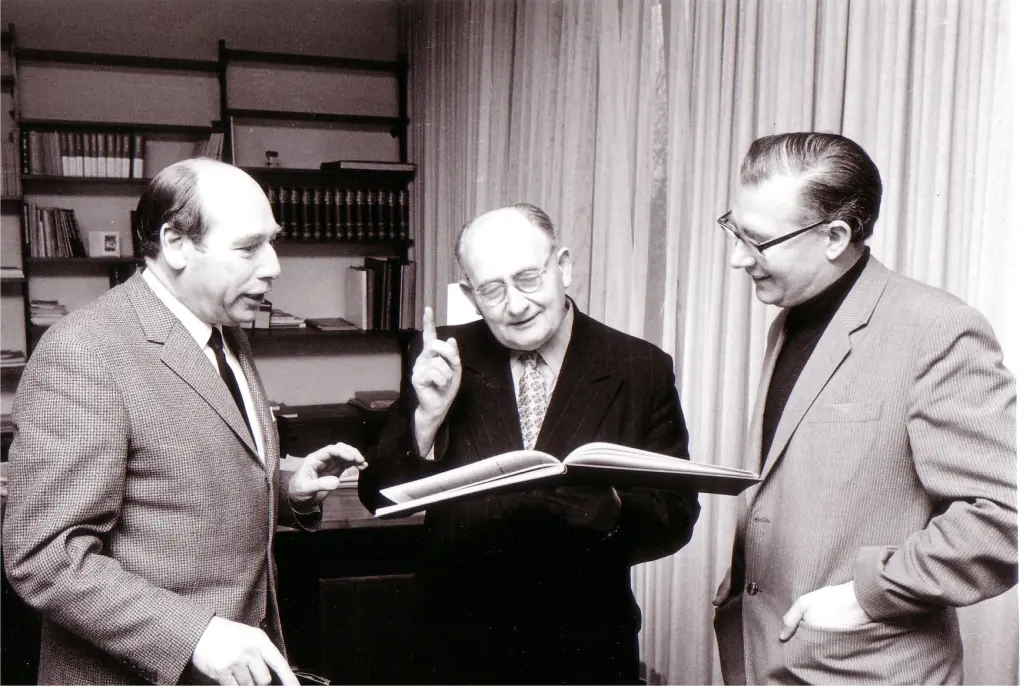
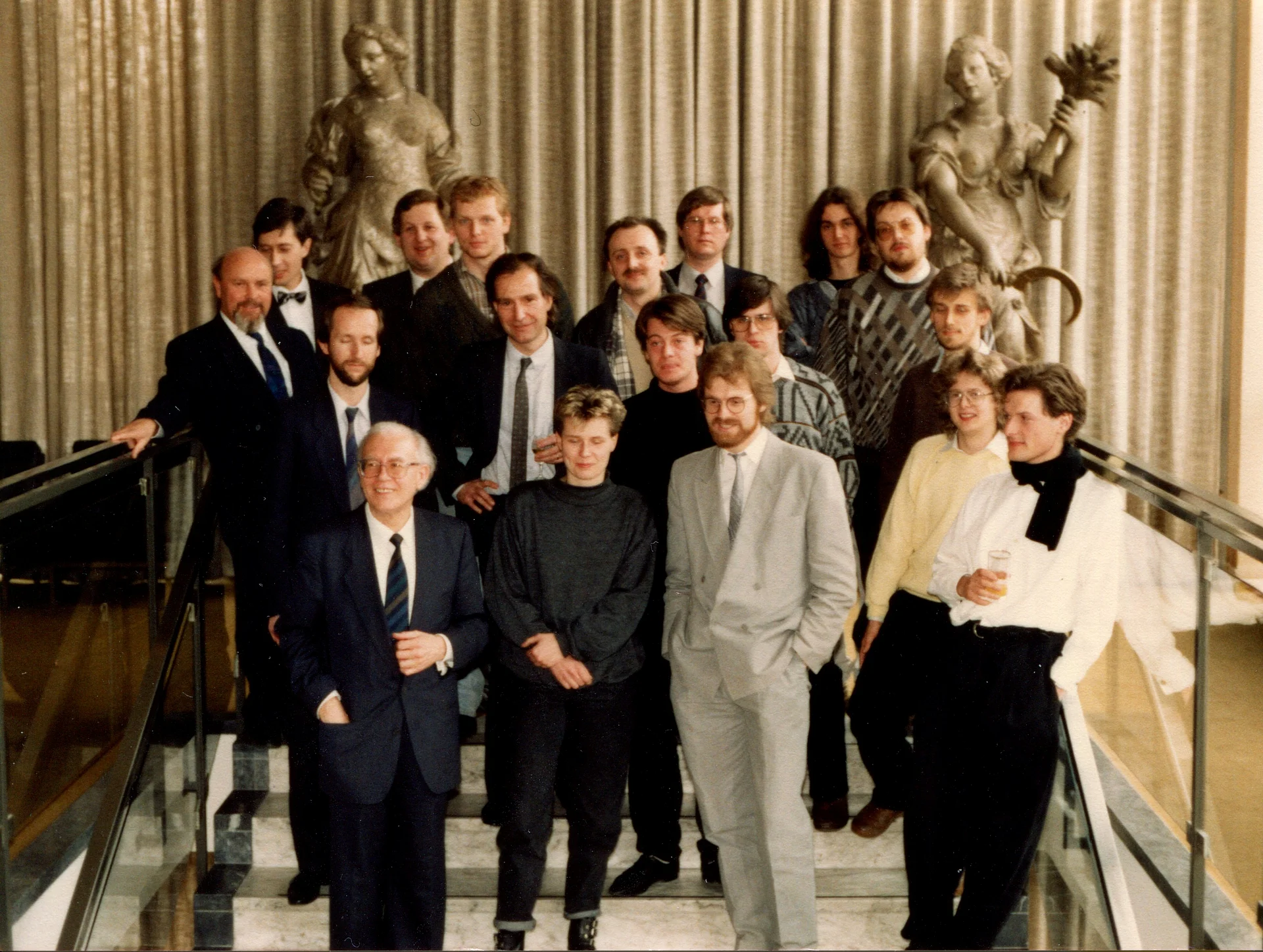
The decisive turning point in Bertold Hummel's life and artistic career came with his appointment as a composition teacher at the Bavarian State Conservatory of Music in Würzburg in 1963. Although the focus in the first few years was more or less exclusively on teaching composition, counterpoint, basso continuo and aural training as the so-called compulsory subjects in the training canon for singers and instrumentalists, he succeeded in purposefully attracting composition students to the institution and establishing a composition class (photo: 1965) by incorporating analyses of contemporary music. Incidentally, Hummel's first work in Würzburg came at a time when a number of open-minded colleagues were prepared to support his innovative endeavours. The compositions of the sixties reflect his encounters with colleagues such as the percussionist Siegfried Fink and breathe the breath of new sound experiences. In Lotte Kliebert, the daughter of the former director of the institute and composer Karl Kliebert, Hummel found a committed personality in Würzburg who persuaded him to head the newly founded "Studio for New Music". Until 1988, many years of responsible development work in the field of new music followed in the otherwise rather reserved episcopal city on the Main. Emphasising a liberal approach to questions of style and aesthetics, he provided a platform in Würzburg for all kinds of composers from Korn, Genzmer and Büchtger to Hába (photo: 1967), Stockhausen, Rihm and Lachenmann. After a six-month stay at the Cité des Arts in Paris in 1968, he was appointed deputy director of the Würzburg Music Education Institute. The director, Hanns Reinartz, obtained a new building for the Bavarian State Conservatory. When the concert hall is inaugurated in 1966, Hummel's Symphony No. 2 "Reverenza" is performed under the baton of the director. When the institute was transformed into the second Bavarian Academy of Music in 1973, Hummel became a full professor and head of a composition class. Now freed from the duties of teaching a compulsory subject, he devotes himself intensively and emphatically to the training of young composers and, as far as his time allows alongside his own composing, helps them to find performance opportunities. The fact that the students are not epigonally bound to the teacher's now distinctly independent tonal language can be seen as a positive sign of Hummel's stylistic broad-mindedness. In the twenty-four years of teaching up to his retirement in 1988, Hummel built up something like a "Würzburg school of composers", characterised by an ethos of high craftsmanship and a striking practical orientation. Successful composers such as Jeff Beer, Ulrich Schultheiß, Claus Kühnl, Klaus Ospald, Jürgen Schmitt, Horst Lohse, Jürgen Weimer, Hermann Beyer, Christoph Weinhart, Armin Fuchs, Christoph Wünsch, Tobias M. Schneid and others give him good marks as a responsible teacher who endeavoured to promote the personal development of the students entrusted to him. In 1979, Hanns Reinartz retires from the management of the university and his deputy Bertold Hummel is elected as his successor. Hummel now put all his ambition into combining both posts - that of president and composition teacher - without significant interference.
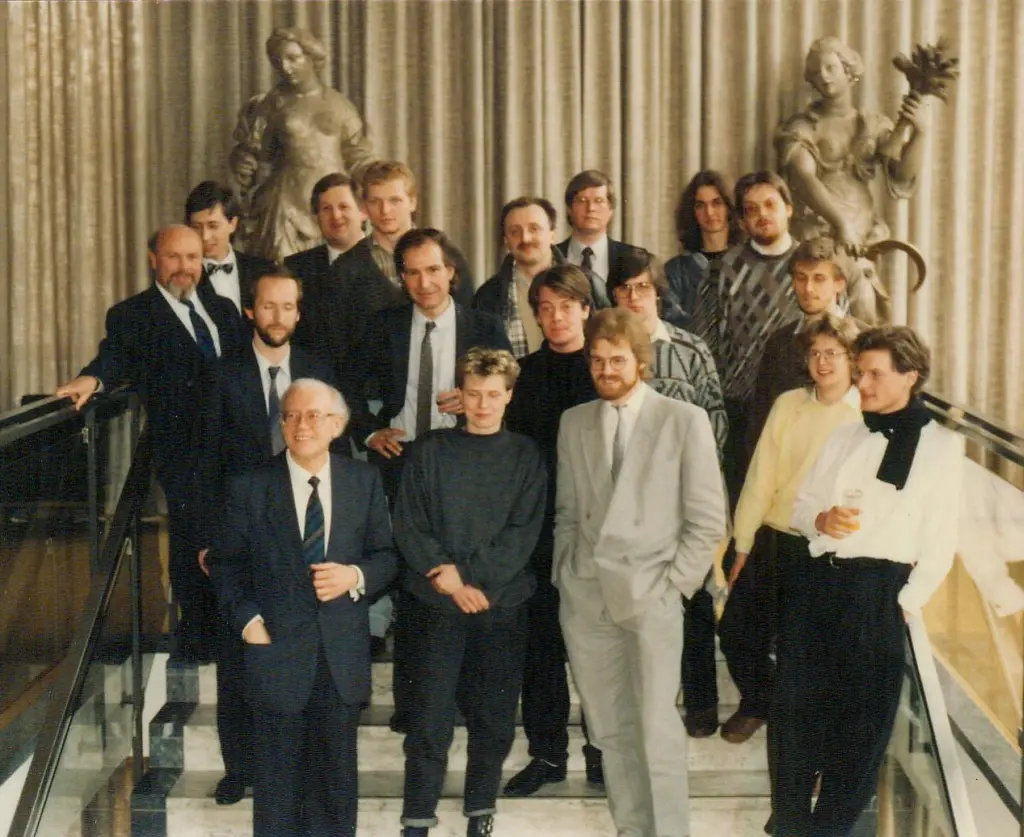
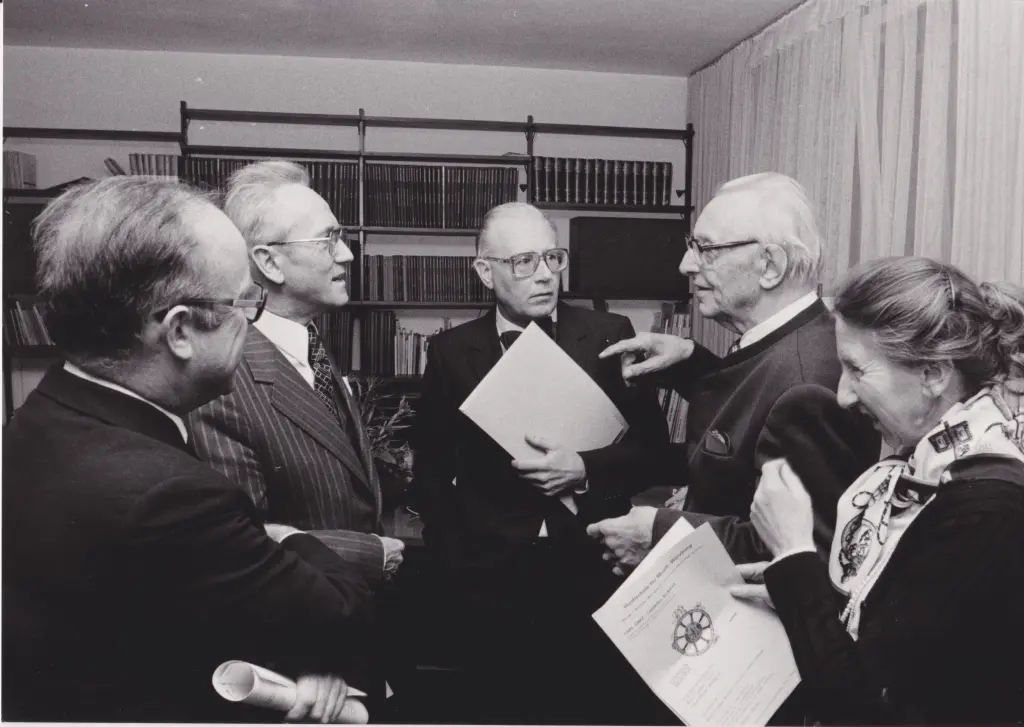
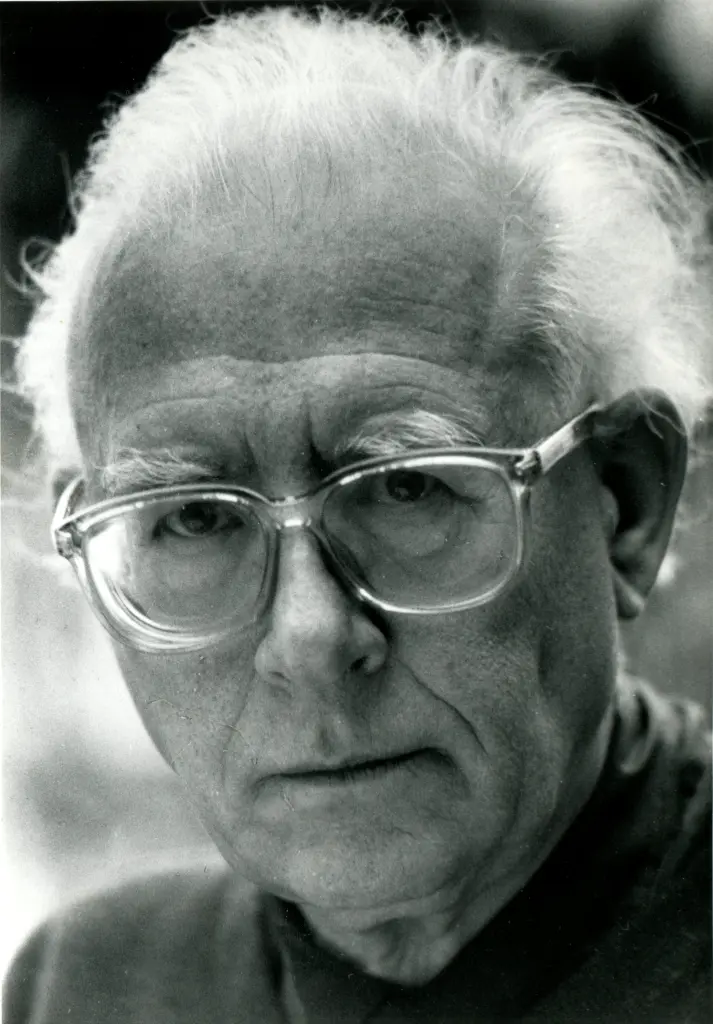
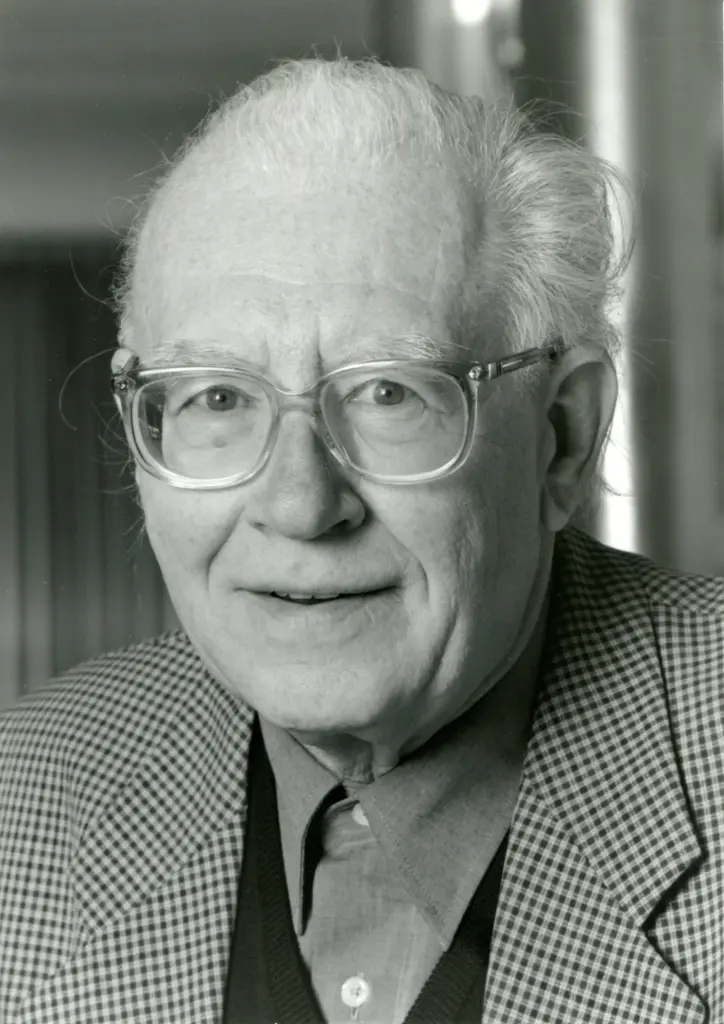
As the son of an organist, himself active as a cantor for several years and close to the Archdiocese of Freiburg, Bertold Hummel also found good opportunities for artistic work in the field of church music in Würzburg. Shortly after moving to Würzburg, he was commissioned to compose a "German Mass" for soloists, choir, congregation and large orchestra on the occasion of the restoration of the cathedral in the Main-Franconian metropolis in 1967. Four years later, the "Metamorphoses on B-A-C-H" for eleven wind instruments and organ were premiered in the cathedral - a work commissioned by the Würzburg Bach Society, which had just been founded under Günter Jena. The crowning highlight of these works created for Würzburg Cathedral to date is the oratorio "Der Schrein der Märtyrer" ("The Shrine of the Martyrs") based on a text by Bishop Paul Werner Scheele, which was completed and premiered in 1989 to mark the 1300th anniversary of the mission and martyrdom of the Apostles of Franconia. In order to be able to complete this large, full-length work for five soloists, mixed choir, boys' choir, narrator, three organs, percussion ensemble and large orchestra, Hummel was released from the obligations of a university director and teacher: he left the university in 1988 (photo: 1988), but remained associated with the institution as Honorary President. It is the year in which the city of Würzburg honours him with the Culture Prize, after he had already been elected to the Bavarian Academy of Fine Arts (1982) (photo: 1982) and awarded the Federal Cross of Merit 1st Class (1985).
Since the years without the burden of office, Bertold Hummel has composed tirelessly and successfully for major orchestras at home and abroad, travelling to countries such as the USA, Russia, Australia, France, Austria and Poland to attend performances of his works and arranging for sound recordings and printed editions of his works. Honours such as the Bavarian Order of Merit (1994), the Friedrich Baur Prize of the Bavarian Academy of Fine Arts (1996) and the Culture Prize of the German Catholics (1998) attest to the high level of acceptance and respect that Bertold Hummel has earned through his personality and his artistic work.
Bertold Hummel died in Würzburg on 9 August 2002 after a short and serious illness.
Source:
Composers in Bavaria (Volume 31)
BERTOLD HUMMEL
Published by Hans Schneider, Tutzing, 1998,
published on behalf of the
Bavarian State Association of Musicians in the DTKV
by Alexander L. Suder
ISBN 3 7952 0944 7