Eberhard Buschmann
15 May 1931, Wanne-Eickel – 18 March 2024, Höchberg
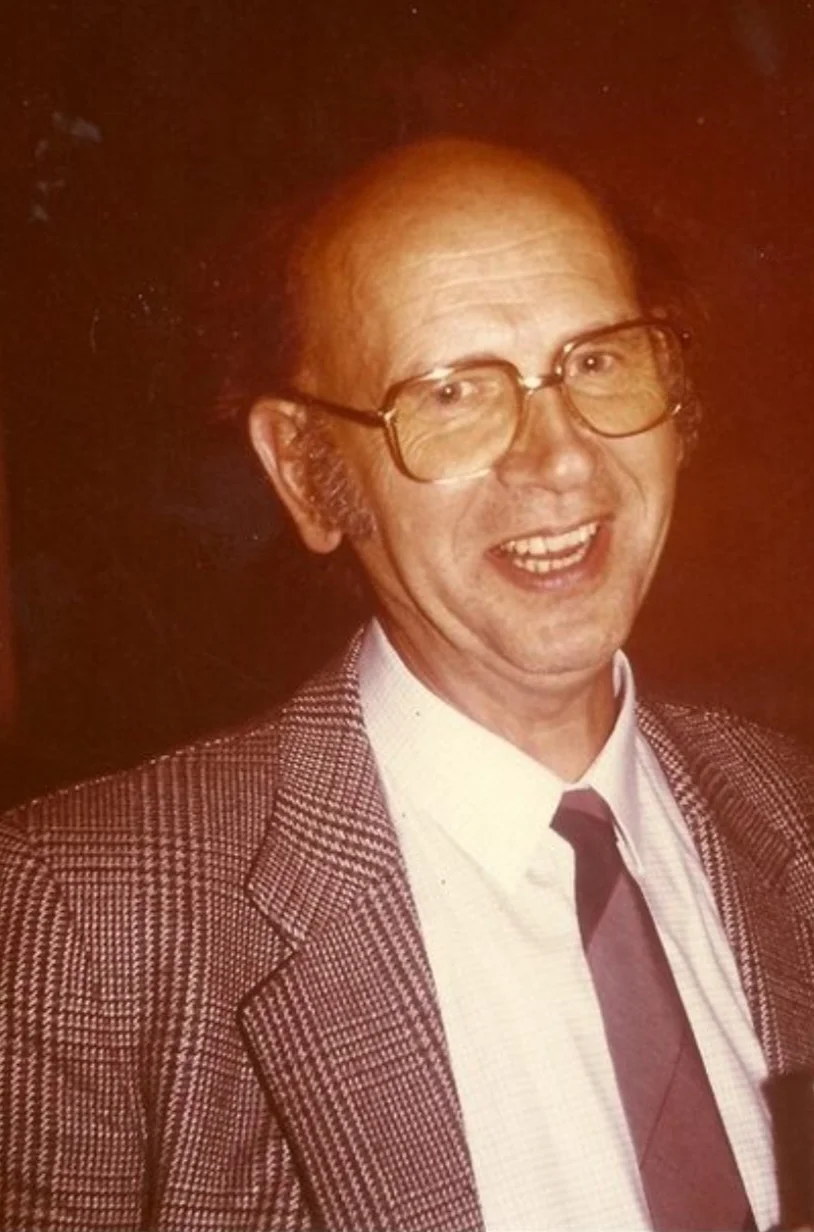
Eberhard Buschmann and Bertold Hummel got to know and appreciate one another by 1971 at the latest, when Buschmann was appointed professor of bassoon and piano at the Bavarian State Conservatoire of Music in Würzburg. The two performed together – mostly in the continuo section – in countless concerts and on concert tours organised by the Würzburg Bach Society, the Würzburg Cathedral Music Society and the State Conservatoire’s Chamber Orchestra. Buschmann asked Hummel for the wind trio *Moments musicaux*, Op. 48, and rehearsed it with young musicians as part of the chamber music courses organised by ‘Jeunesse musicale Deutschland’ for its world premiere on 28 August 1973 in Bad Mergentheim. In 1993, Hummel arranged the *Concertino for Basset Horn and Strings* for bassoon, Op. 27a, which he had composed in 1964, and consulted Buschmann on the matter; Buschmann, in turn, brought the *Concertino for Bassoon and Strings*, Op. 27b with great dedication. Buschmann’s radio recordings of the 5 Epigrammes for solo bassoon, Op. 51 (BR 1977), the Sonatina for bassoon and piano, Op. 59b (BR 1979) and the Divertimento for Cello and Bassoon, Op. 62c (BR 1979, with the composer on the cello) are regarded as definitive recordings.
Biography
Eberhard Buschmann studied piano with Prof. Hans Richter-Haaser and bassoon with Prof. Albert Hennige in Detmold. He was awarded a silver medal at the International Bassoon Competition in Geneva; at the ARD Music Competition, he was praised for his interpretation of a piece by Henri Dutilleux and was invited to perform in the final concert. From 1957, he was principal bassoonist with the ‘Musiktheater im Revier’ orchestra in Gelsenkirchen. There, over the course of 13 years, he became familiar with the entire operatic and symphonic repertoire. Temporary engagements and chamber concerts with colleagues took him to Dortmund, Essen, Düsseldorf and Hanover. In 1971, he took up a professorship in bassoon at the Bavarian State Conservatoire of Music in Würzburg, a post he held until 1996. From his student days onwards, he played alongside Dieter Klöcker in the Consortium Classicum and performed with this ensemble on every continent. Together with his students, he founded the ‘Würzburg Bassoon Ensemble’, with which he performed, amongst other things, light music that he had arranged himself. Buschmann played several instruments (bassoon, organ, piano, violin, accordion) and was exceptionally skilled at arranging musical works for wind ensembles in the style of the period. His passion lay in rediscovering lost or previously unknown bassoon repertoire from earlier eras in old archives. Among other works, he discovered and edited a bassoon concerto in G major by Friedrich Hofmeister and a bassoon concerto in F major by Johann Nepomuk Hummel. Together with Monica von Saalfeld, he devoted many years to performing concertante duos for bassoon and piano from the Classical and Romantic periods, and they founded the ‘Trio Devienne’ with Robert Dohn, the principal flutist of the Stuttgart Radio Symphony Orchestra. Buschmann remained musically active until the end of his life, accompanying several choirs on the piano and organising a music series at a care home for the elderly, in which he himself performed. In his old age, he could look back on a rich and fulfilling life. Eberhard Buschmann is remembered as a gifted musician and an empathetic person.