Ludi a tre for oboe, percussion and piano (op. 29, 1965)
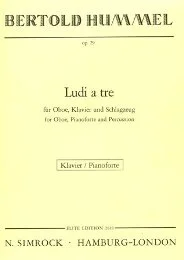
I. Resitativ, II. Notturno, III. Danza
Oboe, percussion, piano (percussion instruments: snare drum, 2 bongos, 2 congas, xylophone, vibraphone, 4 temple blocks, african wooden drum, claves, triangle, 3 cymbals (33, 36 and 40 cm), studded cymbal, gong (diameter: approx. 50 cm))
Duration: 10 minutes
Kurt Hausmann | Siegfried Fink | Manfred Dietz
N. Simrock Hamburg-London (Boosey & Hawkes) ISMN M-2211-0744-2
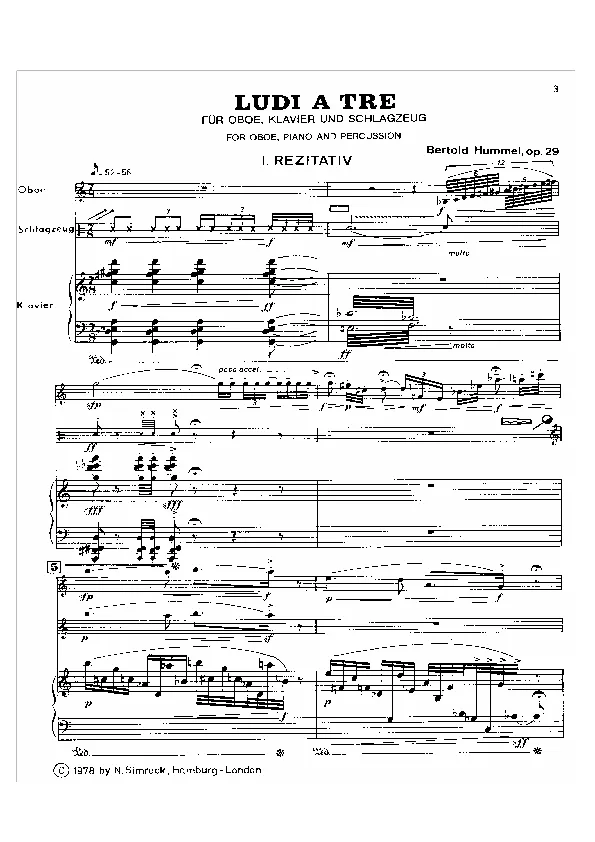
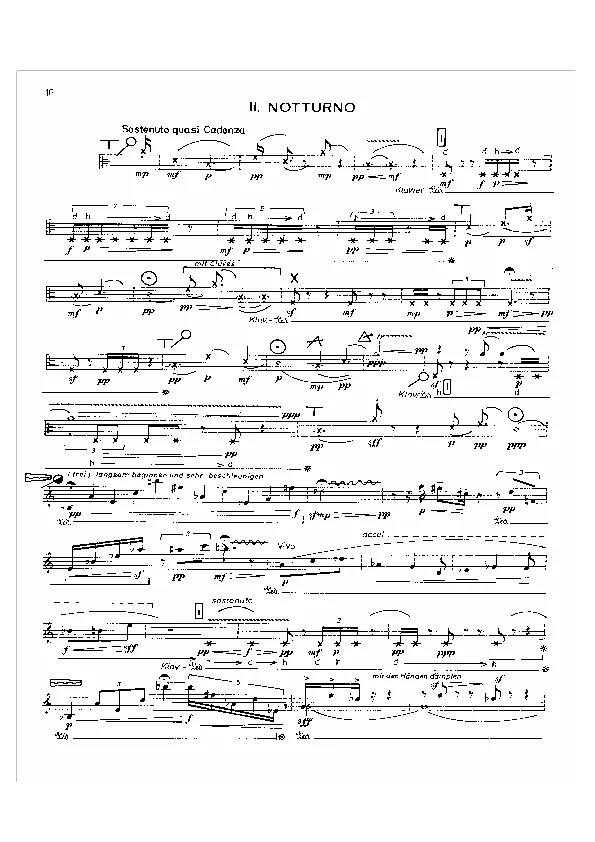
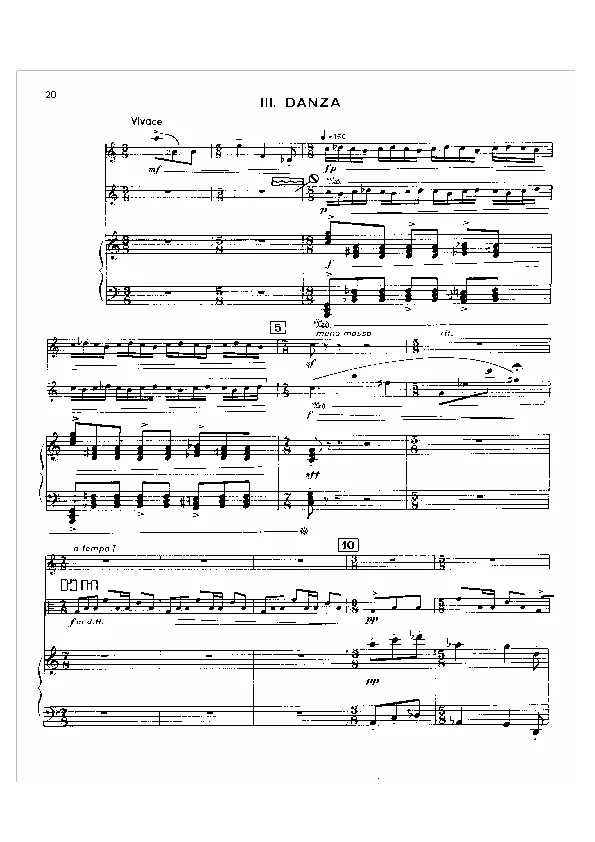

Bertold Hummel's "Ludi a tre" was characterised by strange underwater sounds for two movements, until oboe, percussion and piano opened a lively bar in the finale. The jazz finale is coming into fashion; for two movements, world enigmas are brooded over, and at the end, when the rows are no longer tightly closed, there is a convivial atmosphere.
Karl Schumann
The highlight of the evening was the music for oboe, percussion and piano by Bertold Hummel. Imagine the entire percussion battery, which performed amusing, playful, sometimes salon-like music in three movements, competing with the two other instruments with all its finesse.
Literature list of the German Music Council for the "Jugend musiziert" competition: Difficulty level 4/difficult (intermediate level II)




The 1st movement, entitled Recitative, is actually a theme with variations in a very free style.
Notturno: - a notated percussion cadenza attempts to reproduce the impressions of a summer night - a solitary oboe melody seconded by a few piano chords - determines the middle section, which leads back to the opening mood.
Danza: sequences that are strongly characterised by rhythm - superimposed metres - give the movement a dance-like character.
Bertold Hummel
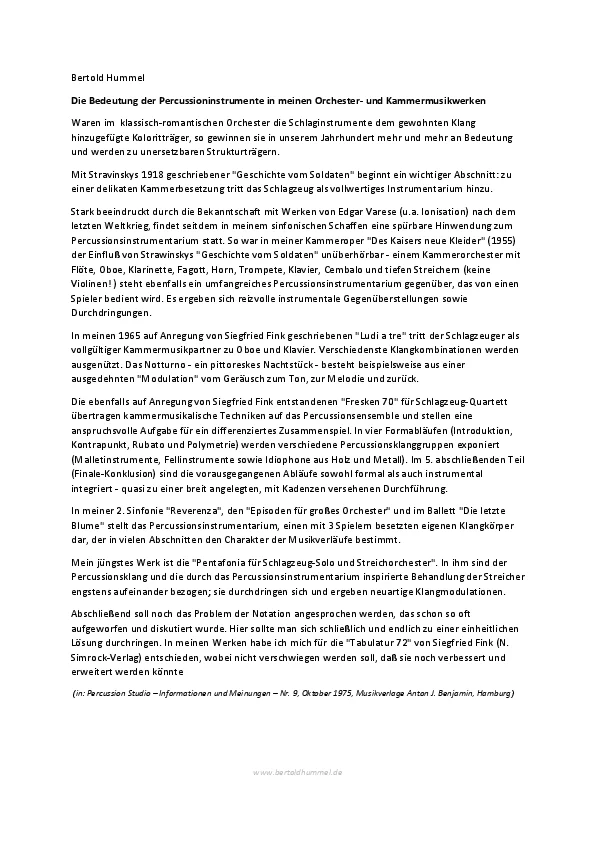
In Ludi a tre op. 29, I treated the percussion instrument as an equal chamber music partner for the first time. This work - like most of my works for percussion - was inspired by Siegfried Fink. It was written in 1965 and premiered in Nuremberg:
An atmospheric nocturne is framed by a haunting recitative and a turbulent round dance entitled Danza.
Bertold Hummel
In May 1981, Bertold Hummel wrote to his friend and conductor Günther Wich that he could also imagine his Ludi a tre, op. 29 in a choreographed interpretation.
See also: Von Mensch zu Mensch for voice and piano after a text by Mascha Kaléko