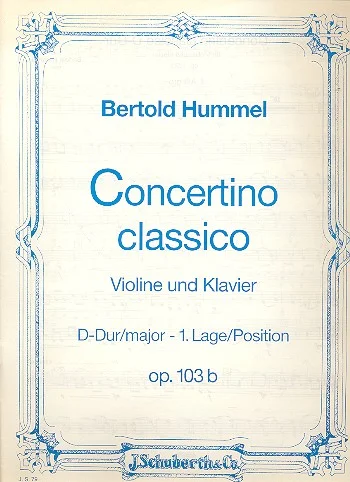
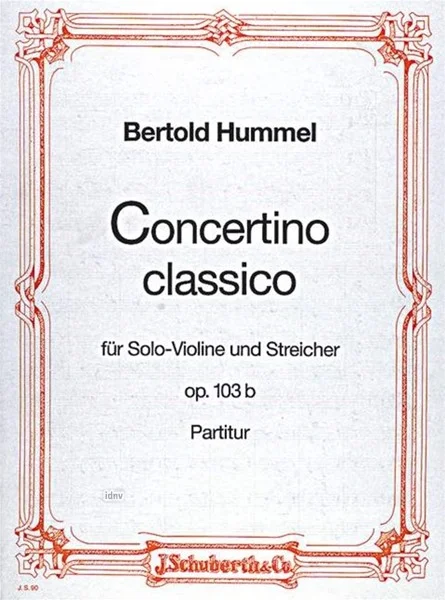
Concertino classico in D major for violin (1st position) and piano or strings (op. 103b, 1999)
for my grandson Fabian
I. Allegro, II. Elegie, III. Presto
Violin (1st position), piano or strings
Duration: 12 minutes
Fabian Hummel | Bertold Hummel
Autograph piano version:
Title: Concertino classico (D major) for violin + piano - Length: 17 pages - Date: I. July 99 II. 11.8.99 [solar eclipse] III. 26.8.99 - Location: Bayerische Staatsbibliothek Munich (2nd and 3rd movements)
Autograph piano version 1st movement:
Title: Konzertstück mit Kadenz im alten Stil für Fabian vom Grossvater - Length: score 7 pages | violin part 4 pages - Date: July 99 - Location: Private property
Autograph orchestral version:
Title: Concertino classico in D major for violin and piano (string quartet or string orchestra) - Length: 23 pages - Dating: - - Location: - -
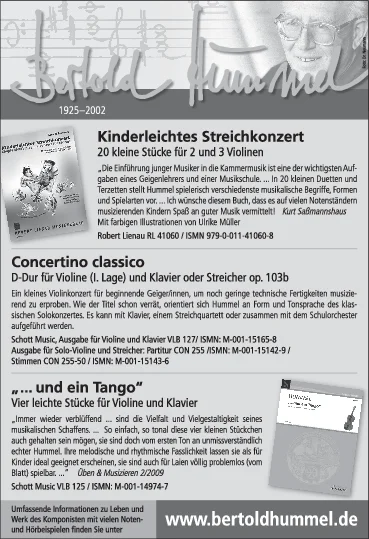
Schott Music Edition for violin and piano Piano reduction and violin part VLB 127/ ISMN: M-001-15165-8 Edition for solo violin and strings: score CON 255 /ISMN: M-001-15142-9 Parts CON 255-50 / ISMN: M-001-15143-6

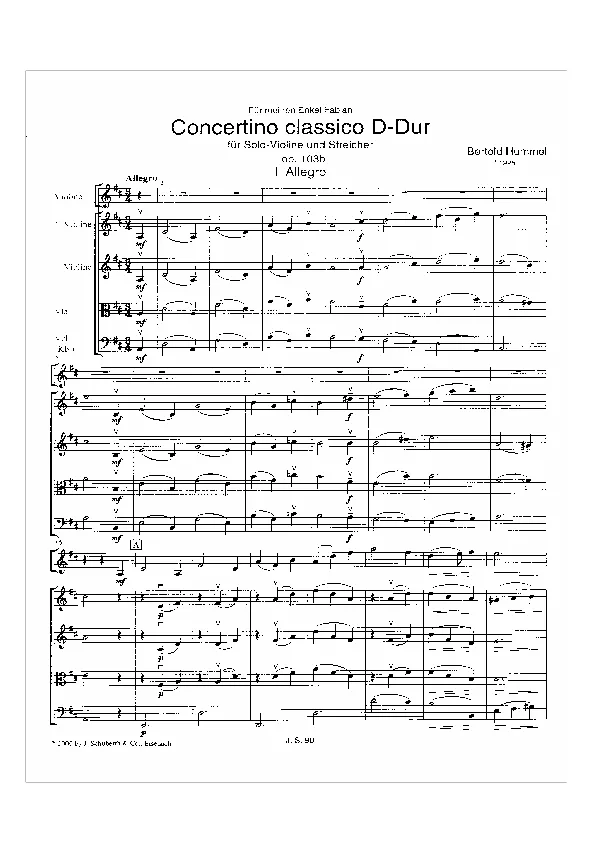
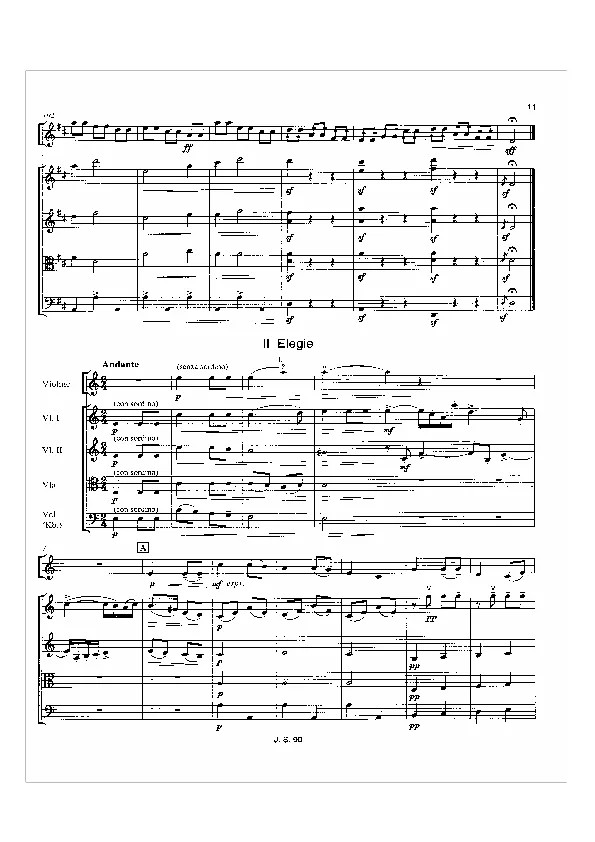
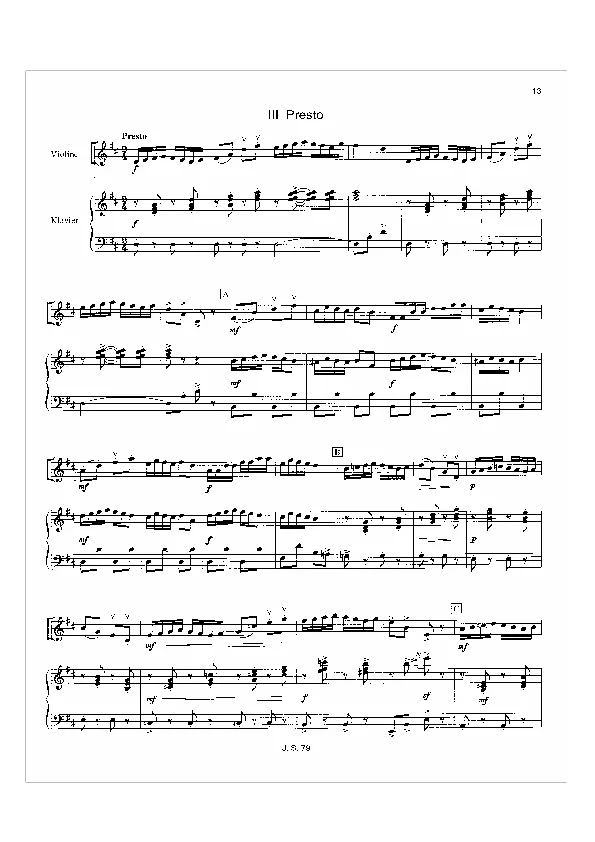
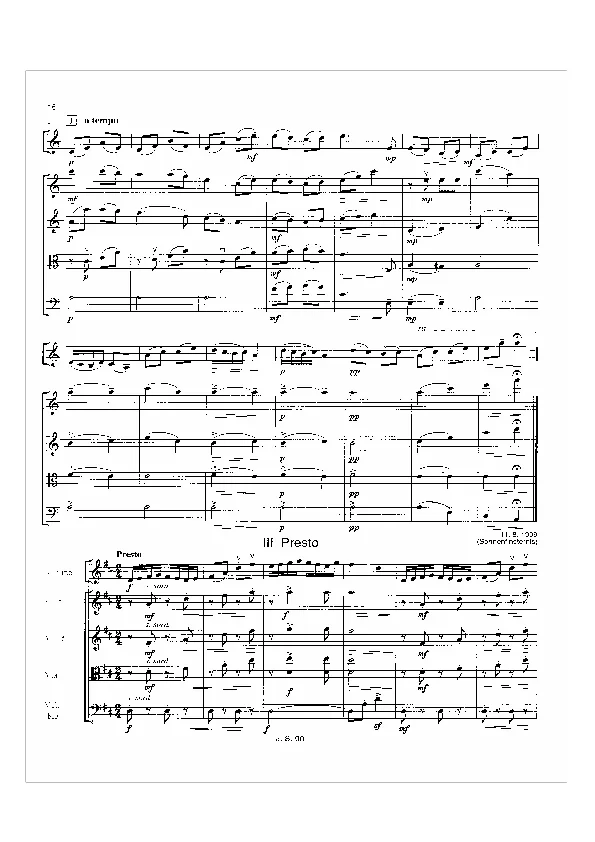
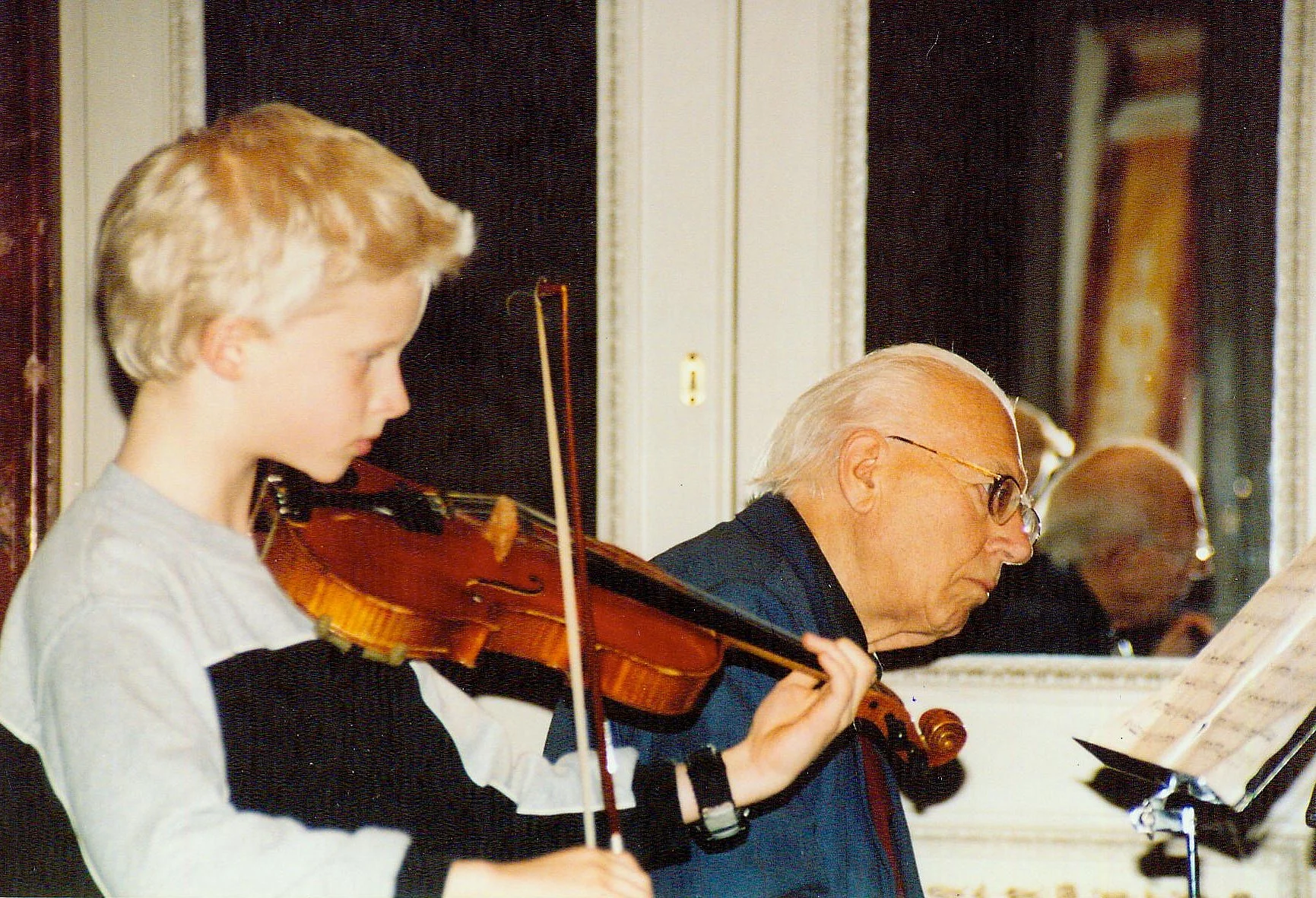




The Concertino classico for violin and piano or strings by Bertold Hummel was written in the summer of 1999 when his grandchild Fabian had just mastered the first position on the violin. The idea was to provide beginning violinists with a short violin concerto to try out their few technical skills in a musical way. Depending on the occasion, it can be performed with an accompanying piano, a string quartet or together with the school orchestra.
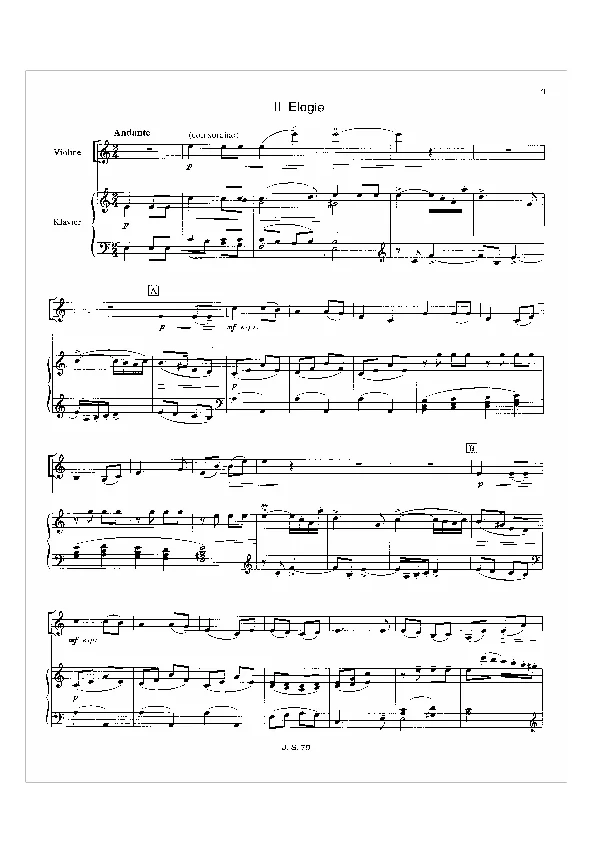
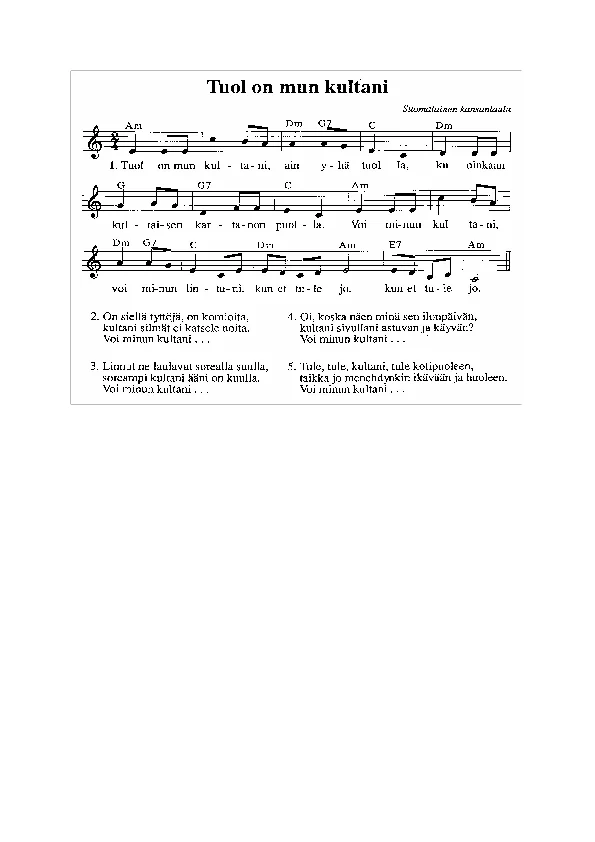
The title already reveals that Hummel orientates himself on the form and tonal language of the classical solo concerto. Simple, folk-like themes are introduced and varied in three movements. A larger cadenza in the Allegro is offered by Hummel - depending on the character of the child playing the violin - only ad libitum. The short transitional cadenza in the Presto, on the other hand, must be played. With the wistful Finnish folk song , which is varied in the Elegy, the Hummel couple liked to bridge physical distances.
He probably arranged the second movement of the Elegy for viola and piano for his daughter-in-law Andrea in 2000.