Suite for clarinet in B flat solo (op. 26a, 1963)
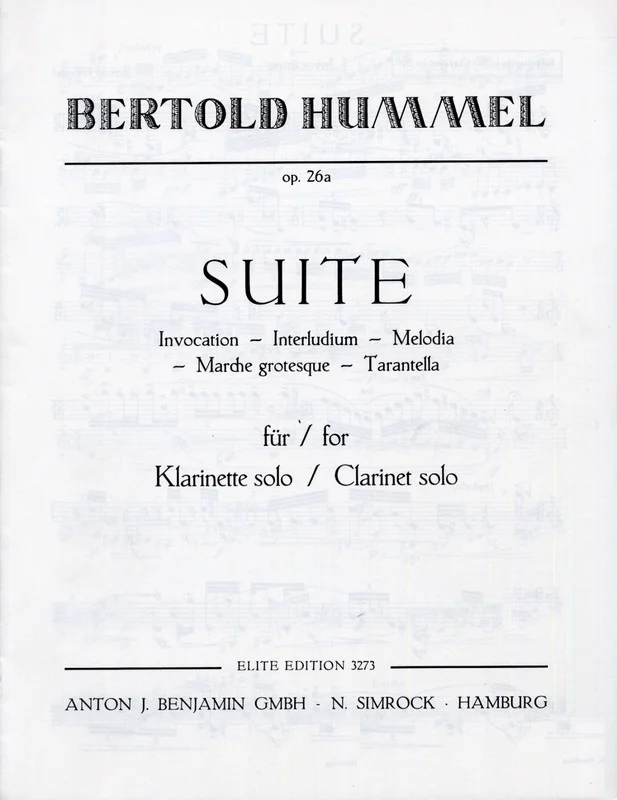
I. Invocation, II. Interludium, III. Melodia, IV. Marche grotesque, V. Tarantella
Clarinet in B flat
Duration: 11 minutes
Ernst Flackus
Title: Suite for clarinet solo 1963/64 - Length: 10 pages - Date: II. 2.Aug.63 - Location: Bayerische Staatsbibliothek, Munich
N. Simrock Hamburg-London (Boosey & Hawkes) ISMN M-2211-1254-5
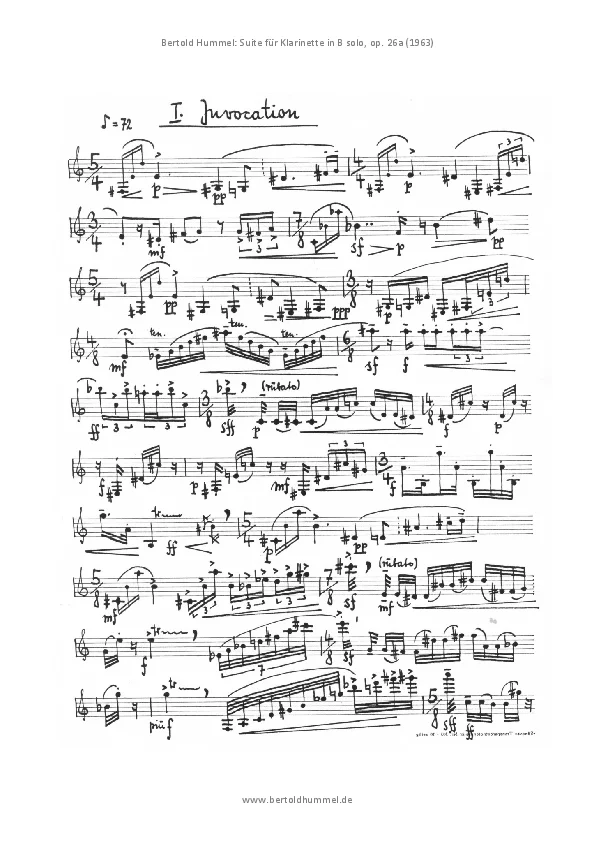

After Igor Stravinsky's pieces for solo clarinet, a wealth of solo works for clarinet have appeared on the market in recent times. However, only a few composers have succeeded in achieving the originality of the great model, and one can even go so far as to say that most of the solo pieces have become merely musically interesting etudes. An exception that cannot be praised highly enough is the 1963 Suite for Clarinet Solo by Bertold Hummel, born in 1925 and now President of the Würzburg Academy of Music. Hummel manages without modern gimmicks, i.e. he does not base his work on new sound sources, the discovery of which alone serves many composers today as legitimisation for the creation of a composition and for whom concepts such as theme or melody have been completely lost. Hummel created a suite which unfavourable critics might well call conservative, but which, in its honesty to rhythm and melody, should make its way even in the age of no longer existing musical criteria.
Dieter Klöcker




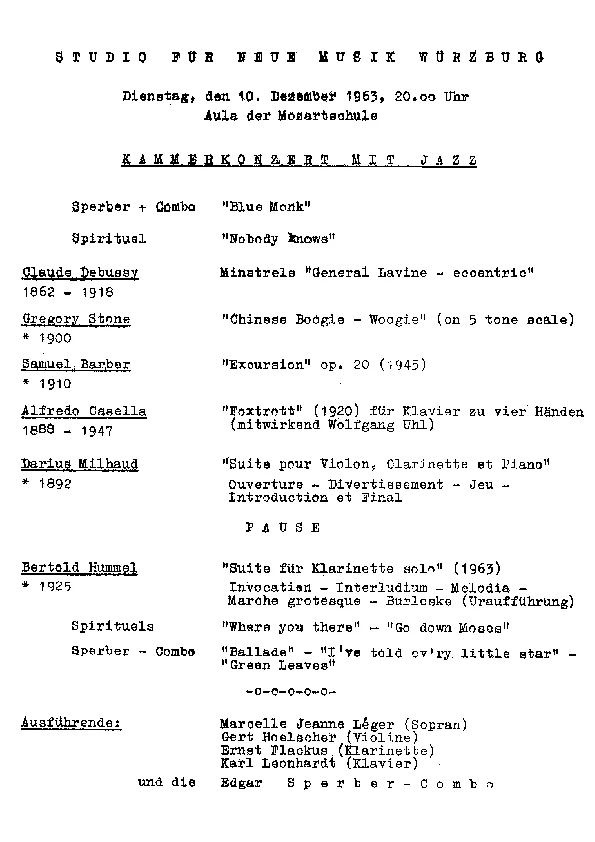
The work, written in modal technique, skilfully exploits the possibilities of the instrument in terms of sound and virtuoso playing technique. The movement Marche grotesque should be interpreted as a parody. The V. movement Conclusion, originally intended to be played at the premiere, was replaced in print by the Tarantella.
Bertold Hummel (text sketch, ca. 1972)
With the Suite for clarinet solo op. 26a - structured in five movements of Invocation, Interludium, Melodia, Marche grotesque and Tarantella - Hummel also opens an entire series of clarinet pieces. With the whimsical Marche grotesque, he criticises militarism and frees himself from the stigmatisation of the young soldier. In the spirit of Hindemith's humour, he ridicules the paradise step of the Soldateska and gives us an idea of what was to take shape in later years in the anti-war piece "The Last Flower".
Klaus Hinrich Stahmer (in "Kammermusik als persönliches Bekenntnis" Tutzing 1998)
The pianist Françoise Deslogères (1929-2020), who worked with the inventor Maurice Martenot and his sister Ginette Martenot on the electronic instrument Ondes Martenot from 1957, played "Interlude et mélodie" from Hummel's Suite op. 26a on the Ondes Martenot in May 1969 at performances in Paris and Bordeaux.