Concertino for bassoon and string orchestra (op. 27b, 1964)
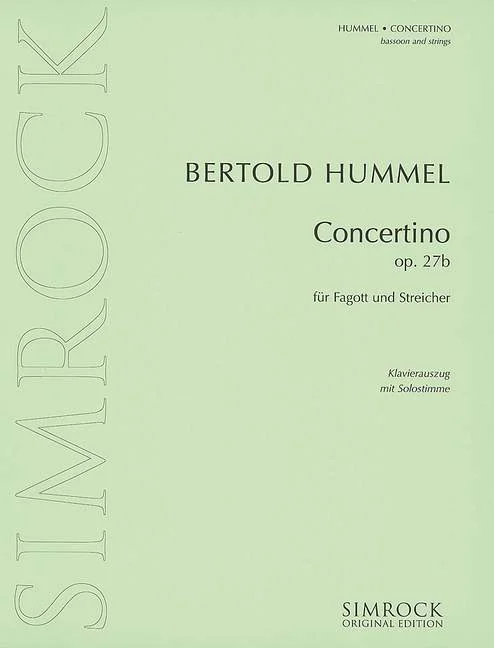
I. Prolog, II. Concerto, III. Epilog
Bassoon, string orchestra
Duration: 15 minutes
Eberhard Buschmann | Collegium instrumentale | Martin Weber
Title: Concertino for basset horn (bassoon) and strings - Length: 19 pages - Date: - - Location: Bavarian State Library, Munich
N. Simrock Hamburg-London (Boosey & Hawkes)
Score and parts: EE 5380 / ISMN: 979-0-2211-2171-4
Piano reduction and solo part: EE 5289 / ISMN: 979-0-2211-2072-4
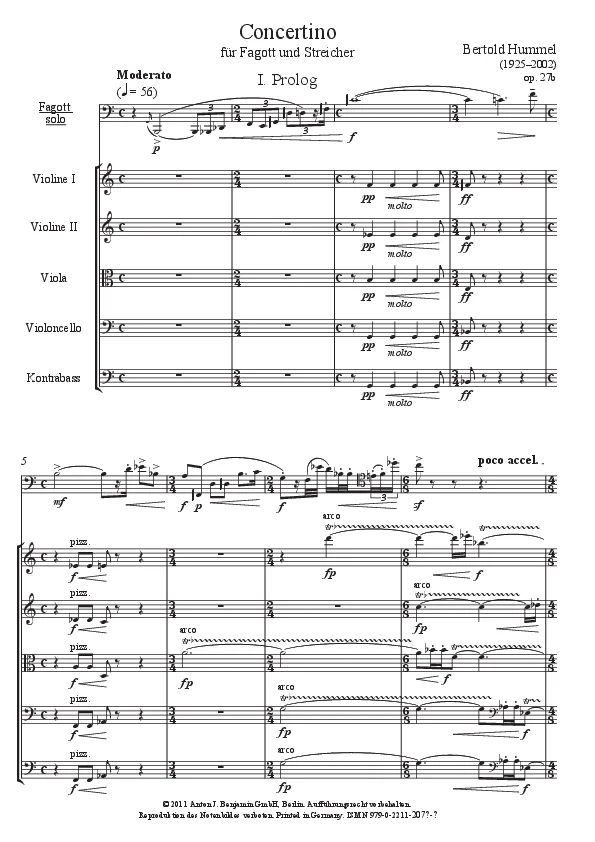
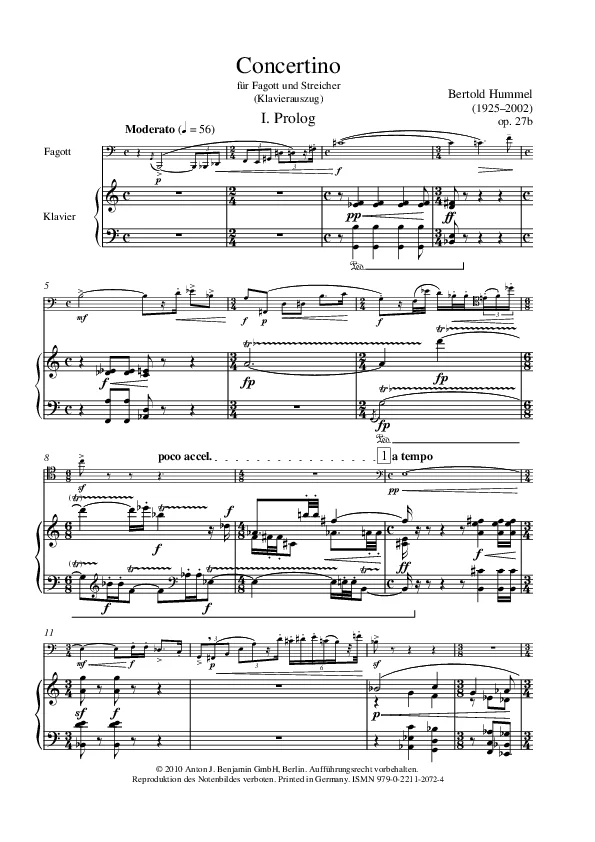
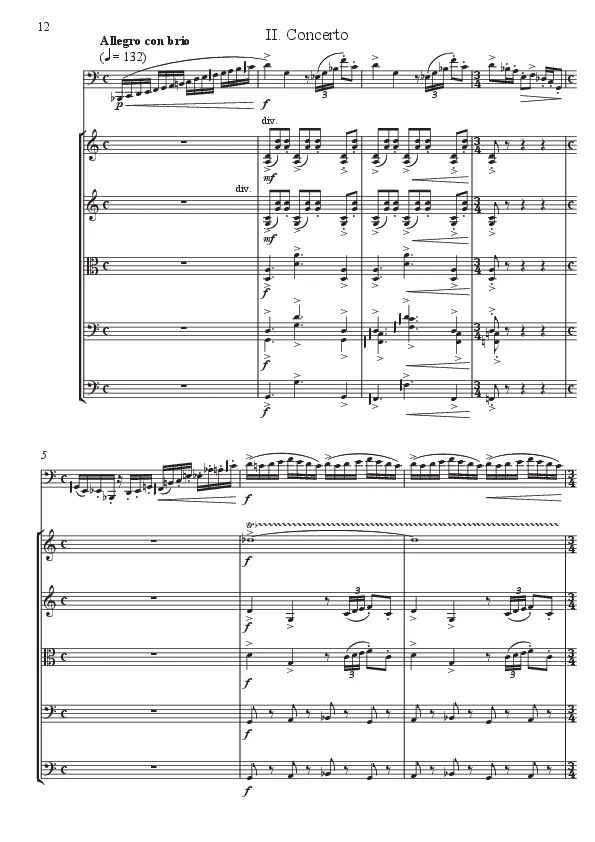

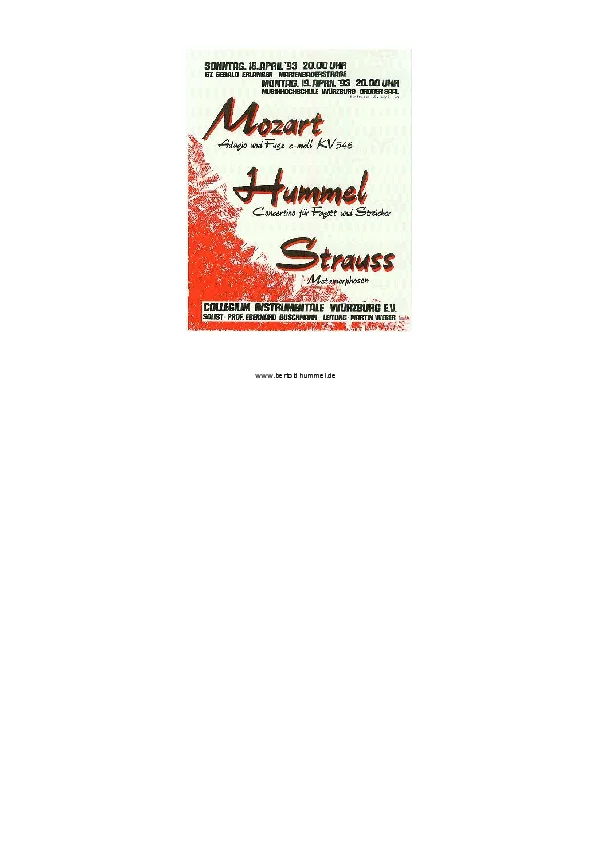
The concertino for bassoon and string orchestra by Bertold Hummel was the centrepiece of the evening. Originally conceived for basset horn, the Würzburg composer arranged it for bassoon as this evening's world premiere and thus literally wrote it for the soloist Eberhard Buschmann. What he conjured up from the brown reed proved to be as virtuosic as it was expressive. In the discreet partnership of the orchestra, he made his instrument sing, lament, even eloquently "narrate" (lush"cadenza" of the middle section). Hummel's wealth of harmonic inventions, frequently surprising rhythmic reversals and sometimes even subtly humorous turns of phrase came into full bloom.




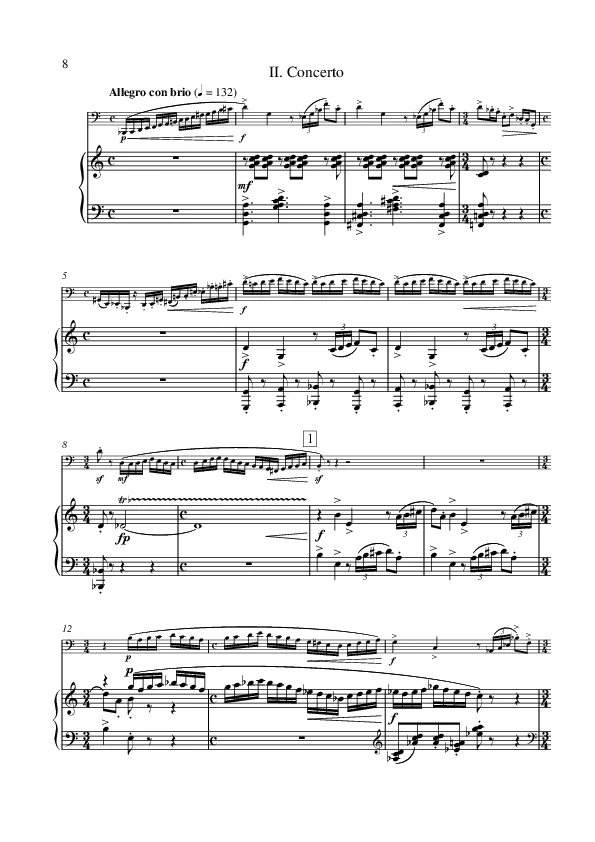
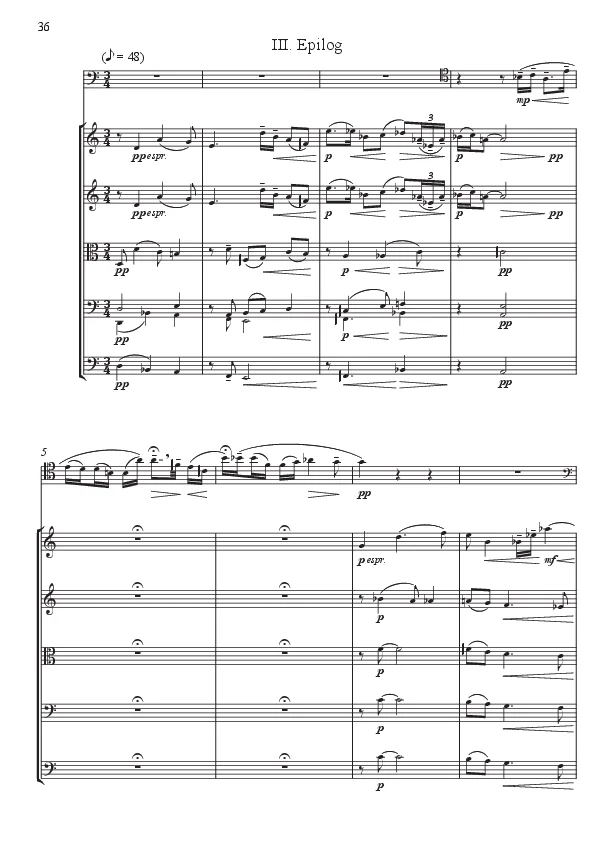
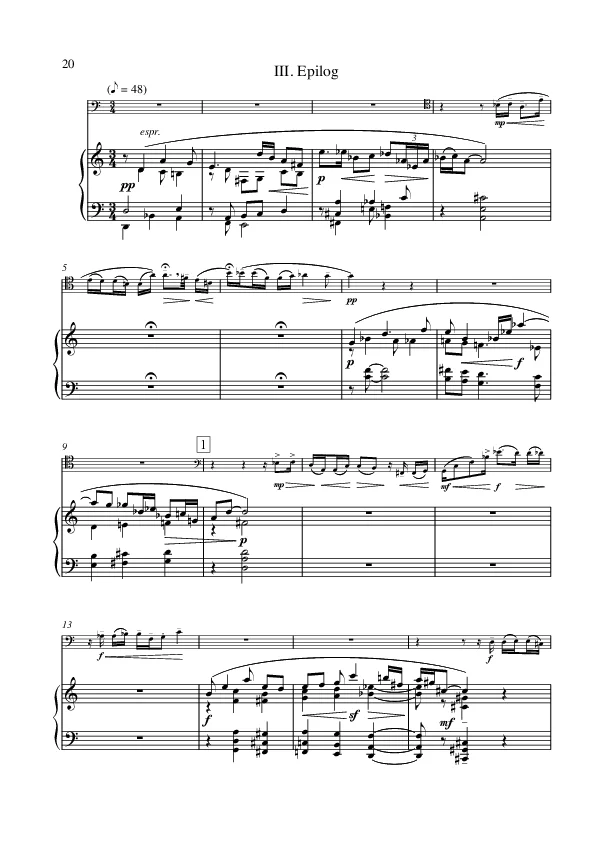
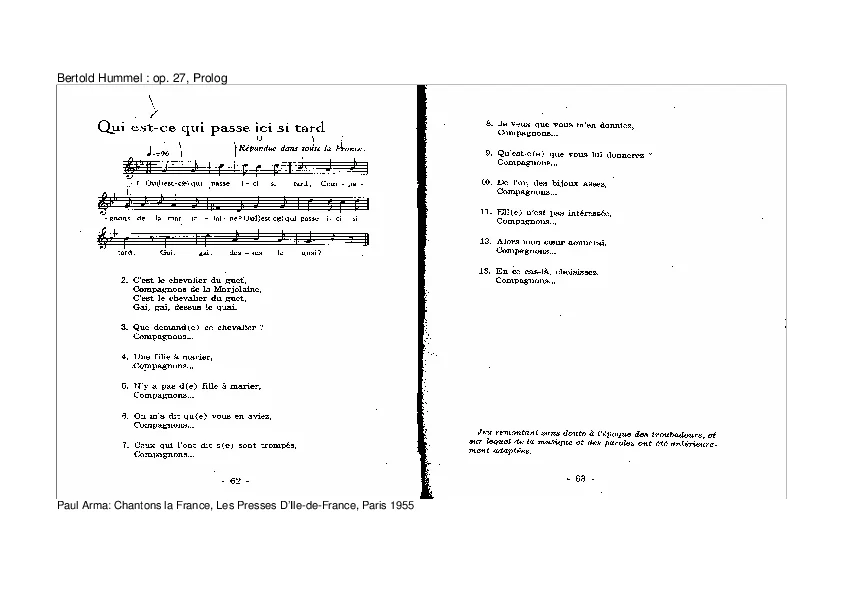
The 'CONCERTINO' op. 27 was written in 1964 as 'Concertino for basset horn and string orchestra'. In 1992, it was arranged for bassoon and string orchestra (op. 27b). In this three-movement work, the solo part of which is extremely virtuosic, the organic inclusion of French folk melodies is particularly surprising and original. The melody and harmony are mainly based on sequences of fourths and fifths which, derived from a folk tune, provide the musical material for the prologue (1st movement) and the entire work. The 'Concerto' (2nd movement) is dominated by a striking bassoon motif (triplet upbeat, fourth and fifth leap). Like a rondo, this motif also appears in the orchestra in different variations. Furthermore, nervous scale movements, counterpointed by syncopations and odd rhythms, determine the musical progression. Suddenly a folk melody appears again - as a contrasting idea. After a virtuoso solo cadenza, this is continued as a 'cantus firmus' in the orchestra. The extremely fast-paced final bars of this movement are followed by a contemplative epilogue in the manner of an 'antiphonal chant' between the first violins (harmonically supported by the other string instruments) and the solo instrument.
Alfred Thomas Müller
Bertold Hummel initially composed the Concertino for bassoon and string orchestra with basset horn as the solo instrument before arranging it for bassoon at the suggestion of Eberhard Buschmann. The piece is characterised by the use of French folk song melodies, which are integrated into the composer's own thematic material. In the first movement - Prologue - the solo instrument makes a recitative-like, declamatory appearance. The Concerto, the second movement, is based on the meaning of the word "concertare" = "to compete", in that the soloist and string ensemble are brought together "competitively" to form an overarching unit. The short epilogue is a fading away in a strict alternation of bassoon and strings.
Hartwig Kuckuck
On 27 September 1958, Bertold Hummel composed the first movement of an unfinished sonatina for soprano recorder and harpsichord. This opening piece is largely identical to the 2nd movement of the Concertino op. 27.