Suite for violin solo (op. 78, 1982)
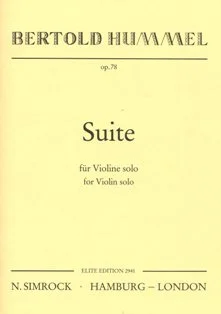
for Joshua Epstein
I. Fantasia, II. Vivace, III. Metamorphoses
Violin
Duration: 19 minutes
Title: Suite for violin solo op. 78 - Length: 16 pages - Date: 16.12.82 - Location: Bayerische Staatsbibliothek Munich
N. Simrock Hamburg-London (Boosey & Hawkes) EE 2941 / ISMN M-2211-0843-2
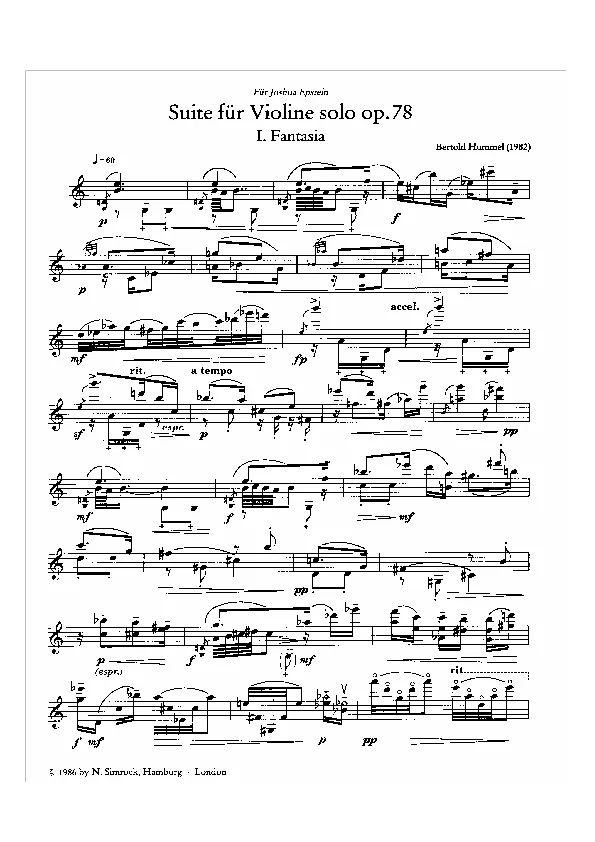
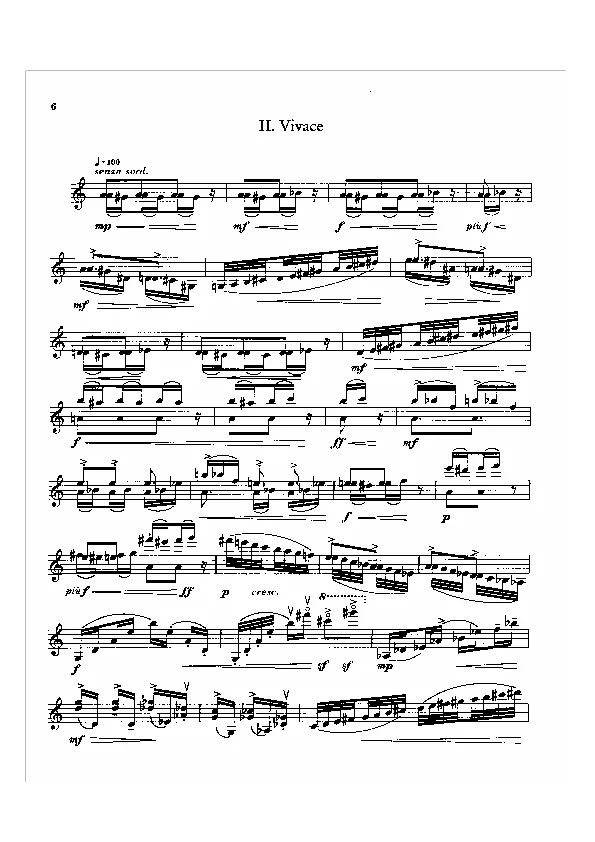
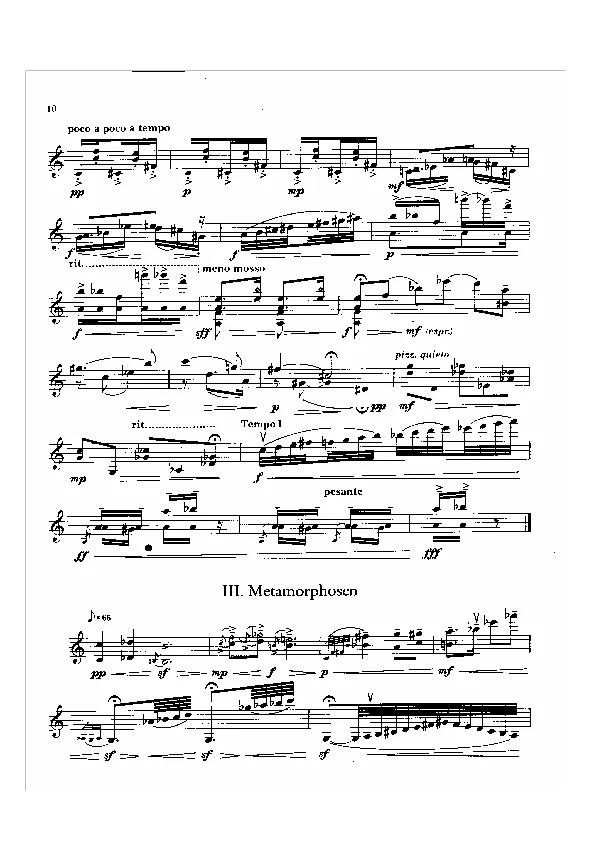
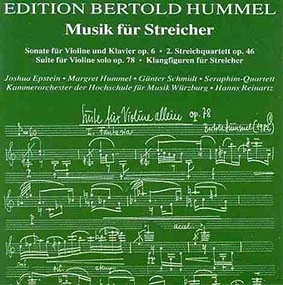
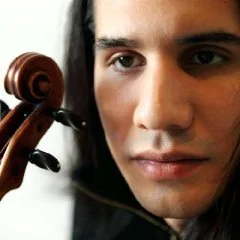
Joshua Epstein is the soloist in the Suite for solo violin, op. 78, which is dedicated to him and is modelled on works by Johann Sebastian Bach. Reger, Hindemith and Prokofieff also benefited from the advanced virtuosity of his playing technique. Hummel gave the violin its due: He is aware of its tonal possibilities and technical reserves, utilises them to great effect and fills them with musical impulses, the brilliance of which Epstein does not shy away from.




Ladies and gentlemen,
After the masterpieces written for solo violin by J.S. Bach, Max Reger and Belá Bartók, it is a somewhat risky undertaking to return to this genre of composition. In recent times, several attempts have been made to reach new shores - starting from the alienation of the instrumental part, which is common in the avant-garde. There have also been attempts to achieve a personal statement with traditional instrumental treatment. To say it up front, I decided in favour of the latter option.
The Suite for solo violin was composed in 1982 at the suggestion of Joshua Epstein, to whom the work is dedicated
The three movements Fantasia, Burleske and Metamorphosen are described briefly below:
Fantasia: The arioso ductus of the opening - with a baroque inflection - and the interval e'' - b'' appear again and again in the course of the movement, organising its form. Consistent tone sequences, their possible inversions and transpositions are evolved in a chain of variants. In the outermost pp, the movement ends with the three-note b.
The burlesque brings a restless, virtuoso element into play. Ideas from the 1st movement are taken up again and incorporated into the structure of the movement.
In the 3rd movement Metamorphosen , additional tonal material is introduced to the existing material. Rhapsodic and recitative-like sections contrast with rhythmically emphasised sequences. In its summation of the material, this 3rd movement forms, as it were, the development of the two preceding movements.
The next 18 minutes will show how far I have succeeded in making the listener understand what I have just described.
Bertold Hummel (concert introduction, Munich 29 October 1985)
The "Suite for violin solo" op. 78 was composed in 1982 at the suggestion of the violinist Joshua Epstein, to whom this composition is also dedicated.
The work is entirely in line with the great classical solo compositions for violin. Hummel's great skill with the instrument is particularly evident in op. 78. He writes for the instrument and yet utilises the great virtuosity in the sound possibilities. He treats the underlying thematic material just as effectively as he handles the violin.
The first movement ("Fantasia") begins with an ariosoductus featuring a baroque phrase which, together with the fifth motif "E - B", repeatedly appears to organise the form. Behind this material, references to J. S. Bach's solo suite and the relationship between the spiritual motor of op. 78, Joshua Epstein (E), and its composer, Bertold Hummel (B), can possibly be surmised ...
The 2nd movement ("Vivace") brings a restless, virtuoso element into play. Despite a new, contrasting gesture, Hummel deliberately retains the connection to the first movement by repeatedly picking up on ideas from the first movement and combining them with the new movement structure.
The formal culmination of the solo suite is reached in the 3rd movement, which has the subtitle "Metamorphoses". The existing thematic material is expanded for dramaturgical reasons and placed in relation to its original elements. Rhapsodic and recitative-like sections are juxtaposed with rhythmically emphasised ones. In its summation of tonal material, this movement, which is also the longest due to its subject matter, represents, as it were, the development of the two preceding movements.
Ulrich Schultheiß (in: Booklet for the CD Bertold Hummel - Music for Strings, Conventus Musicus, Dettelbach 1996)