Pentafonia for percussion and piano (op. 53b, 1974)
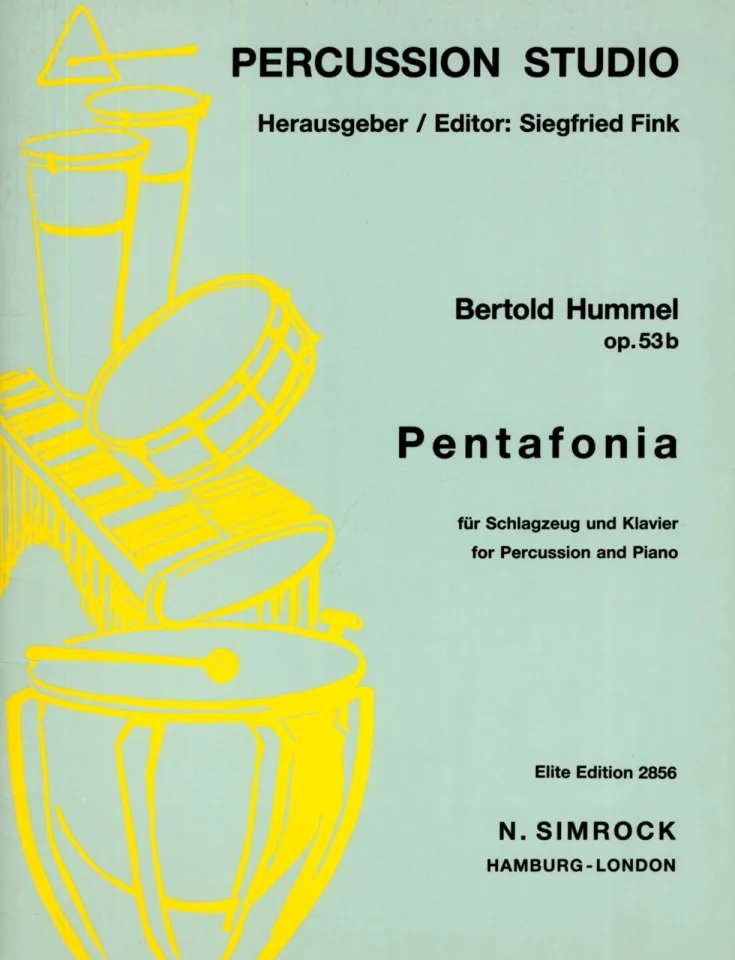
I. Fantasia, II. Allegro ritmico Version mit Streichern, III. Nocturne, IV. Intermezzo, V. Conclusion
gong (50 cm), vibraphone, cymbals (50-45-40-35 cm), cymbals 45 cm (sizzle) 20 cm (bell), 2 tom-toms, snare drum, 2 bongos, 5 templeblocks, 2 woodblocks), piano
Duration: 26 minutes
Hermann Gschwendtner | Gottfried Hefele
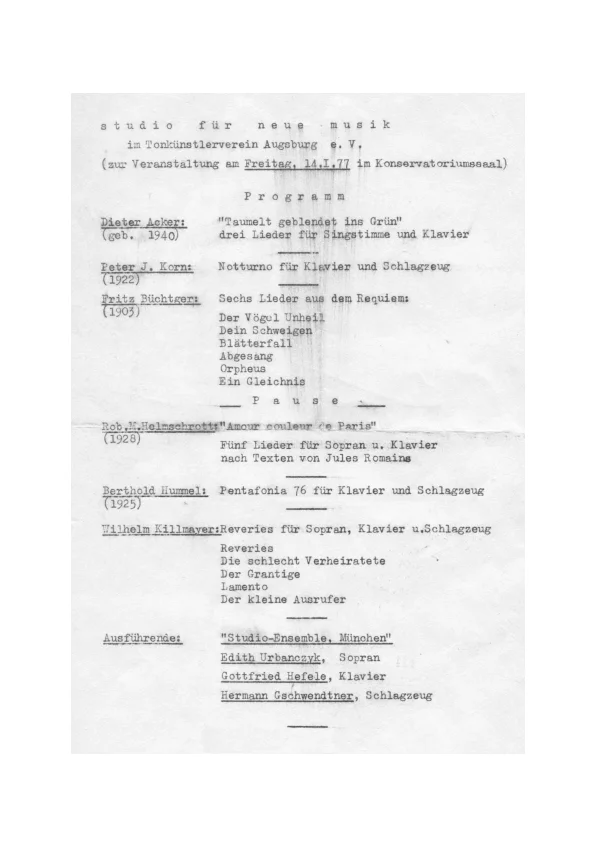
Title: Pentafonia 74 for percussion solo and piano (arrangement by the composer after the original version for percussion solo and strings) - Length: 34 pages - Date: 13 Sept. 76 - Location:
N. Simrock Hamburg-London (Boosey & Hawkes) ISMN M-2211-0810-4
This 25:00, 5 movement multipercussion solo with piano accompaniment is arranged by the composer based on the original version for percussion and string orchestra (available in rental form only). The piece calls for vibe, snare drum, four pitched drums, five temple blocks, two wood blocks, six suspended cymbals and tamtam. Movement I (Fantasia) emphasizes the vibe, cymbals and tamtam, and moves rather slowly with an eight-note = 84. Allegro ritmico uses the drums and temple blocks, and moves faster (quarter = 138). Movement III (Notturno) is a slow, more contemplative movement for vibe. The recurring ametric sections are written without accompaniment. The Intermezzo is again quicker and utilizes all of the instruments except tamtam. A rather metric cadenza is included near the end of the movement. The conclusion again uses all of the instruments, but now in a more complex, denser texture.
All performance directions are clearly marked in both parts: dynamics, implement choices and parts, stick-types plus handslap instruments, tempo changes etc. No unusual performance techniques are used, although the 3- and 4-mallet vibe parts will take some study as well as the "on and off" directions for both snare and vibe motor. Implement changes will also need to be carefully practiced so as to not interrupt the musical flow. Recommended as a very suitable recital piece for an advancing multipercussion student with a grasp of 4-mallet vibe techniques.
John Baldwin
Literature list of the German Music Council for the "Jugend musiziert" competition: Level of difficulty 5/very difficult (upper level)