Concertante music for vibraphone, marimba and strings (op. 86, 1986)
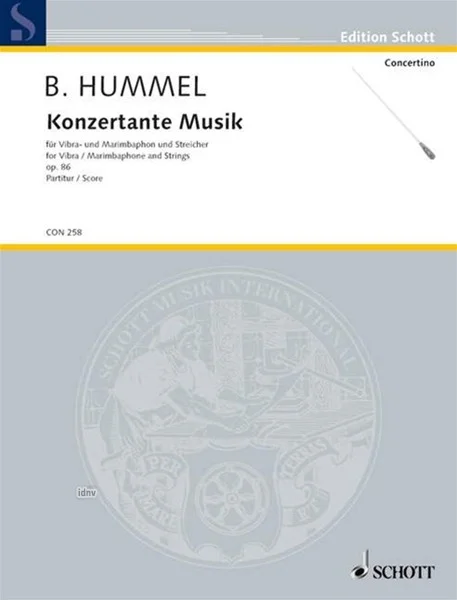
I. Moderato, II. Allegro, III. Rezitativ - Choral - Finale
Vibraphone and marimba (1 player) and 13-part string ensemble
Duration: 25 minutes
Mark Christopher Lutz | Merck Chamber Orchestra | Zdenek Simane
Score / Piano reduction - Title: - / - - Length: 102 pages / 37 pages - Dated: I. 10.8.86 / II. 22.8.86 / 9.9.86
Schott Music: Score: Con 258 / ISMN: M-001-15304-1
Parts: Con 258-50 / ISMN: M-001-15303-4
Piano reduction: ED 20468 / ISMN: M-001-15390-4
First edition: J. Schuberth & Co., Hamburg 1988
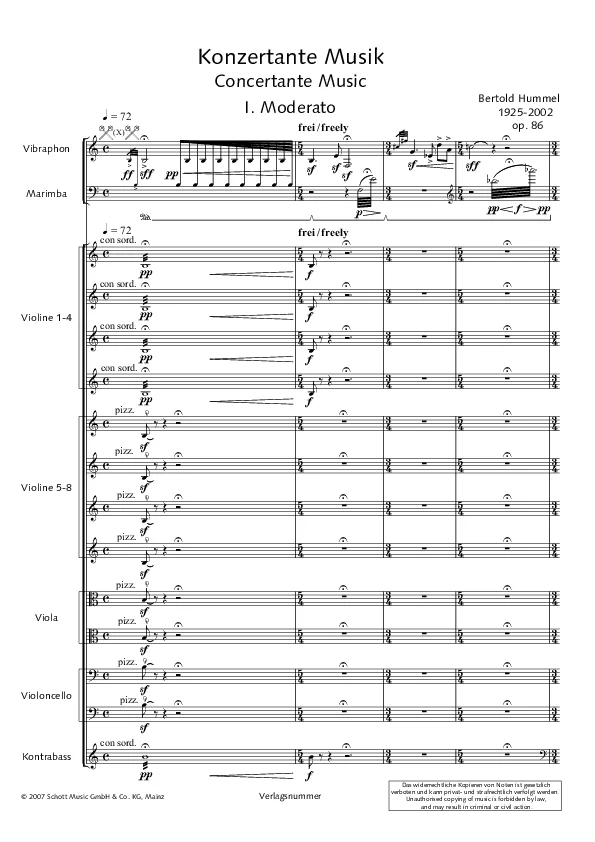
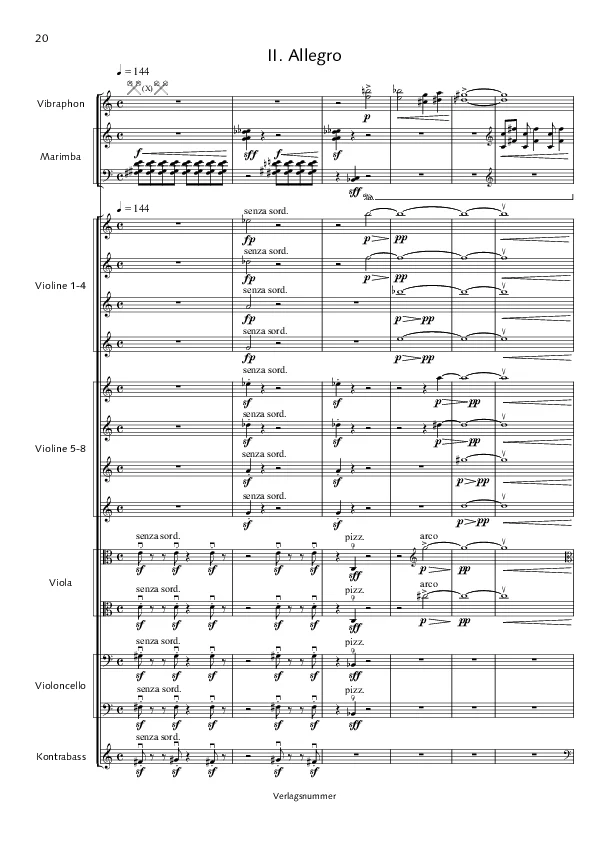
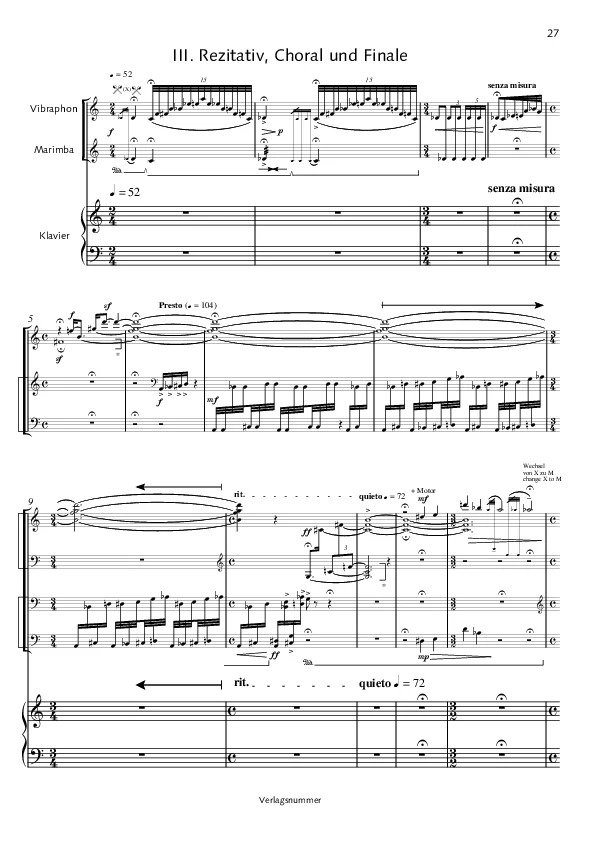
A successful piece that draws its charm from the playful contrast of the wood, steel and bowed, often ordained sound, as well as from attempts to mediate these divergent colours. It is a work full of enigmatic irony, in which at times sombre rhythmic accents or drilling, fanning out clusters suddenly slide into dallying waltz movements.
Hummel has composed an all-round musical work, with rhythmically attractive interplay (even a waltz in the second movement) between soloists and orchestra. It is a pity that the compositional final punch line - harmonics in the strings and marimba glissandi - was somewhat lost. In any case, the twenty-five-minute piece was fun for both musicians and listeners.




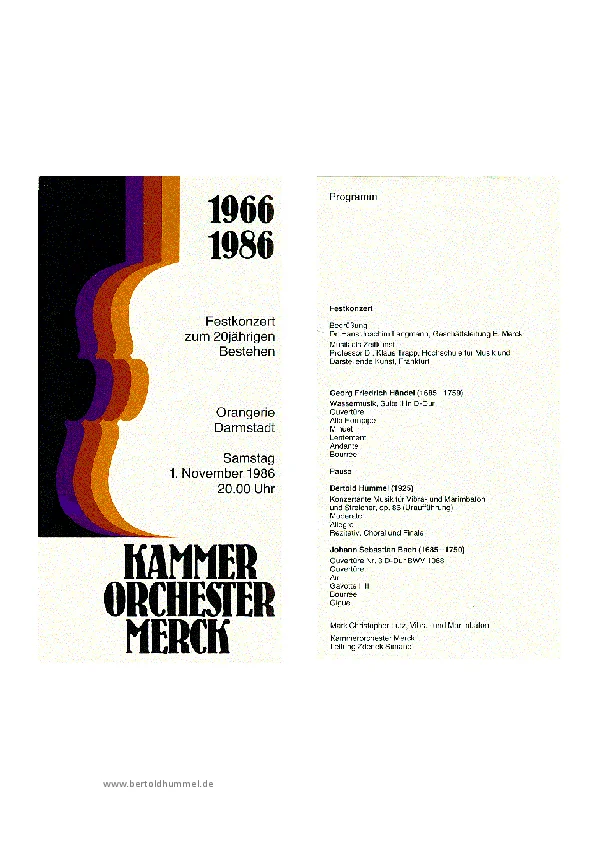
The Konzertante Musik for vibraphone, marimba and strings op. 86 was composed between July and September 1986 on the occasion of the 20th anniversary of the Merck Chamber Orchestra.
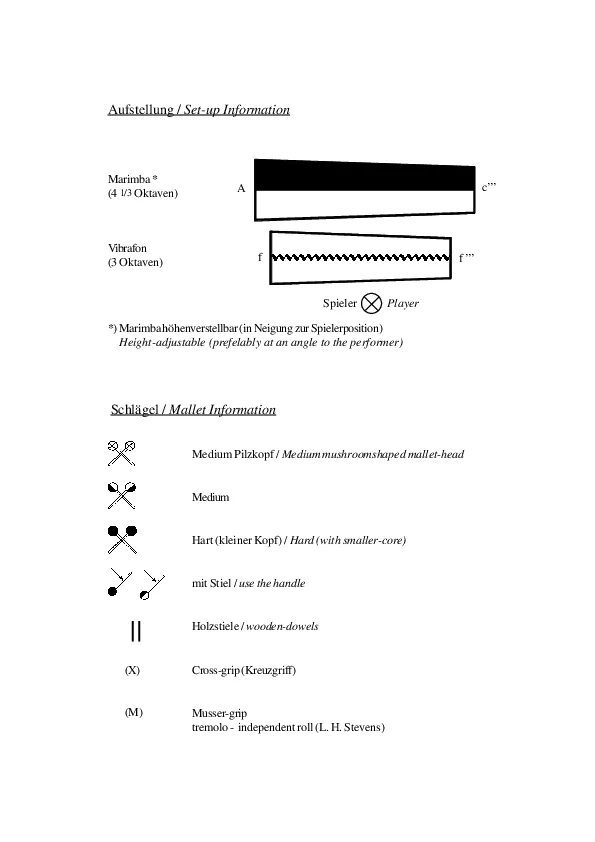
A remarkable novelty of the work is that, for the first time, the soloist is given the opportunity to play both instruments in the same way as an organist plays different manuals. This fact is naturally taken into account in the composition in the virtuoso alternation between the two instruments and the tonal fusion of the two.
The three-movement work contrasts the solo part with a 13-part string ensemble. Here, too, there is both contrast and fusion.
In the first movement Moderato, rhapsodic formulations alternate with lyrical, arioso sections, alternating light and dark colours in a small space. Three episodes with four-part marimba tremolos are just as structuring as two cadenza-like vibraphone interjections.
Throbbing and unrelenting rhythms determine the motoric nature of the second movement Allegro, confronted with a graceful tempo di valse. Even in the short solo cadenza, both movements are set against each other. The rondo-like alternation with ever new twists and turns fades away surprisingly in the extreme pianissimo.
The third movement, Recitative - Chorale - Finale , initially gives the soloist the opportunity to "speak freely". Chorale-like sections (marimba) with respective interludes (vibraphone) are given a very calm character by high organ points in the violins. The finale that immediately follows (presto) gives the soloist many opportunities for virtuoso development. A somewhat grotesque march episode loosens things up in between. All elements of the movement are brought into play in an extensive cadenza. The Presto is continued and new variations are added; the musical momentum is occasionally slowed down by fermatas and reminiscences. An ironic conclusion is added to the final coda bars. I hope that at its première the work will also convey something of the good humour I felt when writing my op. 86.
Bertold Hummel
In addition to the principle of strict construction, the principle of "homo ludens" always prevails in Hummel's music, especially in the CONCERTANT MUSIC op. 86. It is relatively easy to explain and aurally grasp how the whole work proceeds formally: its three movements are clearly structured from a restrained introduction to a dance-like Allegro with flowing and quasi-folkloristic time patterns - some waltz episodes are reminiscent of a somewhat foreign ambience - to the expressive climax in the form of a recitative with a chorale and a toccata-like finale. This is followed by the soloistic layer with quasi-improvisatory cadenzas, soloistic outbursts and generous fade-ins, underpinned by well-calculated orchestral colouring: all in all, an unproblematic work of joyful playing characterised by clear gestures and natural diction. What was Praetorius' translation of the term "concertare"? Skirmishing and competing with each other (1619)...
Klaus Hinrich Stahmer