Trio for trumpet in C, percussion and piano (op. 82a, 1984)
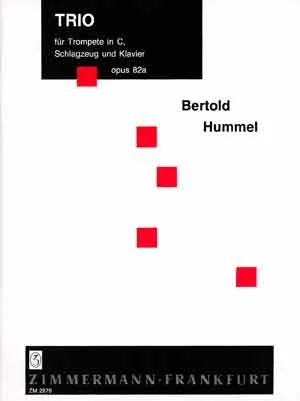
I., II.
Trumpet in C, percussion, piano
Duration: 12 minutes
Richard Steuart | Bernd Kremling | Johanna Klinger
Title: Trio for trumpet, percussion and piano (1984) op. 82a - Length: 31 pages - Dated: I. 27.2.84 II. 18 April 84 New version 11 June 84 - Location: Bayerische Staatsbibliothek Munich
Zimmermann Musikverlag Frankfurt ZM 28760 / ISMN M-010-28760-7
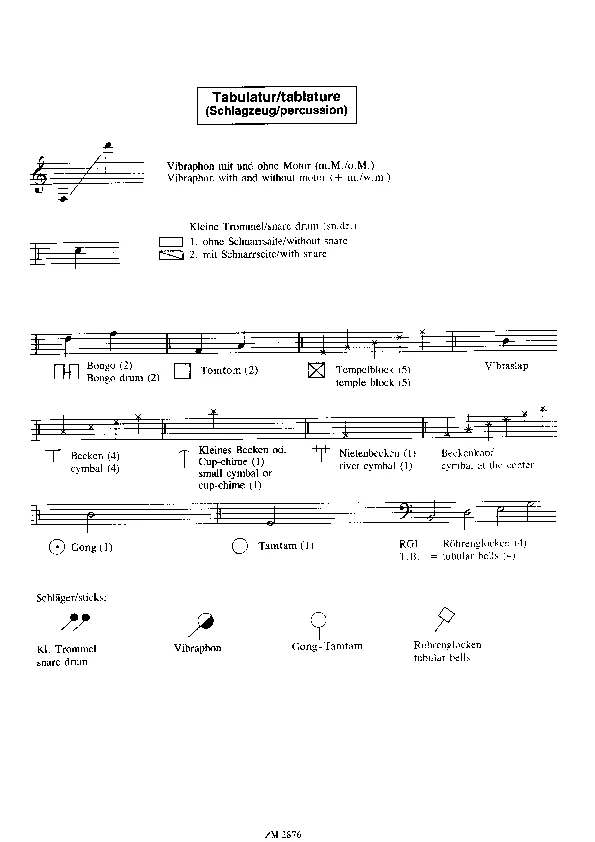
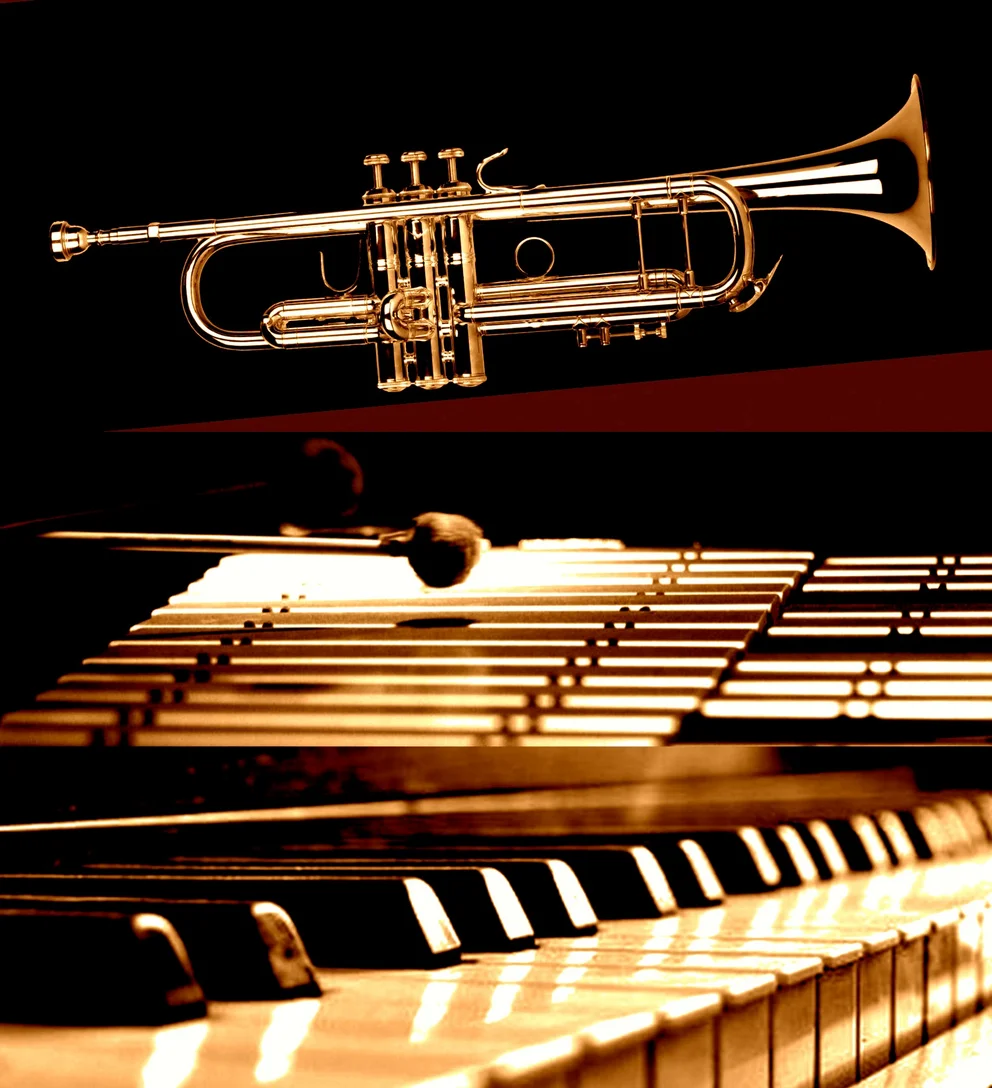
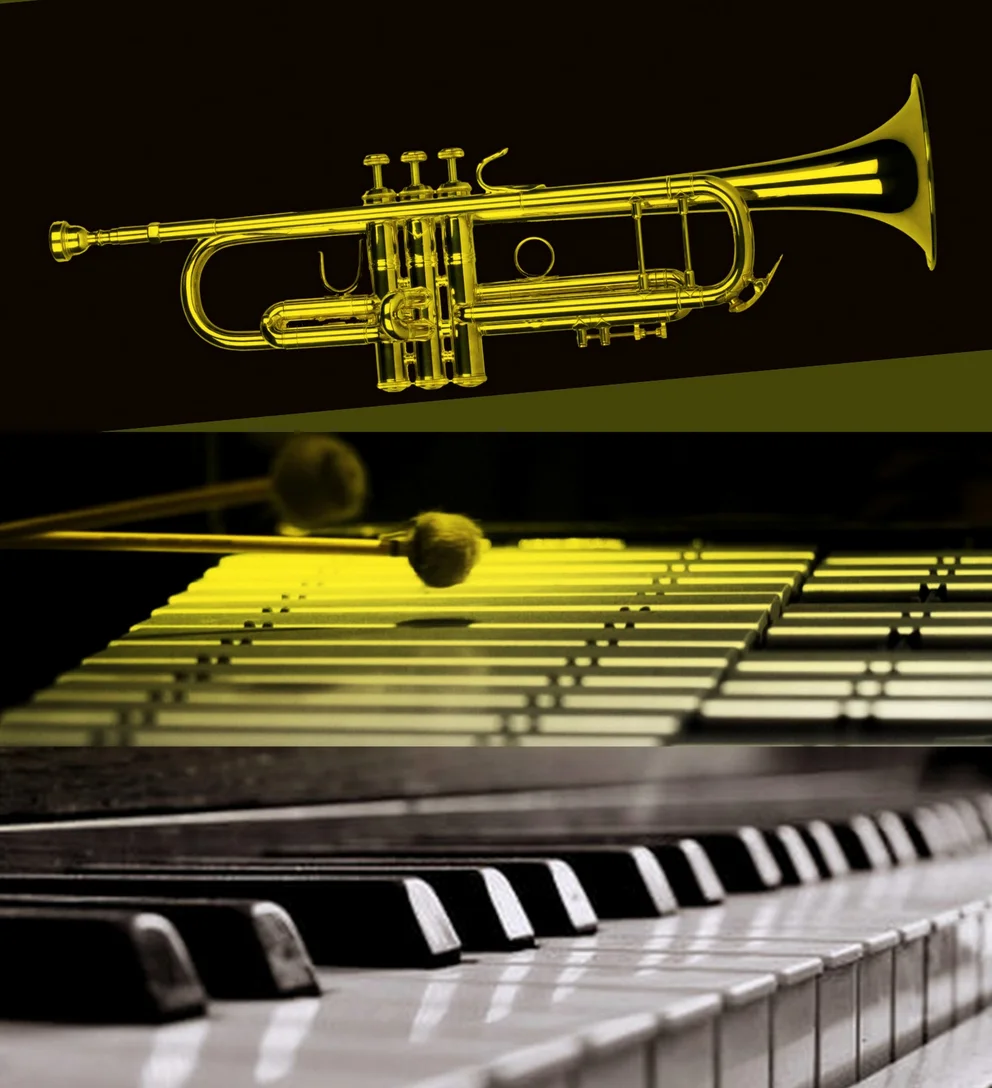
This two-movement work calls for a variety of percussion instruments including: bongos, tom-toms, temple blocks, five cymbals (one with rivets), a cup chime (cup gong?), chimes, gong, tam tam, vibraphone and snare drum. Although the setup is not small, the "choreography" demanded by the music is fairly easy.
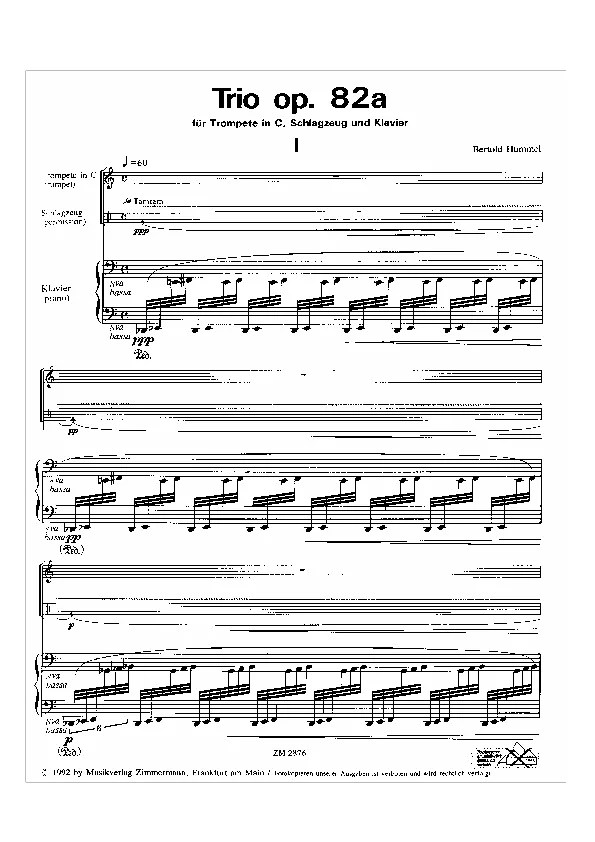
The first movement begins as the piano starts a pianissimo ostinato with a light tam tam roll for accompaniment. The trumpet and vibraphone enter with long tones over the shifting rhythms. These tones compress to the peak of the movement before the original texture returns for a quiet ending.
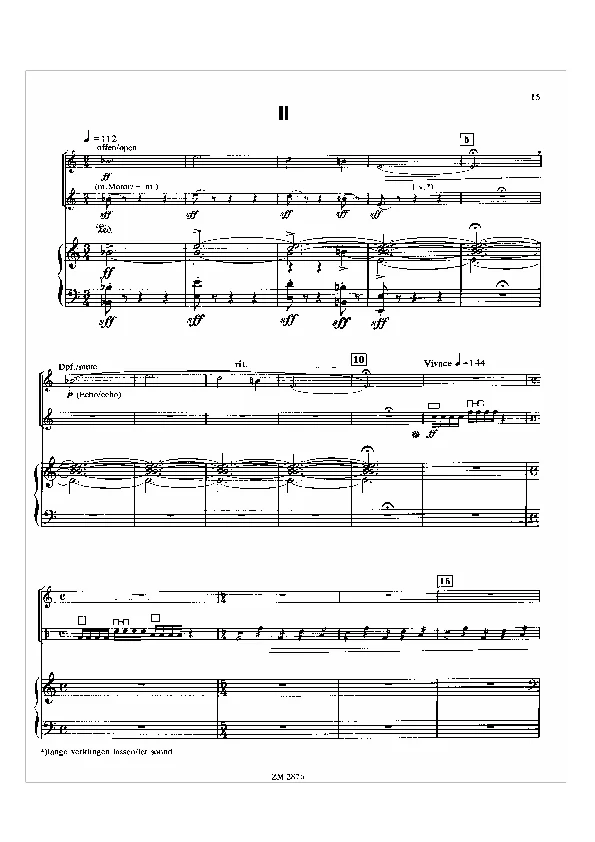
In contrast, the second movement is a fast rhythmical vivace with changing meters. The percussionist mainly performs on drums and cymbals as the work progresses. Hummel incorporates an interesting trio cadenza as all three instrumentalists play jointly in free notation. The percussionist concludes the cadenza alone before the movement recapitulates to the main theme and a strong ending.
The percussion part in Trio is not too difficult, as the music tends to feature the trumpet and piano while the percussionist adds timbre contrast and rhythmic drive.
Mark Ford
Hummel's trio for trumpet (Robert Hofmann), percussion (Mikchael Gärtner) and piano (Oliver McCall) was expressively convincing with many beautiful motivic highlights and interesting percussive combinations of piano and percussion.
In Bertold Hummel's Trio op. 82a for trumpet, piano and percussion, Scott played with energy and finesse, demonstrating outstanding mastery of his instrument. The piece itself utilised this combination of instruments to great effect, switching between moods very effectively.
Daniel Kiser
Literature list of the German Music Council for the competition "Jugend musiziert":
Level of difficulty 4/difficult (intermediate level II)




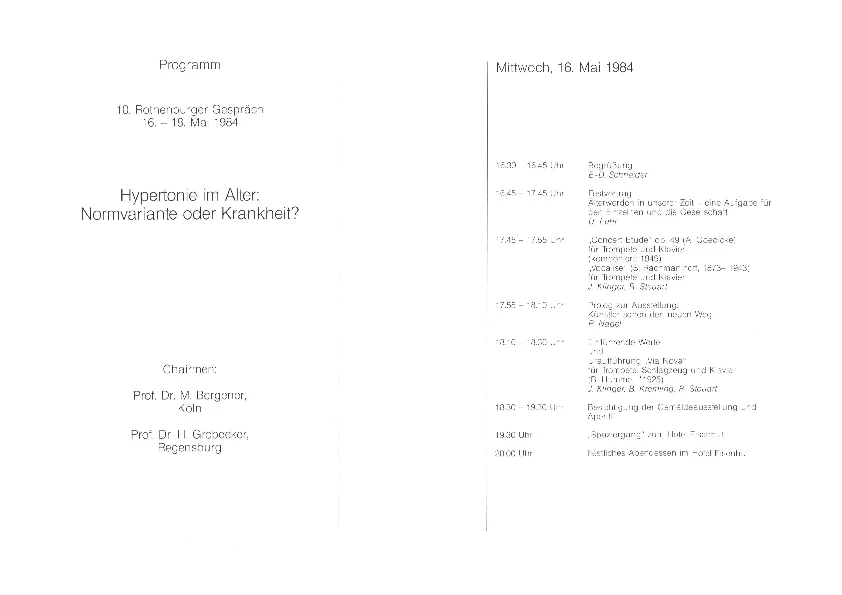
The Trio for trumpet in C, percussion and piano, op. 82 a was composed on the occasion of the opening of an international symposium in Rothenburg ob der Tauber in 1984.
The work is in two movements.
In the first movement, tone sequences are exposed over sound surfaces of the piano, which - becoming increasingly dense - push towards a climax in 3 arioso approaches. A short farewell leads back to the opening mood of the movement.
The second movement stands in sharp contrast to this with its concise rhythmically characterised playing figures, which lead to attractive combinations of the fundamentally different instruments but also to strong contrasts. The golden section of the movement is a joint cadenza in free notation, which brings together all the elements of the work in a performance-like manner and demands a high degree of flexibility from the players. A solo improvisation by the percussion leads to a dense recapitulation that brings the movement to a striking conclusion.
Bertold Hummel
Introductory words by the composer at the premiere of the Trio Op. 82a on 16 May 1984 in Rothenburg o.d. Tauber
Ladies and gentlemen, when a composer receives a commission to compose a piece of music for any occasion, the promise is immediately followed by the consideration: Who is the work aimed at, who are the listeners, how can the work be related to the occasion? I admit that I found it a little difficult to imagine the illustrious company now present here. After all, I wanted to arouse the interest of my listeners with an unusual instrumental line-up. With trumpet, percussion and piano, I thought I had found a distinctive combination that would have a special appeal in terms of sound and instrumental combinations alone. Most of you are probably familiar with the instruments in front of you, whether from classical, jazz or popular music. Each of you certainly has a certain expectation when you hear these instruments. When a composition is labelled "Via nova", it is obvious that the listener has to take a risk - according to the composer's motto: "Some people see things as they are and say: Why? I dream of things that never existed and say: Why not?
To understand the work, the following should be said: I had the task of juxtaposing the paintings and pictures exhibited here under the title "The New Path" with a musical counterpart. I was sent some of the works in photographs - but was only able to draw direct musical inspiration from them to a limited extent. So, after some thought, I came up with the idea of making use of the possibility of using tone names in some way that could be associated with the present occasion. Many composers have already used such a procedure I remember B-A-C-H in the"Art of Fugue" by J.S. Bach, or the ABBEGG Variations by Robert Schumann. A popular example would be the canon: C-A-F-F-E-E - don't drink so much coffee, which I'm sure you remember from your school days. I have derived the entire tonal material of my piece from the tone names H-D-E-G-S-E-A. These are the letters of the drug HYDERGIN-SPEZIALthat can be set to music - surely not entirely unfamiliar to you all! As a tone sequence without compositional processing, this tone series sounds like this: [audio sample 1] In a musical arrangement, something like this: [audio sample 2,3,4,5,6] As already mentioned, the tone sequence is the basis for the entire work. The 1st movement is dominated by amorphous sound surfaces and short motifs with relatively calm movement. Among other things, a blues-like melody becomes recognisable before the movement fades away in the outermost pp. In the 2nd movement, rhythmically accentuated sections in rondo form alternate with lyrical, cantabile insertions. Improvisatory passages are also included; for example, a cadenza shortly before the end of the work gives the percussionist the opportunity to introduce his instruments in an emphatic manner.
I hope that you will be receptive to the première of the following work and possibly even have the feeling that you are part of the authors of the piece of music - at least as far as the derived tone sequence is concerned. Duration about 15 minutes. As a quasi symbolic gesture, may I present you Dr Schneider - as the commissioner - with the first bound score of my work "VIA-NOVA".