Sonatina for double bass and piano (op. 69b, 1979)
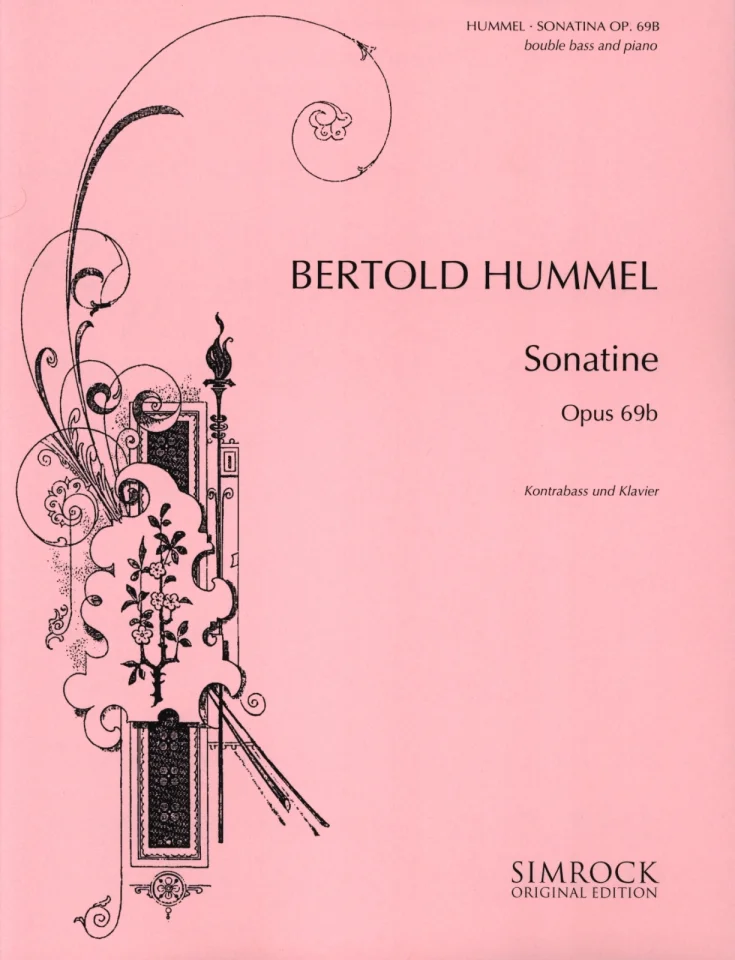
For my sons Martin and Lorenz
I. Allegro, II. Andante cantabile, III. Capriccioso finale
Double bass, piano
Duration: 11 minutes
Gerhard Kiunke | Christoph Weinhart
Title: Sonatina for double bass and piano op. 69b - Length: 16 pages - Date: I. 24.2.79 II. 1.3.79 III. 6.3.79 - Location: Bayerische Staatsbibliothek Munich
N. Simrock Hamburg-London (Boosey & Hawkes) EE 2989 ISMN M-2211-0907-1
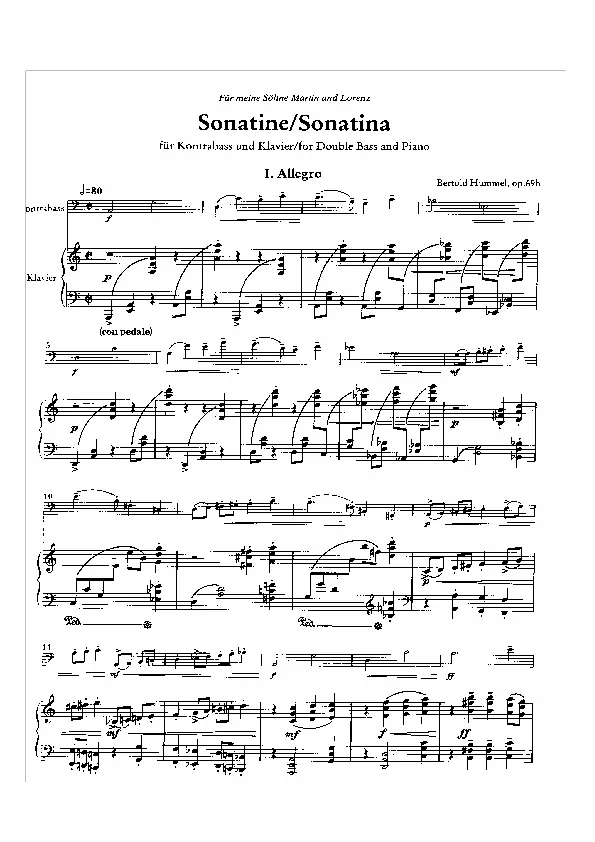
Bertold Hummel's excellently produced Sonatine, Op. 69b, for contrabass and piano has to be for the pedagogical populace and their clientele.
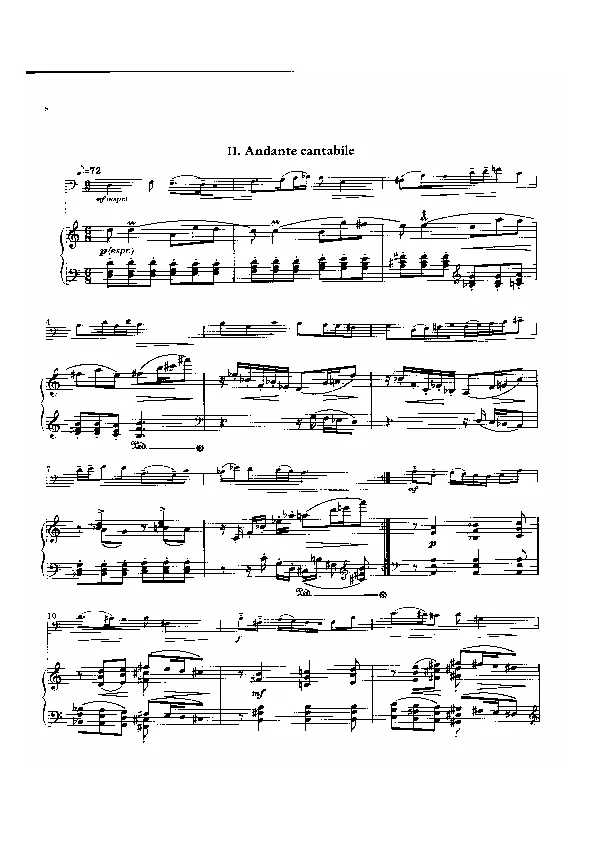
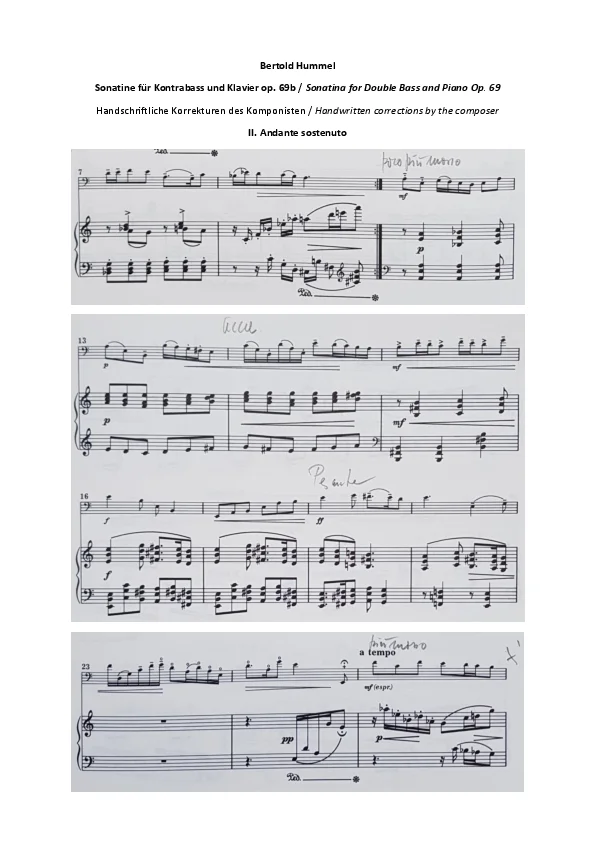
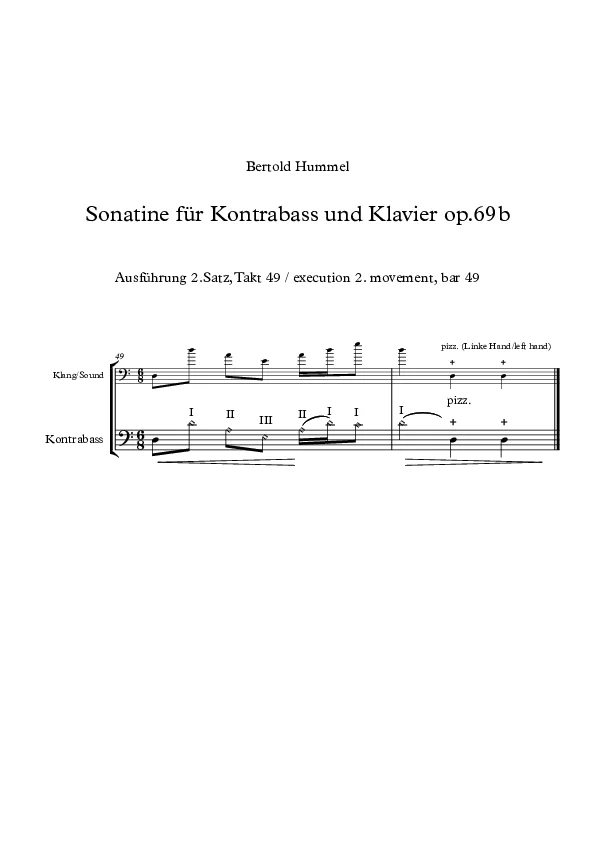
The first movement uses mostly quarter and half notes and is devoid of any rhythmic interest whatsoever. The second movement, Andante Cantabile, is in 6/8 and, yes, it does have references to the siciliano and it makes subtle use of hemiola. It sings, in a neo-baroque style, and is effective in the somewhat murky tessitura. The often rich piano part will certainly have to be played at lower dynamics than those indicated.
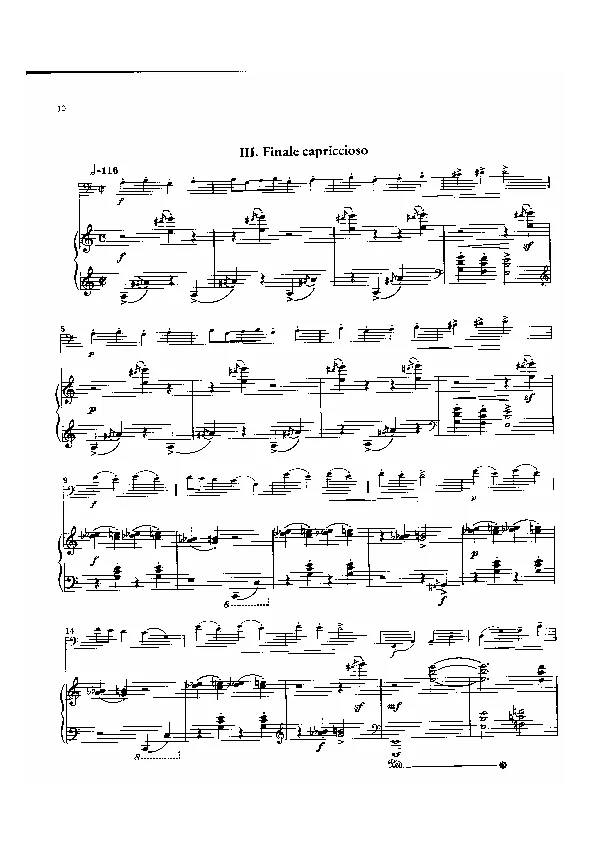
The Finale Capriccioso is full of folk-like tunes that dance and sing in a charming joyous manner. The lighthearted spirit of this movement lends itself to a pedagogic function. The dedication to the composer´s sons seems to reinforce this, and as I read through Hummel´s Op. 69b the vision of his two sons performing this piece in the family music room is in clear focus. If my speculation is correct, then Bertold Hummel has succeeded in producing a useful pedagogical composition for contrabass solo and piano.
Bertram Turetzky
A very effective work for the budding performer on bass. Ample variety between movements but technically not too challenging.
It is no surprise to discover that composer Bertold Hummel trained as a cellist as well as a composer. He writes with an intimate knowledge of strings, and seems to favor the lower sound of viola and cello. His special talent is for composing pieces which are full of variety and vitality, but technically easy enough für capable students. These pieces will delight teachers and students who are looking for accessible contemporary music.
His Sonatina Op. 69b for double bass and piano will be welcomed by teachers and young bass players. Hummel works with uncomplicated musical material, and yet he manages continually to surprise and delight with his harmonic and rhythmic contrasts.
Although many of Hummel's pieces for solo stringed instrument and piano are clearly intended for students, I would not hesitate to place them on a recital program. Their beauty and excitement could not fail to please an audience.
D.M. B.
Literature list of the German Music Council for the competition "Jugend musiziert":
Level of difficulty 1 - 2/easy - moderately difficult (lower level II - intermediate level I)




My father wrote the Sonatina for double bass and piano for my brother Lorenz and me in February and March 1979. After he had heard us beginners practising rather insignificant double bass pieces (trombone transcriptions etc.) time and again, he was of the opinion that we could play something decent. Of course, he couldn't be completely satisfied with our interpretations of his sonatina, as my brother studied theology and I only studied double bass as an additional subject. "We had to write a piece that was more impressive than difficult," he once casually outlined the family dilemma. For this reason, this sonatina can also be easily mastered with simple playing technique and yet does not fail to make an impact - a philosophy that he adhered to in almost all of his 15 sonatinas.
In a concert conversation, my father once referred to a statement by Paul Hindemith. He had the "intention of writing a whole series of such smaller, rather freely designed sonata-like pieces (all for piano and violin) to see what can be said in these smaller forms." (P. Hindemith in a letter to Irene Hendorf on 23 July 1918)
As is well known, Hindemith realised this idea in the large sonata form. My father, who felt very close to Hindemith in his pedagogical commitment, intended to introduce as many different orchestral instruments as possible in the smaller form of the sonatina.
Small motifs from world musical literature often haunt the score in his works. The piano's sighing motifs in the second movement come from one of his favourite operas: In Gianni Schicchi by G. Puccini, the many-headed relatives moan in response to this motif at the beginning of the opera.
Martin Hummel