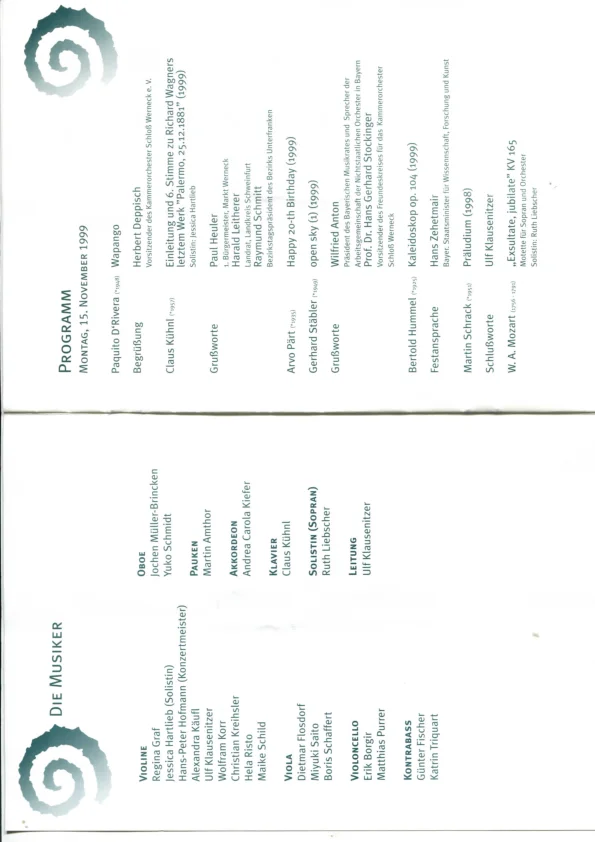
Kaleidoscope for strings (op. 104, 1999)
I. Adagio, II. Allegro ma non troppo, III. Sostenuto, IV. Tempo di Tango, V. Passacaglia, VI. Choral, VII. Presto
Strings (4/4/2/2/1)
Duration: 13 minutes
Kammerorchester Schloss Werneck | Ulf Klausenitzer
Title: Kaleidoscope for strings
Length: 51 pages
Dating: I. - II. - III. - IV. - V. - VI. 10.3.99, VII. 3.3.99 Punto Hidalgo
Location: Bavarian State Library Munich
Vogt & Fritz (score and parts, purchase material!) M 2026-1824-0
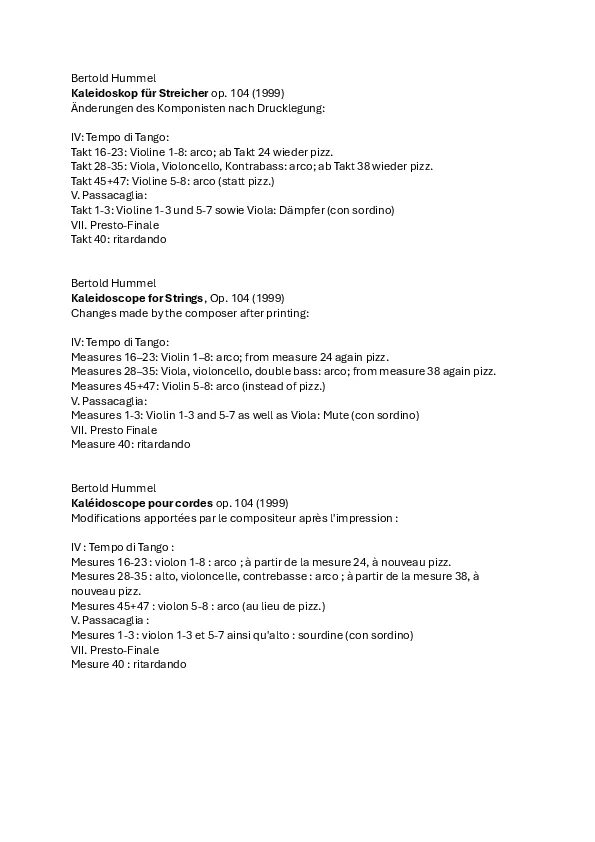

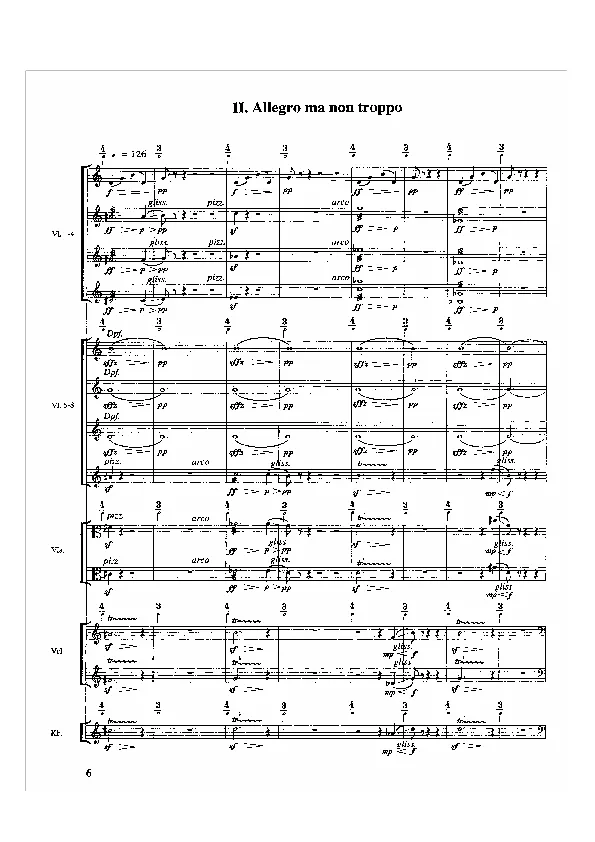
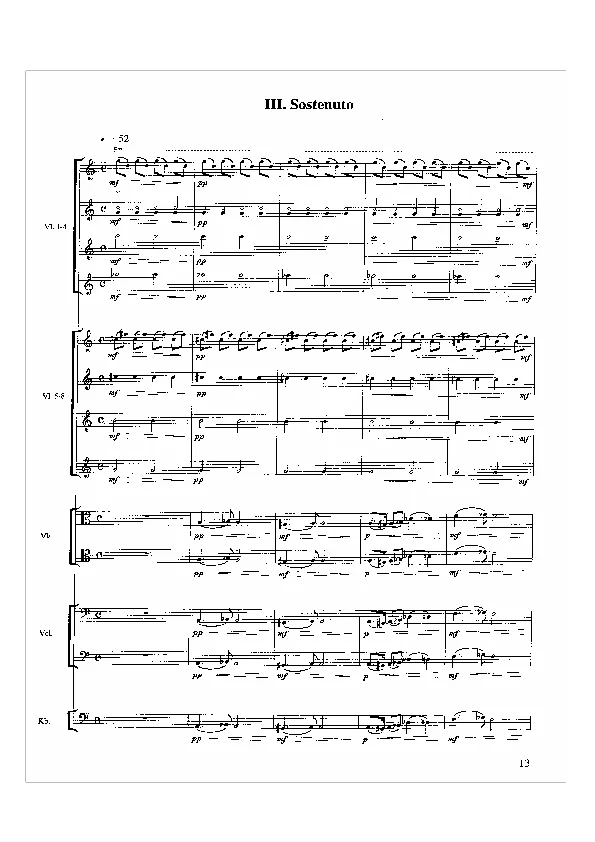
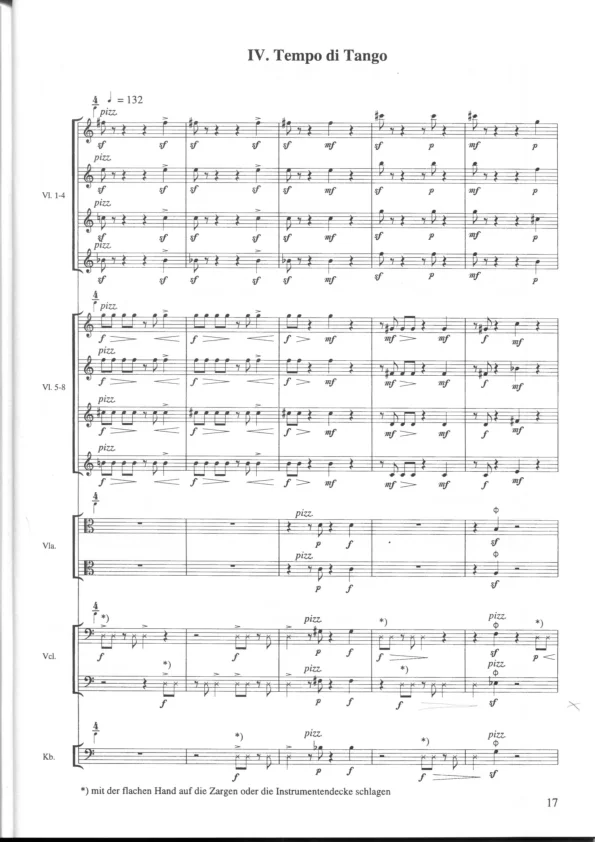
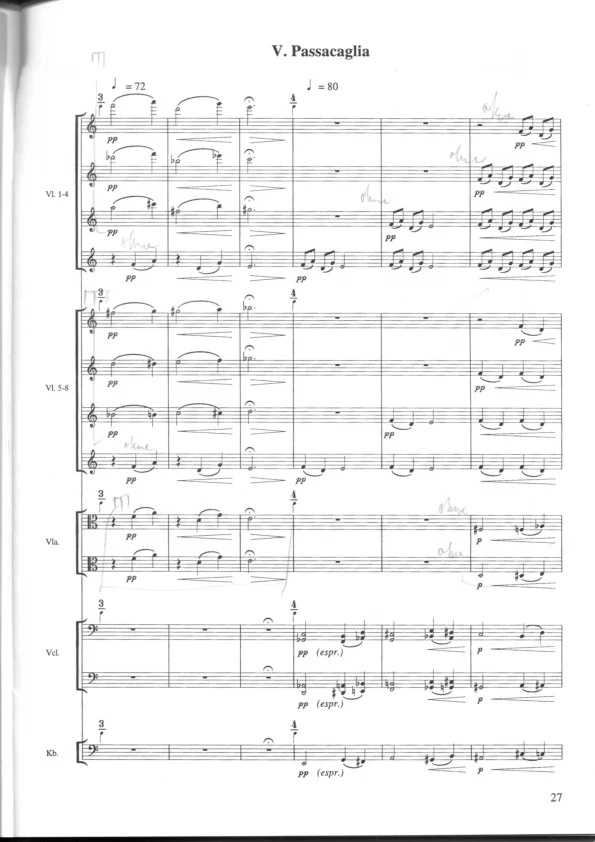
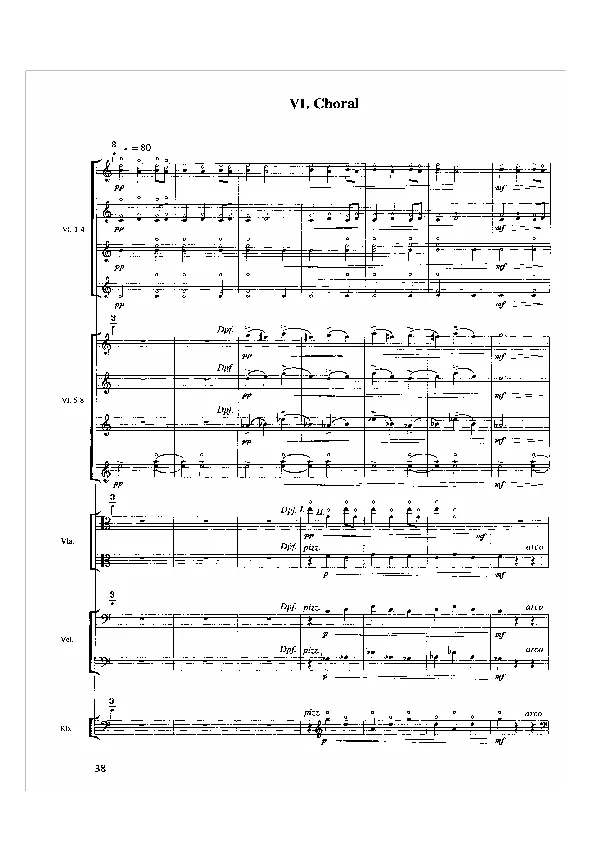
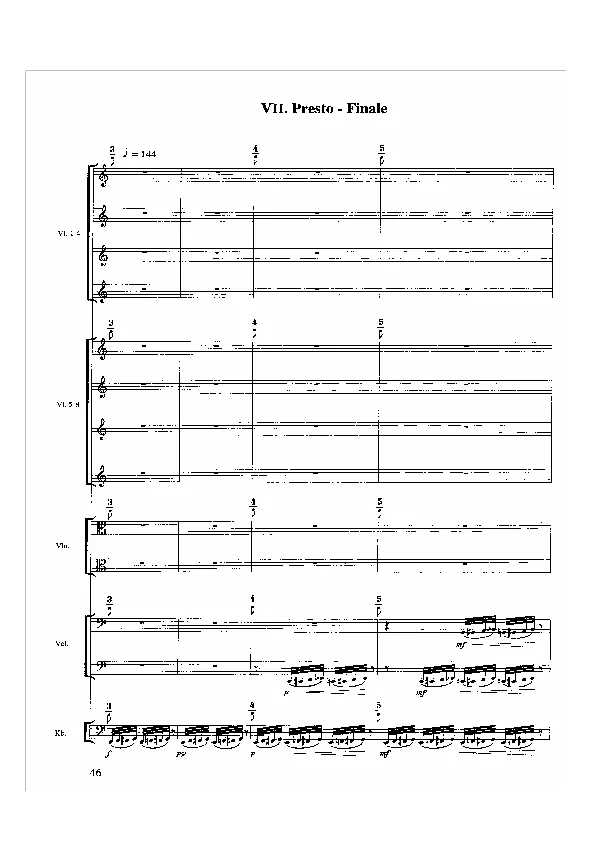

Hummel chose a strict, seven-movement form for this piece. As in a round dance of sound, a "figure/idea" is developed, realised, commented on and varied in each movement. From the Adagio of the first movement, through the Passacaglia and chorale to the Presto of the last movement, the result is a very cohesive, finely nuanced and self-contained work.
Hartfried Kaschmieder




In seven short movements, the respective source material is realised in a fanned-out string section (4/4/2/2/1) in accordance with the title. Sections entirely focussed on sound are contrasted with rhythmically structured sequences.
Bertold Hummel
In 7 movements, an attempt is made to translate the title into musical structures.
1) Adagio: a gradually built-up 12-note chord, which is repeated in third transposition at the end of the movement, provides the framework for the layering of sounds in the smallest of spaces.
to 2.) Allegro ma non troppo: a G major sound (in a six-four chord) is present throughout the somewhat burlesque movement and is harmonically and rhythmically commented on by extraneous sounds and clouding.
3.) Sostenuto: a "symphonic" gesture undergoes a brief development, which is increasingly lost in the course of the movement.
4.) Tempo di Tango: rhythmic pizzicati and percussive effects are interrupted twice by vital tango episodes and lead to a surprising conclusion.
5.) In the passacaglia, the supertitle is most evident: constant changes over a constant sequence of notes.
3) Chorale: various rhythmic sound foils run side by side, accompanied by a chorale gesture 5 times.
7) Presto: a restless, chromatic 4-note sequence dominates the final movement - interrupted twice by a lyrical insertion.
The work was commissioned by the Kammerorchester Schloss Werneck in 1999.
Bertold Hummel