Trio for clarinet, viola and piano (op. 76a, 1981)

for my son Florian
I. Introduktion, II. Allegro molto, III. Fantasia, IV. Finale - Presto
Clarinet, viola, piano
Duration: 20 minutes
Rüdiger Warnecke | Florian Hummel | Wendelin Treutlein
Title: Trio for clarinet, viola and piano op. 76 - Length: 40 pages - Date: I. - II. 8 June 81 III. 11 July 81 IV. 15 Aug. 81 - Location: Bayerische Staatsbibliothek Munich
Schott Music ED 20295 / ISMN: M-001-15000-2
Printing error in the viola part: 1st movement, bar 6, 1st note should be b instead of b!
First edition: J. Schuberth & Co., Hamburg 1986
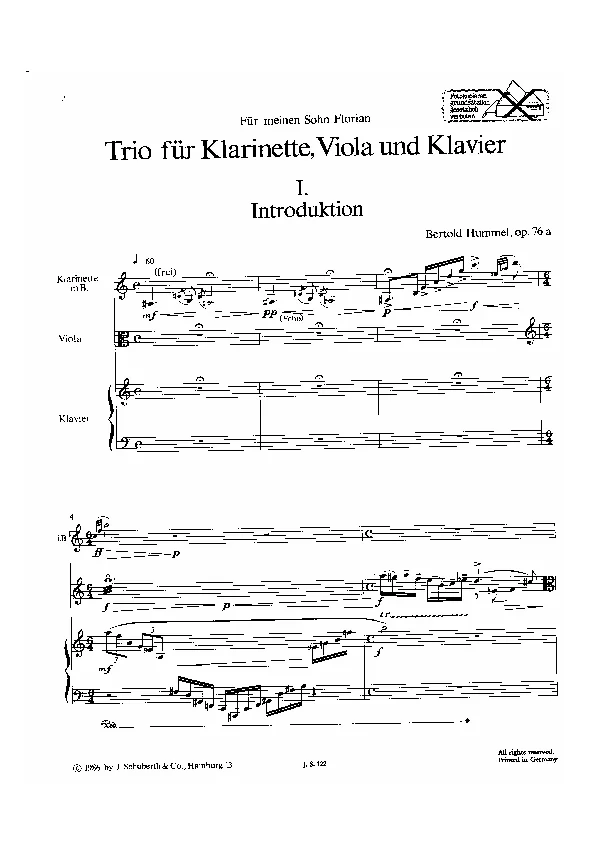
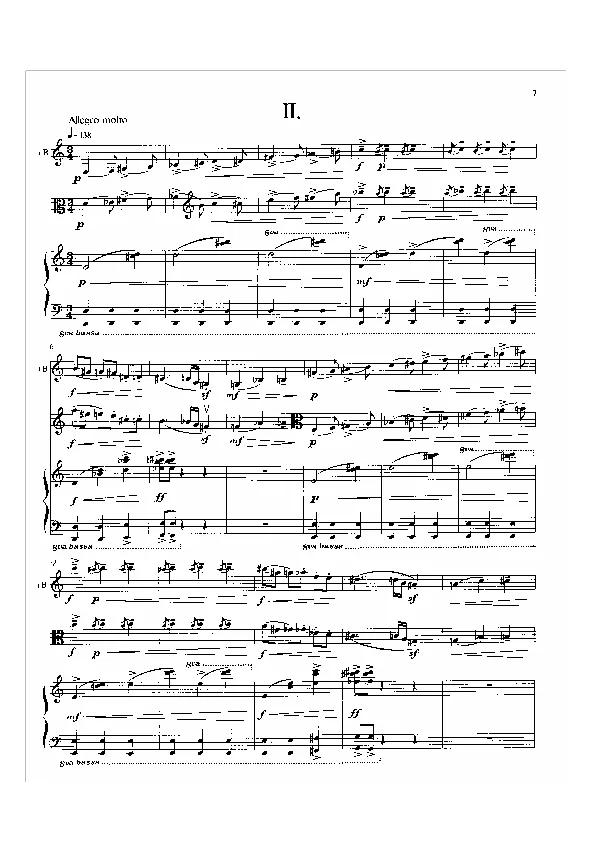
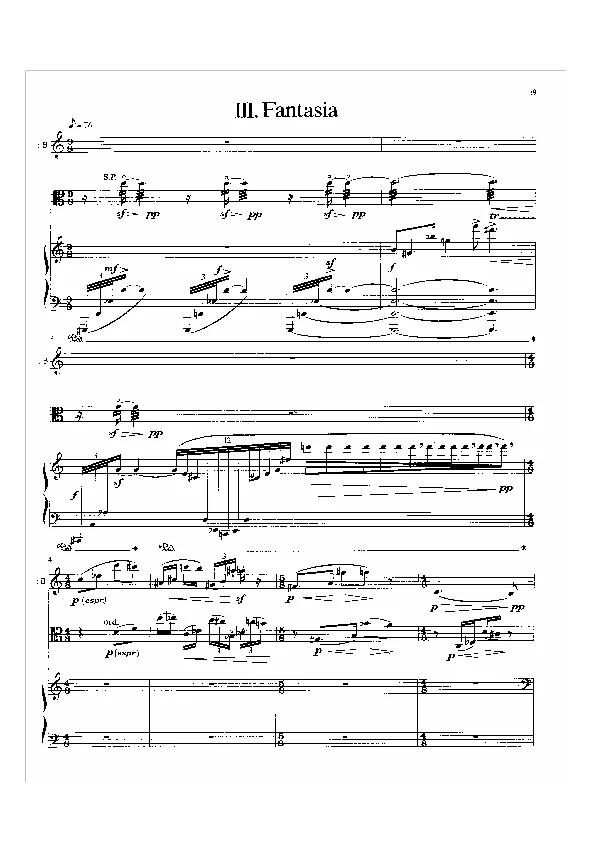
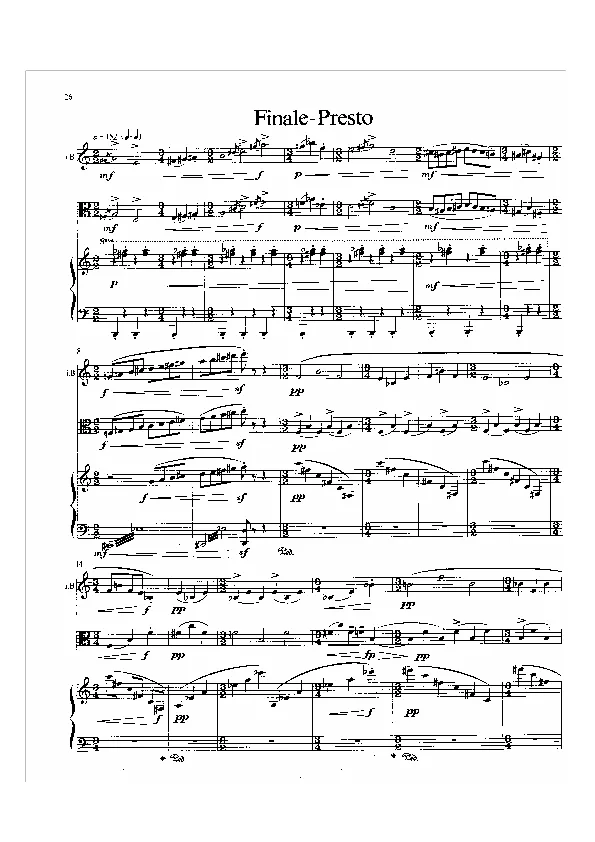

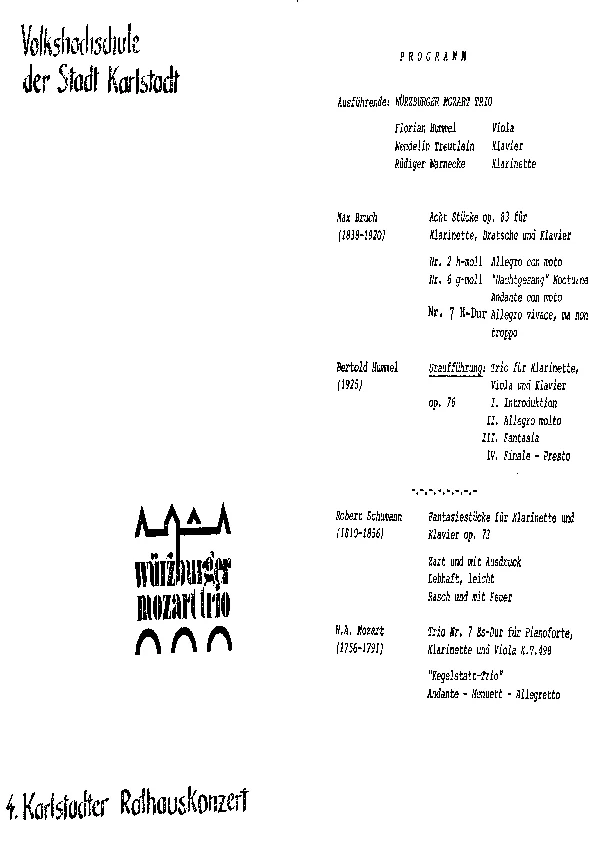
The clarinet introduces the Introduction as a soloist. The rhythmically strong Allegro molto is followed by the Fantasia, which offers free interpretation and shows successful adaptation in the ensemble playing. In the jokingly animated finale, which contains repeated calming phases, each artist has the opportunity to play solo music.
The highlight, however, was the premiere of opus 76, which Bertold Hummel composed especially for this trio just a few weeks ago. In this work for clarinet, viola and piano, the composer lives up to his name. From exciting to threatening and dramatic, this music reaches the listener's ear right up to the spirited finale, who, according to Hummel, should not just listen, but join in. The composer wanted to find access to the audience, to communicate with them through his music, and he succeeded, as the applause finally showed.
... a predominantly free-tonal composition with a great variety of forms and a sensuous expressiveness of sound.




The Trio for clarinet, viola and piano op. 76a is written in a concertante style, i.e. it gives the three instrumentalists ample opportunity to showcase the tonal and technical possibilities of their instruments.
The introductory 1st movement begins with a recitative-like solo by the clarinet, which is continued by the viola until all 3 instruments "enter into dialogue" with each other. Easily recognisable short motifs and 12-note chordal structures consisting of superimposed major and minor tones create the form.
The Allegro molto (2nd movement) is dominated by upward - and forward - pushing, syncopated melodies, which are sustained by throbbing basses. A calm middle section structures and provides relaxation for a short time. The whirling 3/4 metre of the beginning is immediately taken up again. The movement fades away in the outermost pp.
The Fantasia (3rd movement) is based on a 4-note sequence, which determines both chordally and melodically a sequential form with its manifold, sometimes meditative metamorphoses.
In the turbulent final movement, which incorporates a variable metre in a very dance-like manner, a calming fugato insertion is heard twice as a contrast. The movement elements are progressively linked more and more. An effective coda concludes this catchy and "serene" opus.
Bertold Hummel 21.11.1989