Frescoes 70 for percussion quartet (op. 38, 1970)
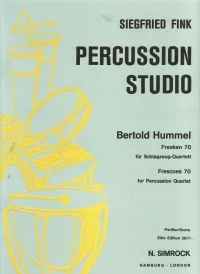
I. Introduction, II. Counterpoint, III. Rubato, IV. Polymetry, V. Final conclusion
Percussion quartet
Duration: 12 minutes
Percussion ensemble of the Bavarian State Conservatory Würzburg / Siegfried Fink
N. Simrock Hamburg-London (Boosey & Hawkes)
Score: ISMN M-2211-0737-4
Parts: ISMN M-2211-0738-1
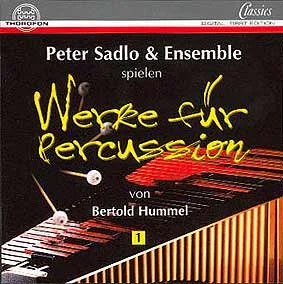
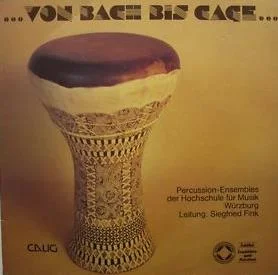
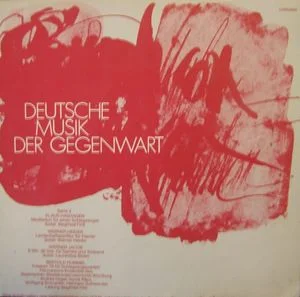
Unique in its richness of colour and rhythm, Hummel's "Fresken 70" cycle was the pinnacle of these 90 minutes. Comparable to a sum of contemporary percussion music, the joy of experimentation and the satisfaction of sound go hand in hand here, the players' tasks crescendo into orchestral togetherness, an enthusiasm blows through the church that is otherwise absent from the avant-garde due to its doggedness.
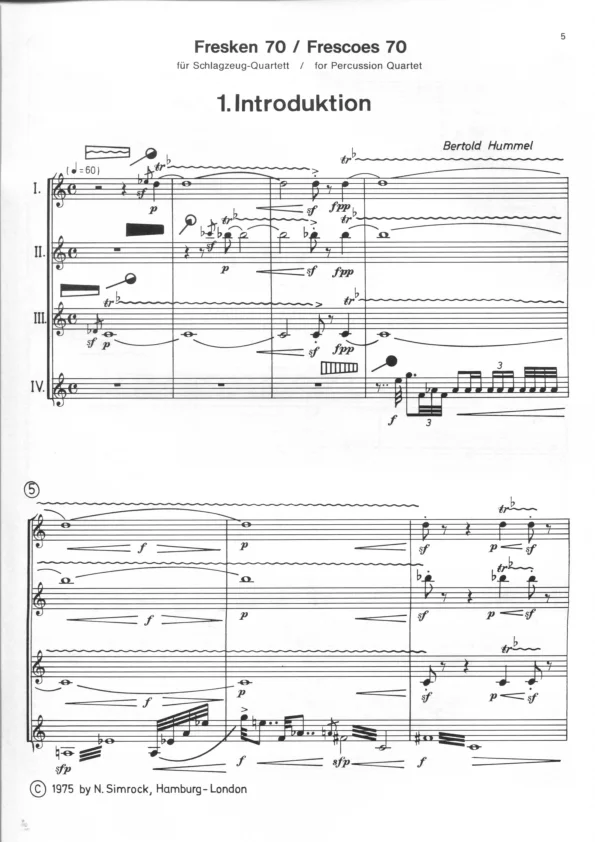
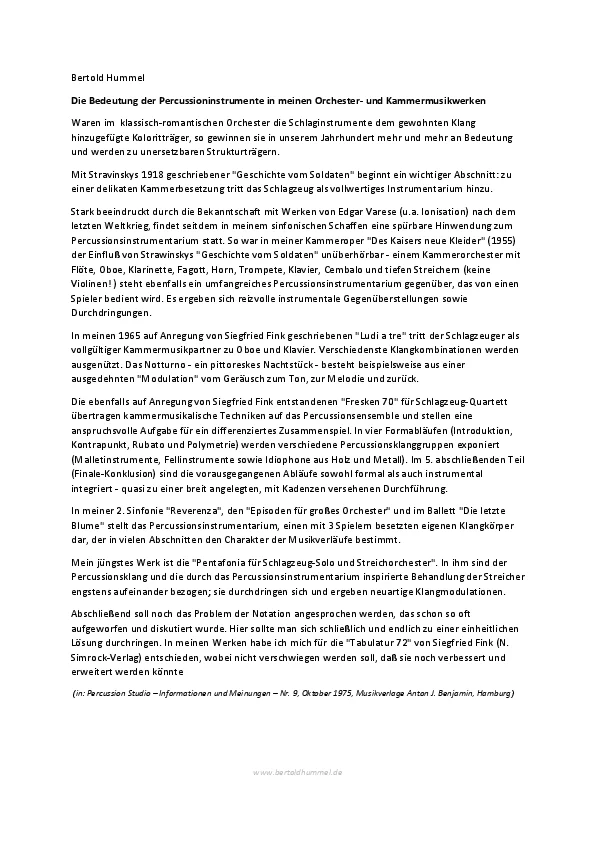
Fresken 70 proves to be comprehensible, superb-sounding, richly varied playing music. The composer wisely restricts himself to concise, uncluttered forms in order to extract colour and graphic possibilities from the large percussion arsenal. The introduction, interspersed with imitative episodes and opened by "chordal columns", the linearly legitimised detonations of the counterpoint, the magical-expressive moments of the rubato, the picturesque developments of the polymetry and the contrasts of the conclusion arising from the instrumental characters harbour brilliant effects alongside high technical demands, which were played out by the four players Amthor, Ort, Römer and Schneider with a somnambulistic certainty of pointing and interaction.
The sensuality in Bertold Hummel's "Frescoes 70" really does come out "al fresco".
Hummel succeeds astonishingly in transferring chamber music playing and expression to the percussion instruments and creating pointed, colourful pieces that grow out of the xylophone-vibraphone trill.
In his "Fresken 70", Hummel presents the most important sound materials of the percussion in sequence and together at the end; an educational work in the best sense, especially for the listener, which was brilliantly and percussively played in the last movement, enriched with virtuoso solo cadenzas.
Bertold Hummel's "Fresken 70" for percussion quartet was characterised by an extreme dynamic range, which, with its numerous trills, glissandi and extremely extended volume contrasts, placed high demands on the instrumentalists, especially in the Far Eastern-sounding concluding section entitled "Konklusion".
In the unconventional sound aesthetics of this five-movement tonal work, the quartet skilfully realised clearly and logically structured sound mixtures, which came to a grandiose conclusion in the last movement. The mixtures of sounds could already be described as melodies, and the sophisticated polythymics developed into rhythmic counterpoint.
Literature list of the German Music Council for the competition "Jugend musiziert": Difficulty level 4/ difficult (intermediate level II)




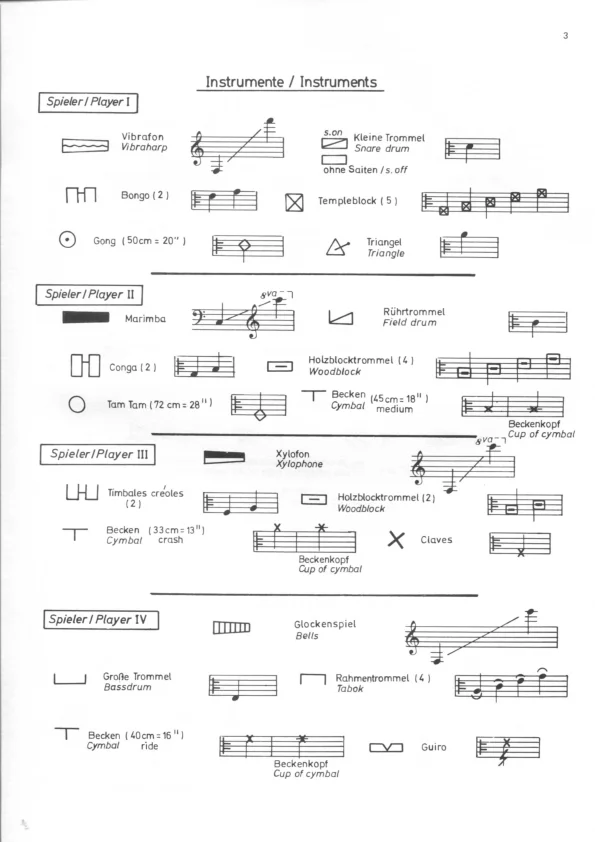
The work, written in 1970, attempts to transfer chamber music thinking to percussion instruments. Each of the four players plays a mallet instrument, as well as a limited number of skin instruments and selected, harmonised idiophones made of wood and metal.
In the first movement (introduction), only mallets are heard: vibraphone, marimba, xylophone and glockenspiel. Each of the four instruments is given the opportunity to introduce itself.
In the 2nd movement (counterpoint), only skin instruments are introduced at first. Wood idiophones are added in the middle section. The following four-part canon is heard in unison, leading into an organ point. A short recapitulation of the fur instruments - interrupted by the canon's theme head - concludes the movement.
In the rubato (3rd movement), mallet and wood idiophones are joined for the first time by metal idiophones. This movement is characterised by tonal surfaces and short motivic constrictions.
In Polymetrie (4th movement), three differently structured rhythmic models are superimposed (skin, wood and metal idiophones) and dynamically contrasted. Above this is a vibraphone solo with a tendency to increase. Having reached its climax, the solo breaks off, the polymetric "back-ground" dissolves and evaporates.
The 5th movement (final conclusion) brings the entire instrumentation together. A bell-like "motto" structures the rondo movement, which is interrupted by cadenzas (vibraphone and marimba). This movement can also be interpreted as a realisation of the ideas that appear throughout.
Bertold Hummel
Perhaps you will be pleased to hear that I have utilised some of your polymetry system's suggestions in my work "Fresken 70" for percussion quartet.
Bertold Hummel (in a letter to his friend and jazz musician Marion Brown on 5 February 1971)
In May 1981, Bertold Hummel wrote to his friend and conductor Günther Wich that he could also imagine his Fresken 70, op. 38 in a choreographed interpretation.