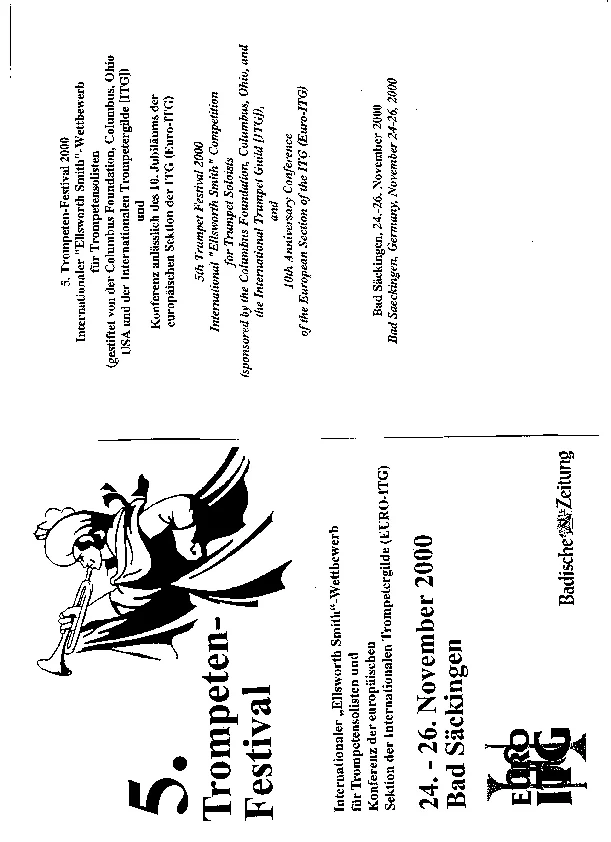
Säckingen (op. 103f, 2000)
Music for 6 trumpets and timpani (+rivet cymbals)
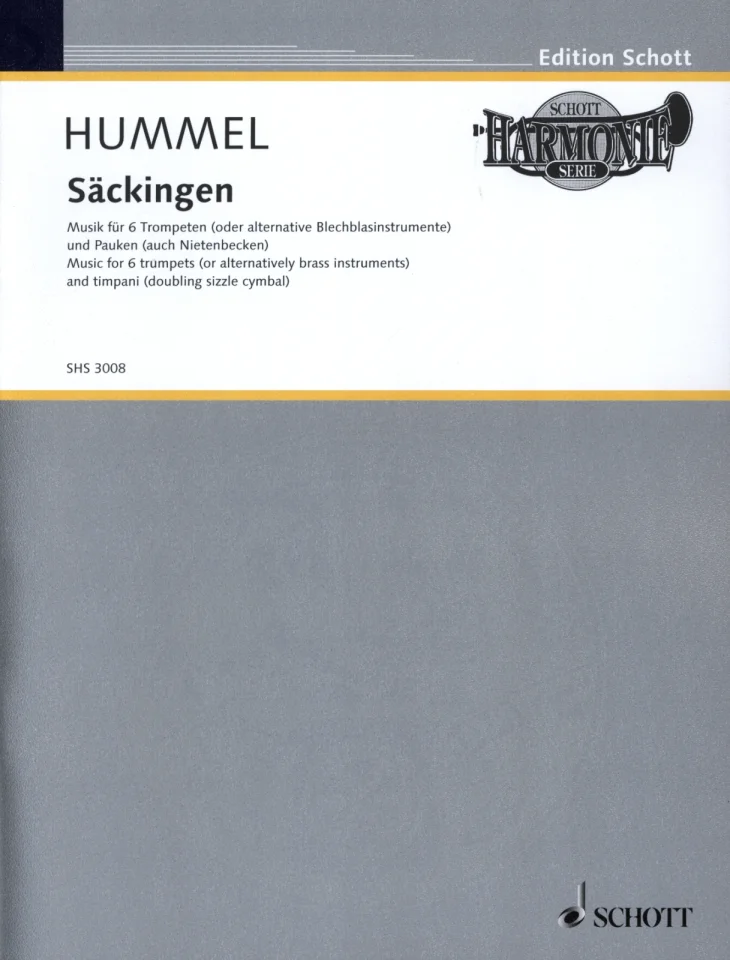
Dedicated to Richard Carson Steuart
I. Allegro, II. Choral, III. Paraphrase
1st part: piccolo trumpet in B flat, 2nd part: trumpet in E flat (or trumpet in B flat), 3rd part: trumpet in B flat, 4th part: trumpet in B flat (or French horn in F), 5th part: bass trumpet in B flat (or horn in F or alto trombone), 6th part: bass trumpet in C (or bass trumpet in B flat or horn in F or tenor trombone), timpani (+ rivet cymbals)
Duration: 8 minutes
Richard Carson Steuart | Peter Lawrence | Matthias Schäfer | Knut Johmann | Christy Belicki | Edward H. Tarr | Marc-Andreas Gieseke
Title: "Säckingen" Music for 6 tompets and timpani (+ rivet cymbal) - Length: 12 pages - Dated: I. 26.8.00 / II. 26.8.00 / III. 30 8.2000 - Location:
Schott Music score SHS 3008 / ISMN: 979-0-001-17221-9, parts: SHS 3008-70 / ISMN: 979-0-001-17222-6
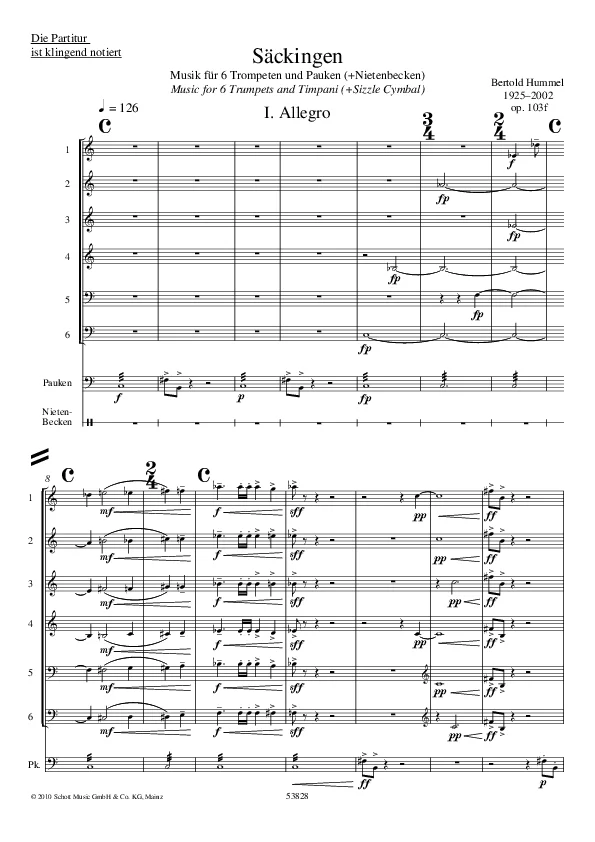
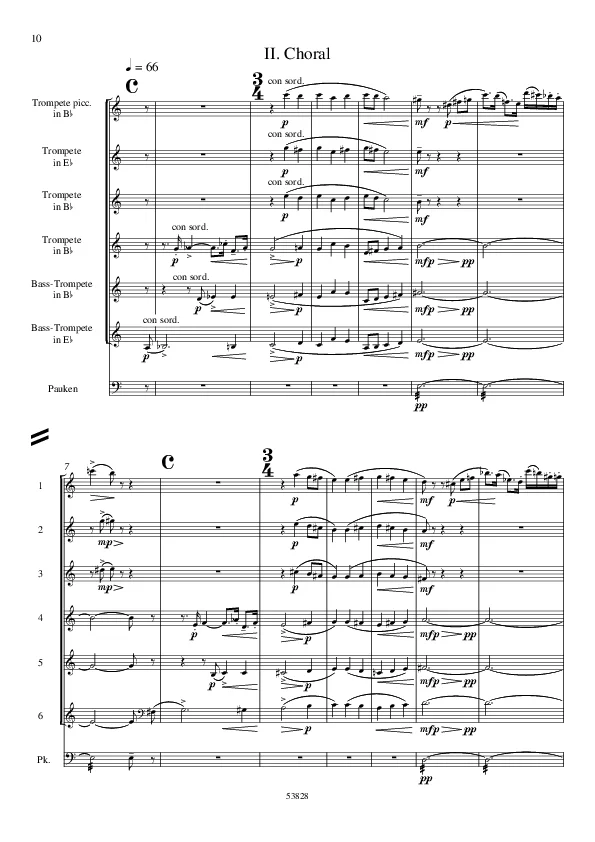
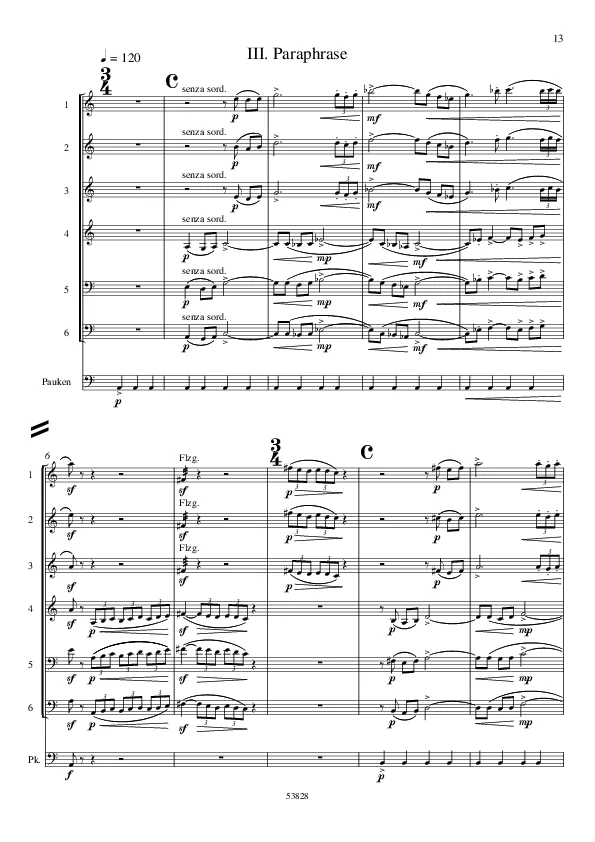
(...) Reading the music, recognising the melodic lines - Hummel was a great melodist - and the structural forms are simply a joy.
The technical demands are high, but not extreme. It is more likely to be difficult to arrange the instruments in the sense of the original score: one piccolo trumpet, one E flat trumpet, two B flat trumpets, one bass trumpet in B flat, one bass trumpet in C. This instrumentation should certainly be a rewarding task for music academies. The formation can also vary, e.g. with horn, alto trombone, tenor trombone, which is certainly what the composer intended.
Peter Hoefs




Säckingen is a three-part work for six trumpets: from bass trumpet to piccolo trumpet and timpani. It is dedicated to Richard Carson Steuart. The three sections of the work denote exactly the opposite sequence of movements. In the first movement (Allegro), a deliberate use of chromaticism is coupled with trilled passages to contrast with new accentuated antiphonal rhythmic interjections. An echo of Luther's "Ein feste Burg ist unser Gott" can be sensed in the second movement (chorale) through the partly sustained and partly architectural rhythmic theme. In the last movement (paraphrase), a well-known, this time modern melody is quoted and rhythmically and harmonically dissected, only to be brought together again in the rapid run-up to the dramatic ending.
Bertold Hummel