Wind quintet (op. 22, 1961)
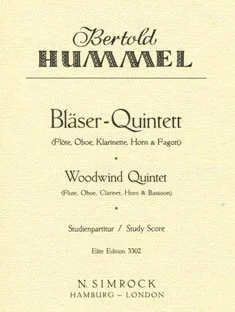
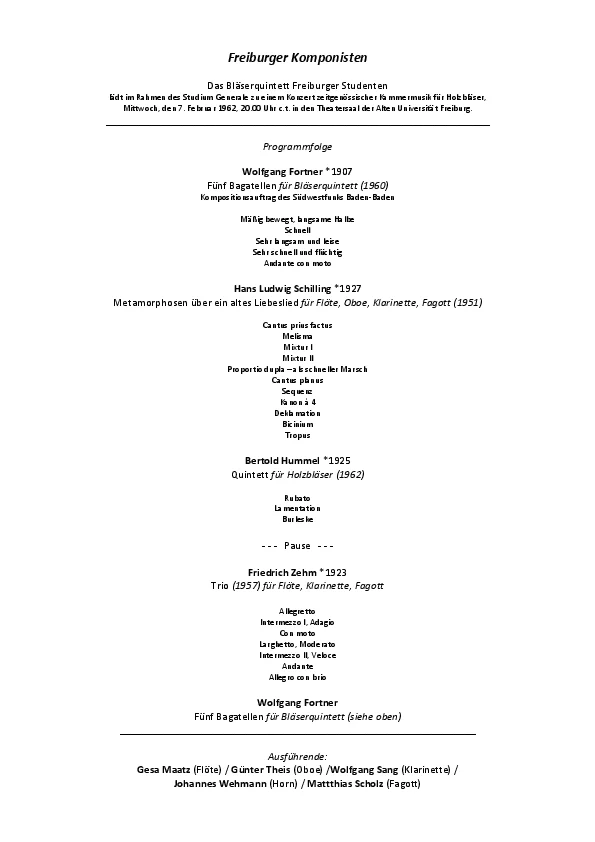
I. Rubato, II. Lamentation, III. Burlesque
Flute, oboe, clarinet in Bb, horn in F, bassoon
Duration: 12 minutes
Gesa Maatz | Günter Theis | Wolfgang Sang | Johannes Wehmann | Matthias Scholz
N. Simrock Hamburg-London (Boosey & Hawkes)
Pocket score: ISMN M-2211-1289-7
Parts: ISMN M-2211-1225-5
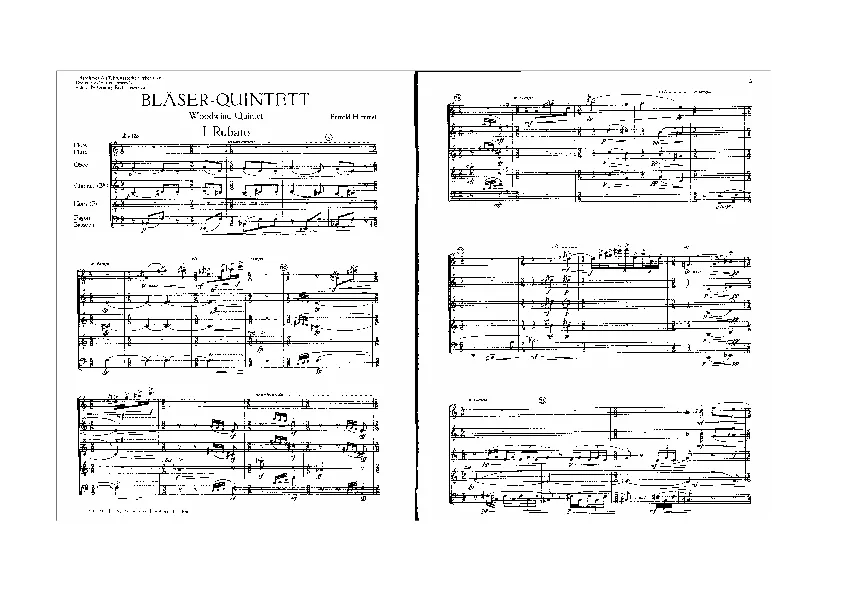
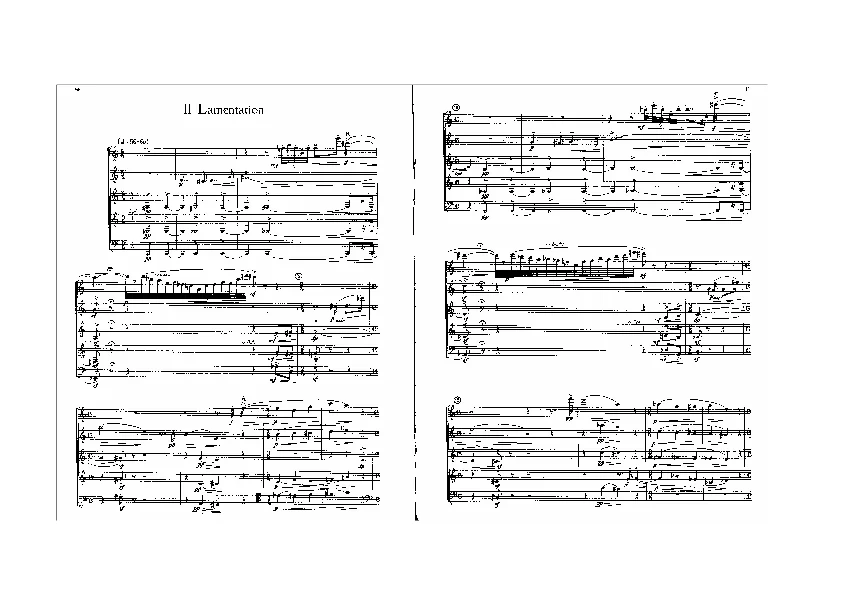
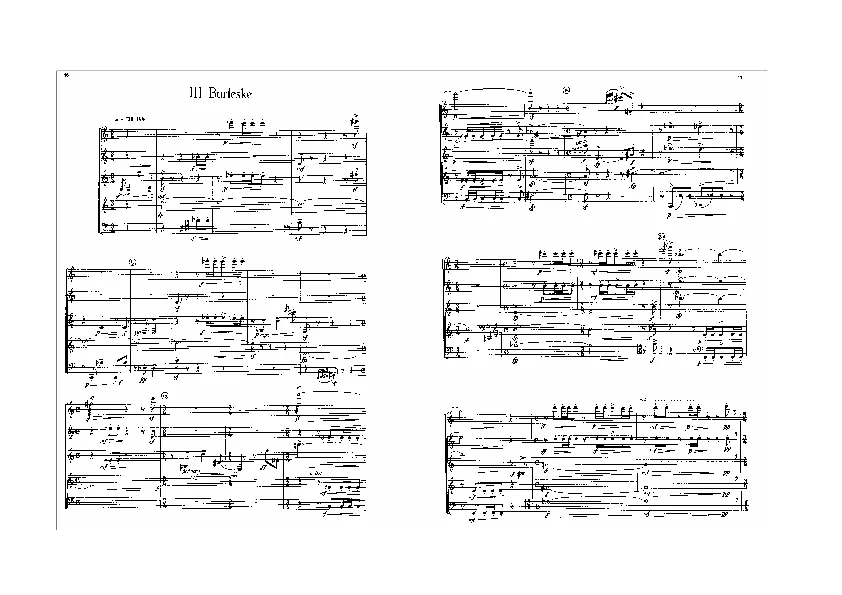

Hummel has - again or still - the courage to make a personal statement, and he is right to do so at a time when music has already begun to lose "its face". His winds play with a noble sense of sound, indeed with feeling, in the quintet, which does not deny its classical structure, except for the concluding "Burleske", which is twelve-tone, but if the ear is not mistaken, belongs to the whole of the work, could perhaps also be meant parodistically - that would also be a gain!
In his wind quintet, Hummel tends towards the grotesque, which nevertheless comes across as graceful, honest and bright. It amuses and is likeable at the same time.




The Wind Quintet op. 22 opens the three-movement work with a rubato, whereby the unpredictability of the free-flowing design is mainly evident in the constant changes of metre. From time to time, some of the five wind players break free from the dense tutti blocks to play rhapsodic solo lines with ingratiating melodies. This kind of dialectical tension between the collective and the individual continues in the second movement, a lamentation of haunting effect, which closes with an open gesture and gives way to a burlesque where the giggling, whimsical valeurs of the winds come into their own.
Klaus Hinrich Stahmer (in "Kammermusik als persönliches Bekenntnis" Tutzing 1998)
During the conception of the Wind Quintet op. 22, Bertold Hummel composed an additional movement which he did not want to integrate into the complete work for formal reasons. Shortly before his death, he wrote the existing parts with slight changes in a new score and called the piece Intermezzo.