Due a due for soprano saxophone in B flat and percussion (op. 88a, 1987)
Instrumentation
Percussion (one player): vibraphone, marimba, cymbals
Duration: 8 minutes
Premiere
30 September 1987,
Rimovski (Canada), Salle Georges-Beaulieu
Normand Deschênes | Mark Lutz
Publisher
Schott Music ADV 7039 / ISMN: 979-0-2063-0690-7
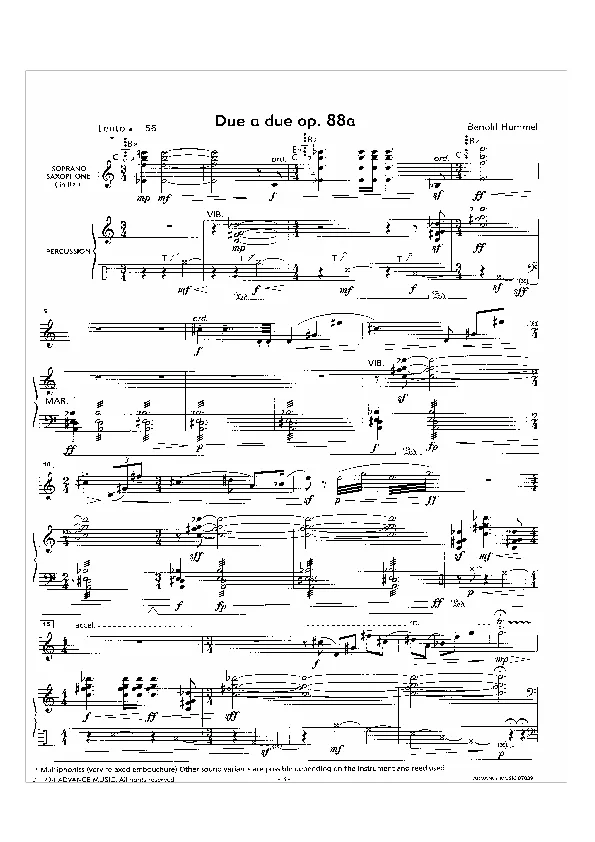
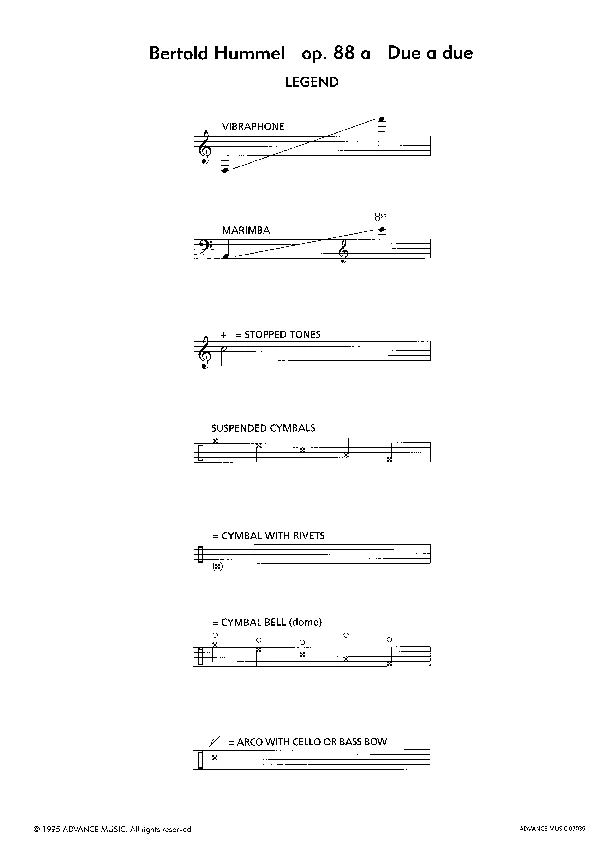
Op. 88a Percussion Tablature
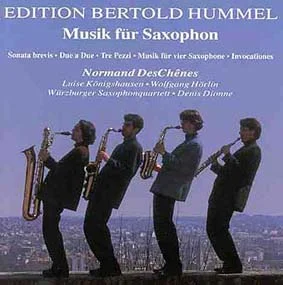
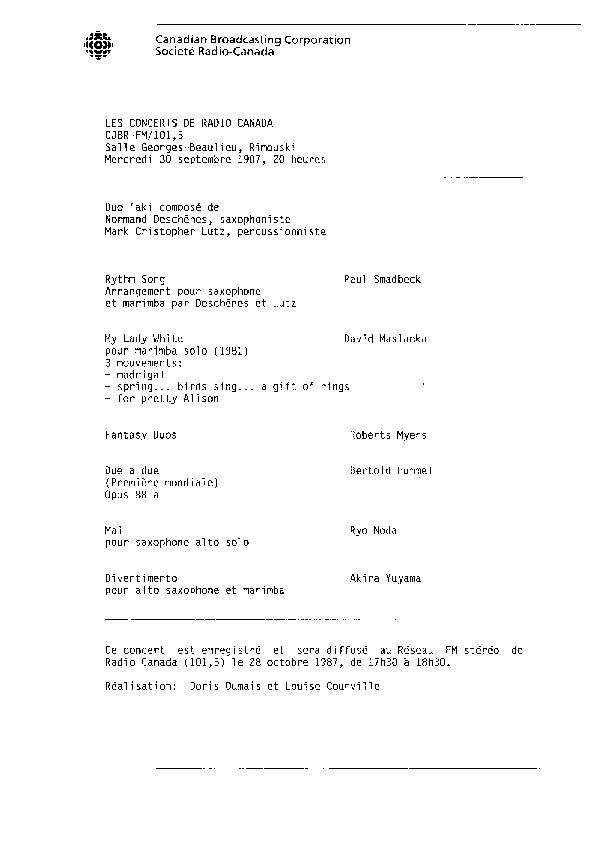
Programme for the world premiere of Op. 88a
Literature list of the German Music Council for the "Jugend musiziert" competition:
Level of difficulty 4 and 5 / difficult - very difficult (intermediate level II - advanced level)




The large-scale form of the one-movement work is in seven parts. A slow introduction begins with multiphonics from the saxophone and cymbal sounds, which are struck with a double bass bow. Vibraphone and marimba provide the chordal foundation for a fanfare-like invocation by the saxophone. The subsequent Allegro is characterised by an ostinato sequence of notes in the marimba, derived from the chords of the introduction; above this, the saxophone develops a jazz-influenced gesture based on a four-note sequence. The structural elements are processed in a cadenza-like section, followed by an arioso passage which, over softly throbbing sounds, finally leads to a climax with the B-A-C-H (B flat - A - C - B) quote in the saxophone. The cadenza continues again. Slap in the saxophone and stopped notes in the vibraphone and marimba open up new tonal possibilities for discussion; the building elements are played off against each other in loose succession. At the end of this second cadenza, the B-A-C-H (B flat - A - C - B) quote appears again in the saxophone. A varied reprise of the first Allegro section leads to a swan song that takes up the mood of the introduction, whereby the four-note sequence of the Allegro is clearly taken into account. The work ends in pianissimo with a third tone that remains suspended until the end.
Bertold Hummel