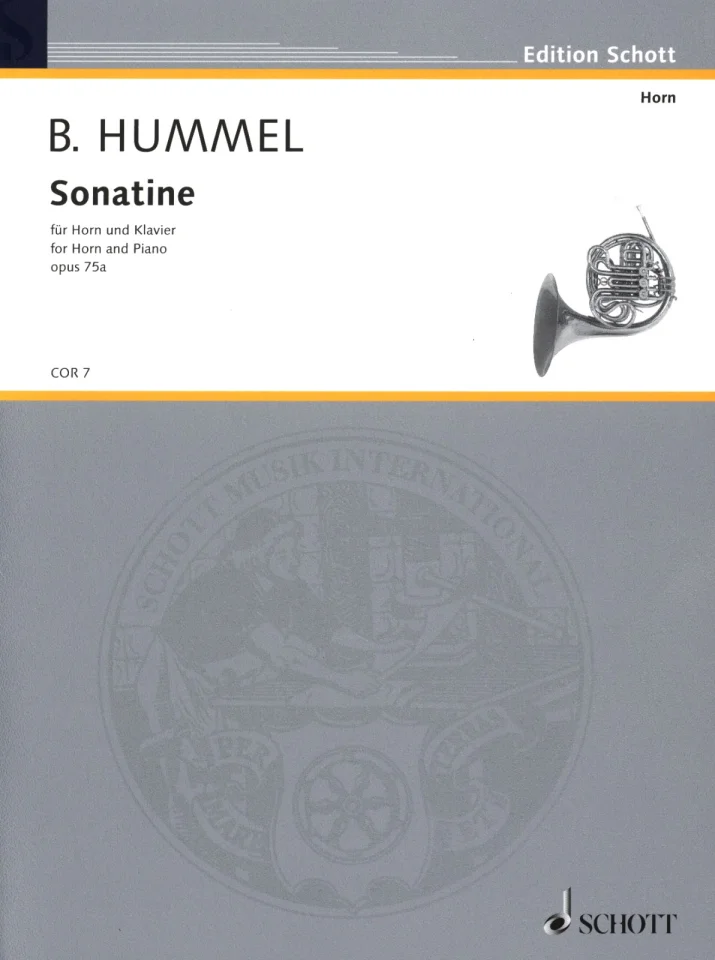
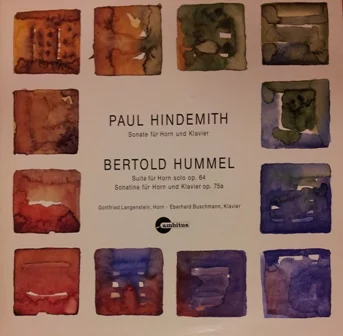
Sonatina for horn and piano (op. 75a, 1981)
Movement titles
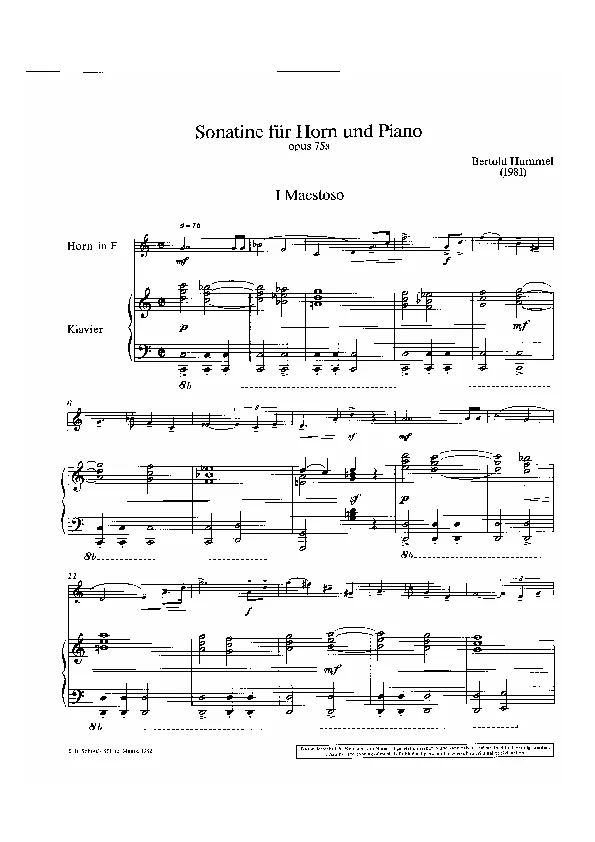
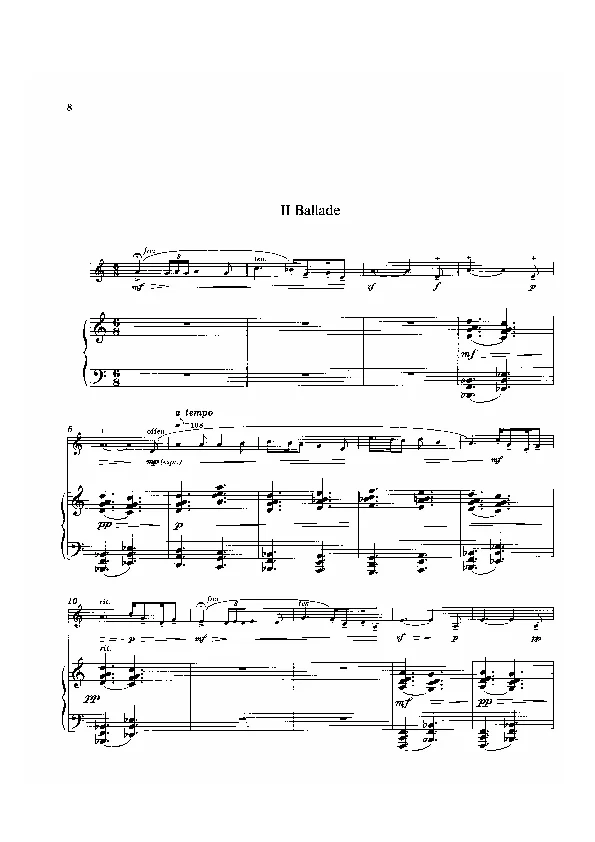
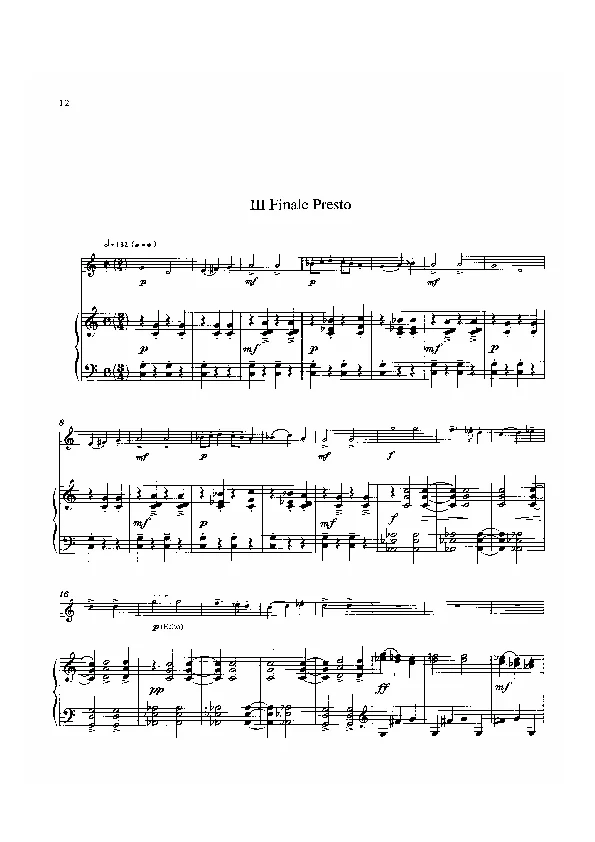
I. Maestoso, II. Ballade, III. Presto Finale
Instrumentation
Horn in F, piano
Duration: 10 minutes
Premiere
29 August 1981,
Kusatsu (Japan)
Autograph
Title: Sonatina for horn and piano - Length: 18 pages - Date: I. 14.2.81 II. 21.2.81 III. 2 March 81 - Location: Bayerische Staatsbibliothek Munich
Publisher
Schott Music COR 7, ISMN: M-001-02518-8
Printing error: Horn single part: page 7, bar 119: Instead of f sharp'-g sharp', g sharp'-ais' must be played.
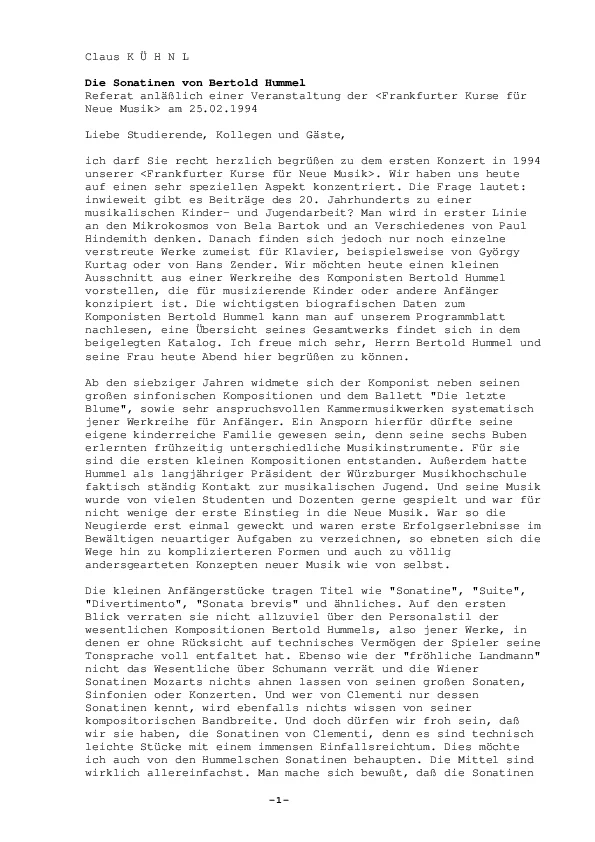
C. Kühnl: The Sonatinas of Bertold Hummel
Literature list of the German Music Council for the competition "Jugend musiziert":
Difficulty level 4/ difficult (intermediate level II)




The Sonatina for horn and piano op. 75a was written in 1981 with the intention of offering aspiring horn players a musically appealing performance piece. In 3 movements, the soloist has many opportunities to demonstrate technique and good musical organisation.
The 1st movement (Maestoso) utilises strict processing technique in the classical sense. Two motifs are derived from the main theme and passed from instrument to instrument in separate developments. However, the technique only appears to be a means to an end, to fill the larger formal organism with life. Freely spun out in its flowing melody, the balladesque middle movement allows players and listeners to recover from the rigour of the motivic-thematic work in the first movement, before the final movement (Presto) - a burlesque rondo with interspersed couplet sections - rhythmically provides some pleasurable turbulence.
The work was premiered in Japan in 1982.
Bertold Hummel
In contrast, Hummel's Sonatina for horn and piano (Suite for horn solo op. 64), composed in 1981 and premiered in Japan in 1982, is much stricter in its processing technique, especially in the opening movement, which is modelled on Mozart's "Hunting Sonata" (Hummel). Two motifs are derived from the opening theme and "passed on" from instrument to instrument in separate developments. And yet here, too, the technique appears only as a means to an end, to fill the larger formal organism with life. Freely spun out in its lively melody, the balladesque middle movement allows players and listeners a kind of respite from the rigour of the motivic-thematic work in the first movement, before the final movement - ingenious in its sequence of rondo-like recurring sections and interspersed couplet sections - leads back to the rigour of the work.
Klaus-Hinrich Stahmer
My choice of the Hummel Sonatina began with the fact that I wanted to juxtapose the familiar Mozart horn concertos with a concert piece from classical modernism. The Hummel Sonatina immediately appealed to me the first time I played it, both in terms of each individual movement and the complexity of the work. The grace and pride of the first movement combined with interesting tonal colours, then the intimate ballad, which is such a convincing and expressive piece in its own right, and "last but not least" the virtuoso finale, which is also energetically linked to the first movement. It is a compositionally successful piece that is incredibly enjoyable to play and offers the listener plenty of variety and surprises.
Jonathan Krah (in the special brochure WESPE - Jugend musiziert, Lübeck 2018)