Invocationes for soprano saxophone in Bb and organ (op. 68b, 1978)
Movement titles
I. De profundis, II. In te domine speravi, III. Non confundar in aeternum
Instrumentation
Soprano saxophone in Bb, organ
Duration: 22 minutes
Premiere
30 April 1995,
Chelm, Parish Church of the Holy Apostles
Andrzej Rzymkowski | Robert Brodacki
Publisher
Schott Musik International ED 6814 ISMN 979-0-001-07227-4
Soprano Saxophone Voice ED 6814-01 ISMN 979-0-001-11489-9
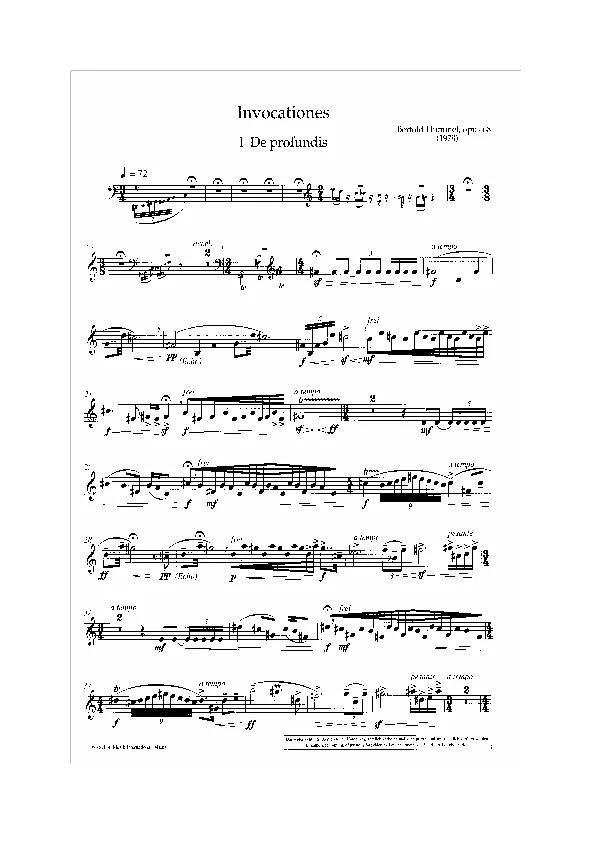
Saxophone part (I. De profundis)
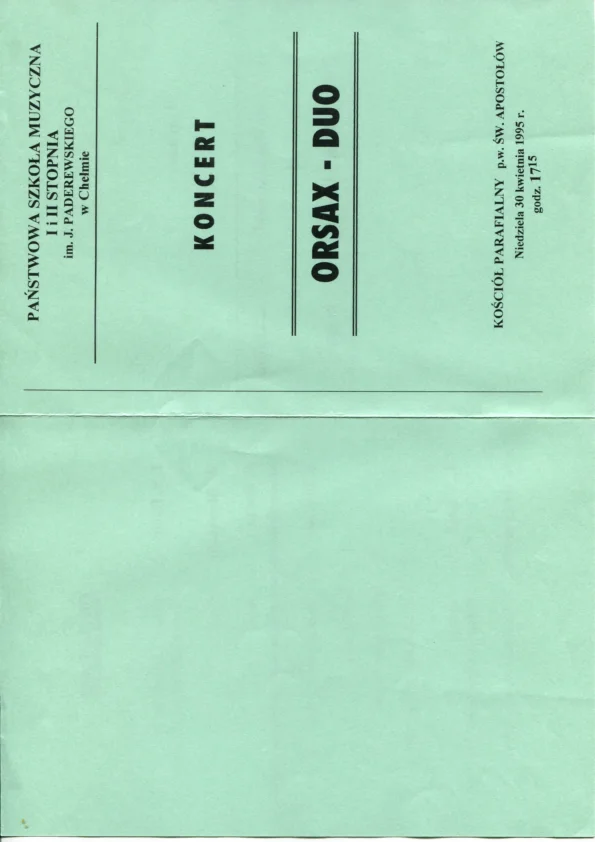
Programme for the world premiere of Op. 68b




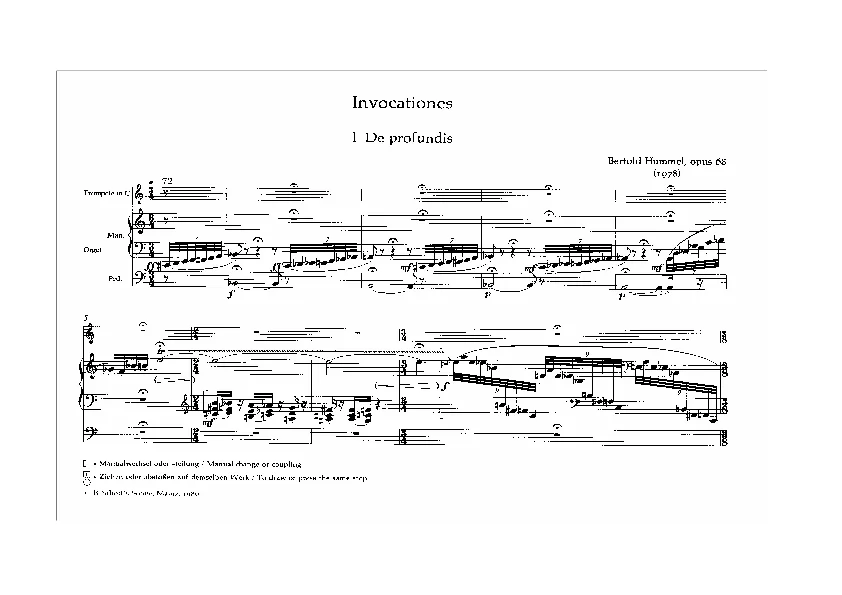
"De profundis", the first of the three "Invocationes " (invocations), is based on the chorale "Aus tiefer Not schrei' ich zu dir" (from deep distress I cry to you ) (after the psalm "Aus der Tiefe rufe ich, Herr, zu dir"). The organ introduction expresses the "De profundis" ("From the depths") by descending twice from Bb to A and an organ point on E as a trill in the pedal. After fanfare-like, accelerating tone repetitions, the solo instrument intones a motif formed from the beginning of the chorale melody and lets it resonate as an echo before continuing freely in a cadenza-like manner. After the organ part has also increased to ever more virtuosic passages, the saxophone performs the complete chorale melody (freely declamatory), lets it fade away very calmly by repeating the three final notes twice and then, together with the organ, begins a great final intensification which culminates in a triple forte with a brilliant tremolo (fluttering tongue of the saxophone).
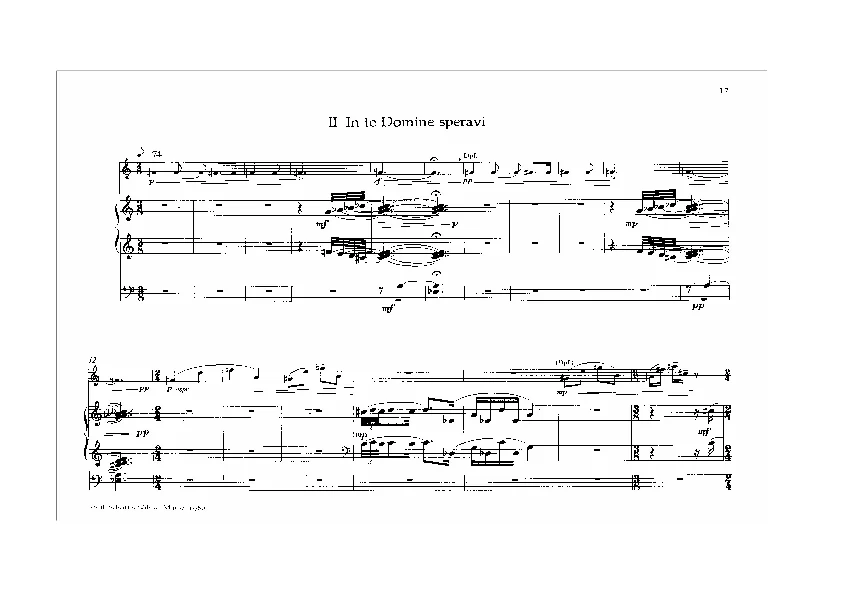
The two following "Invocationes" are based on the two final movements of the Te Deum. "In te Domine speravi" ( "In you, O Lord, I have hoped") begins with a recitation of the text in F sharp by the solo instrument. After its echo-like repetition, the eight-note theme (a setting of the text, as it were) enters espressivo, which is developed and - musically symbolising the rising hope - increasingly intensified until the fff climax brings the recitation on e, whereupon the invocatio with theme and recitation gradually fades away as if into nothingness.
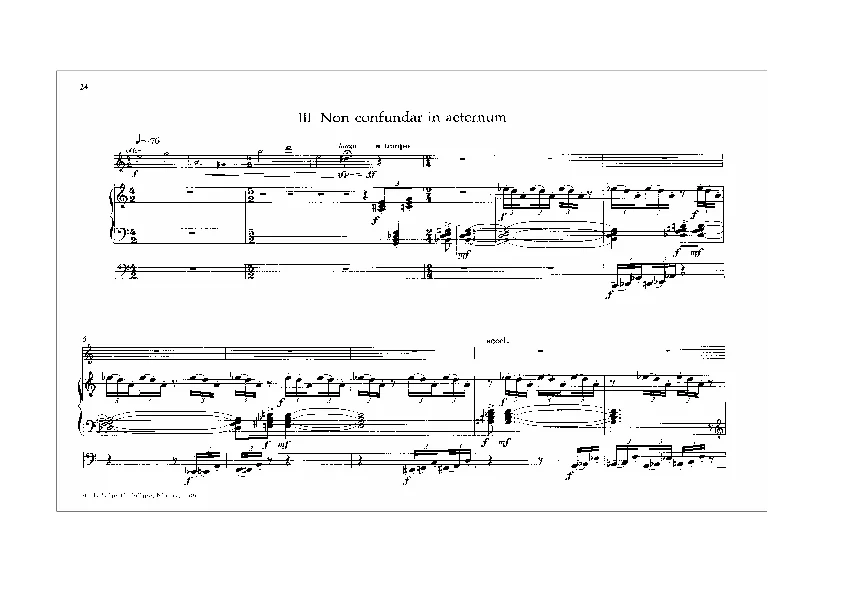
"Non confundar in aeternum" ("I will not be confounded in eternity") is opened with the theme, forte and in half notes, by the solo instrument alone. The organ then contributes an ostinato figure in the manual and another in the pedal. The Invocatio leads into a large-scale cadenza that fades away in an echo. Now the "De profundis" motif is heard once again, whose call for help is answered in unshakeable (ostinato accompaniment!) certainty of faith by the "Non confundar in aeternum" , which then gradually ebbs away in a triple piano.
The work was composed in its original version for trumpet and organ in 1978 as a commission for the consecration of the organ concert in Freiburg Minster and premiered on 5 September of the same year on the occasion of the Katholikentag. At the suggestion of the Canadian saxophonist Normand DesChênes, I wrote the adaptation for saxophone and organ in 1995.
Bertold Hummel