Fragment for large orchestra (op. 55c, 1975)
3.3.3.3 - 4.3.3.1 - timpani, percussion, harp, strings
Duration: 12 minutes
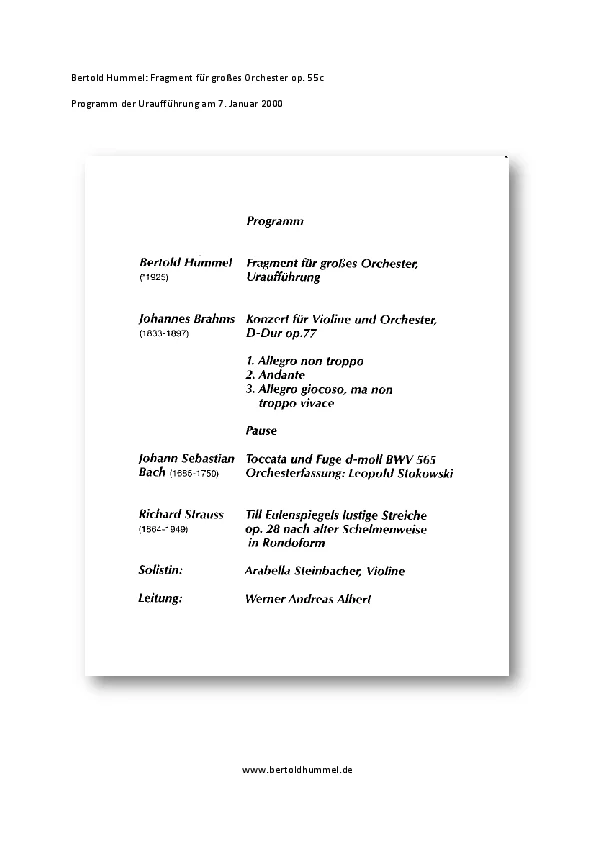
Bavarian State Youth Orchestra | Werner Andreas Albert
N. Simrock Hamburg-London (Boosey & Hawkes)

The quarter-hour piece strikes apocalyptic tones right from the start with large percussion and raw winds, painting a stirring portent. Despite the virtuoso orchestration of the end-time situation, Hummel denies himself any melodic appeasement; the flute-like lamentation of the last flower echoes lonesomely through the rows before the "deadly atomic rain" trickles down.
The world premiere of Hummel's fragment finale "The Last Flower" was unsettling and threatening. With plasticity, the huge orchestral apparatus presented an eerie apocalyptic scenario, which, in interspersed, strictly formulated rhythms, row arrangements and booming bass ostinatos, simulates supposed order in a despotic-chaotic (compositional) world.
The music clearly illustrates the total downfall; the flute as a flower symbol no longer even functions as a bearer of hope, but only as a melancholy, final confirmation when it dies away glissading in a siren sound.
The work, characterised by an explosive development of sound (...) was appealing and cleverly orchestrated (...), as the approval in the hall showed.




The fragment for large orchestra op. 55c traces the final section of the ballet plot: Once again, a dictator appears with his henchmen. As "liberators", they stir up hatred and envy among the peoples. They demonstrate their power and start an all-out war with nuclear weapons of destruction. This time the destruction is so complete that there is no chance of survival for humans or animals. The last flower (Flute Solo) tries in vain to grow and bloom once more. It dies in the deadly nuclear rain.
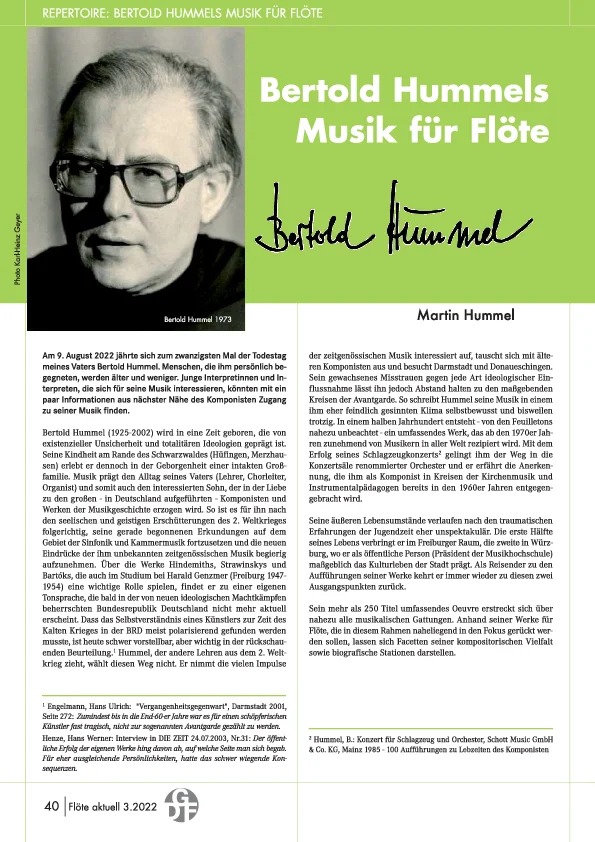
Bertold Hummel
In 1974, Bertold Hummel composed his ballet "The Last Flower" based on a picture story by James Thurber. However, while Thurber's destruction and reconstruction of the world are strung together in an endless chain, with people forgetting each time why a war was actually waged - the plot thus amounts to an eternal repetition, a kind of rondo of human stupidity and cruelty - Hummel ventured a finale that warns that destruction can also be final if people do not realise where the roots of evil are to be found: in power and greed as well as hatred and contempt for humanity.