Sonatina I for violin and piano (op. 35a, 1969)
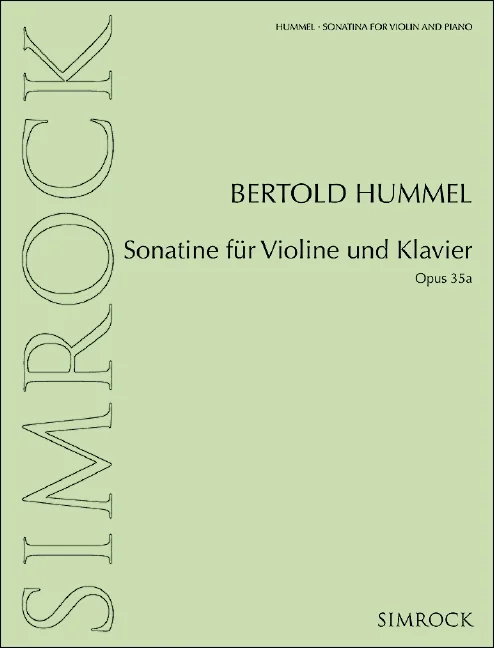
Dedication
To my son Florian!
Movement titles
I. Maestoso, II. Elegie, III. Lively finale
Instrumentation
Violin, piano
Duration: 6 minutes
Premiere
Würzburg
Monika Fritsch | Susanne Fritsch
Autograph
Title: Sonatina for violin and piano - Extent: incomplete - Date: - - Location:
Publisher
N. Simrock Hamburg-London (Boosey & Hawkes) EE 5463 / ISMN 979-0-2211-2255-1
First edition: EE 3339 N. Simrock, Hamburg 1970
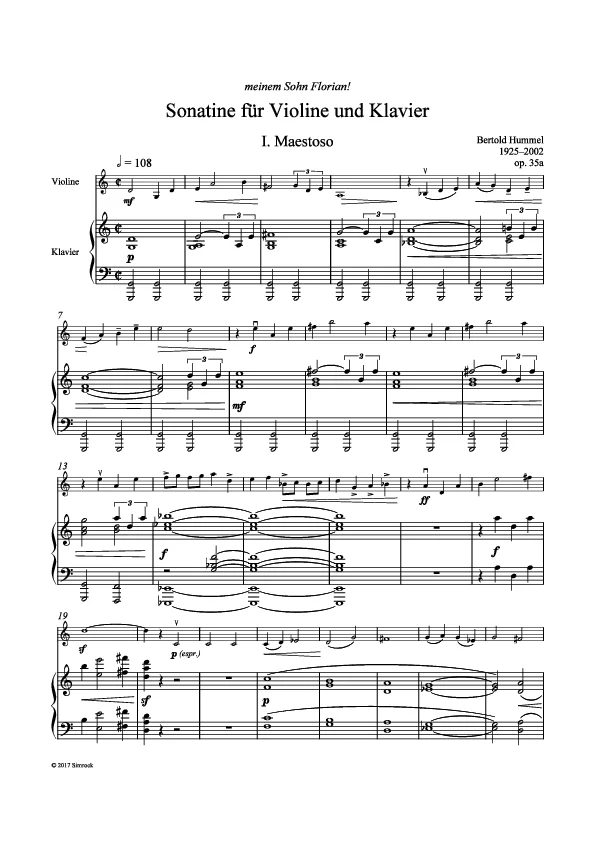
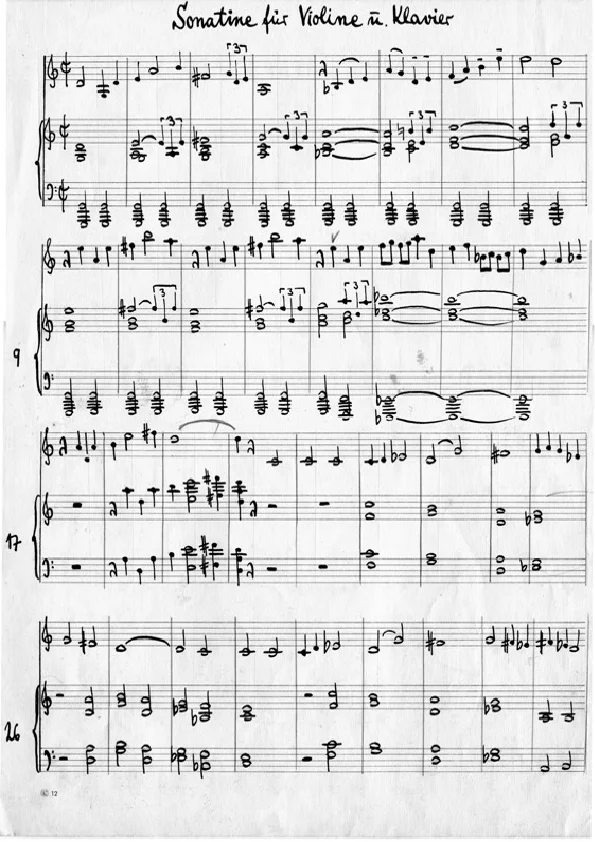
Manuscript
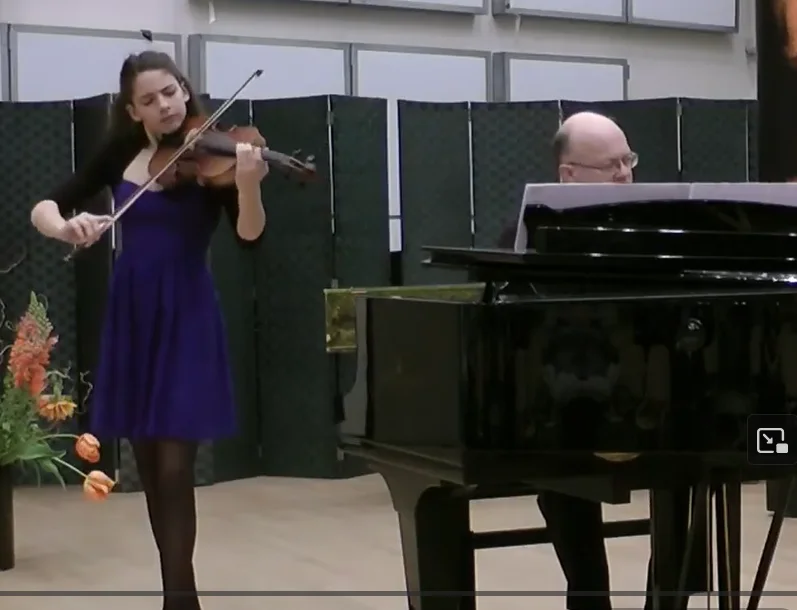
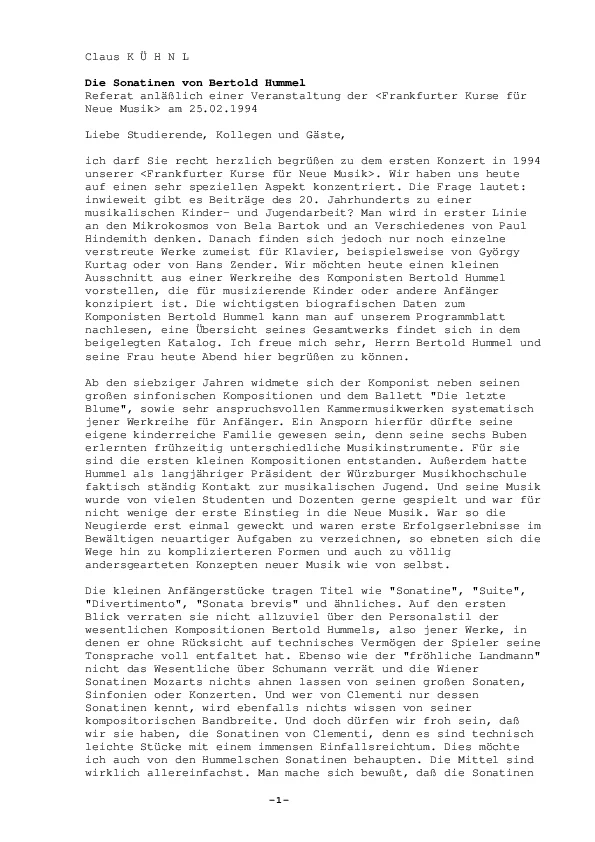
C. Kühnl: The Sonatinas of Bertold Hummel
Frankfurter Allgemeine Zeitung, 27 March 2002
Bertold Hummel's Sonatina was a rousing interlude in which Hungarian sounds and rhythms were combined in an entertaining way.
Literature list of the German Music Council for the "Jugend musiziert" competition: Difficulty level 2/easy - moderately difficult (lower level III)




I wrote this sonatina for one of my sons, as a kind of practice incentive. The 1st movement follows the sonata form with two themes - development and recapitulation (all in a very short space, of course). In the 2nd movement, the solo part, played with a mute, rises aria-like above a sighing motif in the piano accompaniment. In the 3rd movement - a rondo with a 2nd march theme - rhythmic elements take centre stage.
Bertold Hummel (1977)
The Sonatina for violin and piano op. 35a was composed in 1969 and, along with the Concerto for Percussion op. 70, is one of Bertold Hummel's best-known works. The sheet music has been sold thousands of times all over the world. With its warm melody and sparkling rhythms, it appeals to "young players" in a special way.
It begins with a powerful maestoso movement. The sonority of the first theme is attractively contrasted by a lyrical secondary theme. The recapitulation ends with an impulsive fugato. The second movement, Elegy, consists of a single, sensitively felt melody. The sonorous violin sound floats, as it were, above the spherical sounds of the piano. The sonatina reaches its climax in the virtuoso vivace finale. Playful lightness, march rhythms and dramatic climaxes alternate in rapid succession. The coda leads to the end in wild arpeggios.
(...) A few years later, I accompanied my son at a school concert on the piano. He had to play Hummel's Sonatina for violin and piano and was really proud to be able to crack this piece with its sometimes extremely complicated rhythms. "That really grooves!" was the nicest thing a boy could say about this music. I was impressed by the composition because of its almost cheeky handling of the musical material; I was fascinated by the way Hummel incorporated elements of jazz and knew how to introduce young people to new music.
Wilfried Hiller (CD booklet of Tastenspiele on the MUSICAPHON label, 2005)
Sometimes to his chagrin, the composer, who was born in Hüfingen in Baden in 1925, is identified with a piece that is relatively easy to realise even for younger players and yet sounds brilliant, has achieved unexpected popularity and is repeatedly used as the standard pedagogical work of the twentieth century at musical competitions involving string players up and down the country. This Sonatina for violin and piano op. 35a from 1969 is just one striking example from a whole series of pedagogically motivated works from Hummel's pen, which arose from the need to provide his own offspring - six sons and now 15 grandchildren - and the pupils of his wife Inken, who is still in great demand as a violin teacher today, with playable literature that would open the way to studying the music of the twentieth century. We music teachers regularly draw gratefully on this large fund of good music.
Michael Corßen (from "Bertold Hummel and the Sonatina", programme booklet of the Gütersloh Music School, 2000)