Capriccio for violin, viola and violoncello (op. 14, 1958)

Movement titles
I. Allegro, II. Sostenuto, III. Rondo
Instrumentation
Violin, Viola, Violoncello
Duration: 12 minutes
Premiere
13 March 1960,
Lörrach, Bergstraße 32
Inken Hummel | Edith Klein | Bertold Hummel
First Performance
Juli 1967,
Cape Cod, Massachusetts (USA)
Pacific String Trio: Nannette Levi | Forrest Midtmoen | William Harry
Autograph
Title: String Trio - Length: 17 pages - Date: 4 July 58 - Location: Bavarian State Library, Munich
Publisher
N. Simrock Hamburg-London (Boosey & Hawkes)
Pocket score: ISMN M-2211-0043-6
Parts: ISMN M-2211-1223-1
Printing error: Violoncello part, 1st movement, bar 10, 2nd quaver: e flat instead of e flat.
Literature list of the German Music Council for the "Jugend musiziert" competition: Difficulty level 4/difficult (intermediate level II)




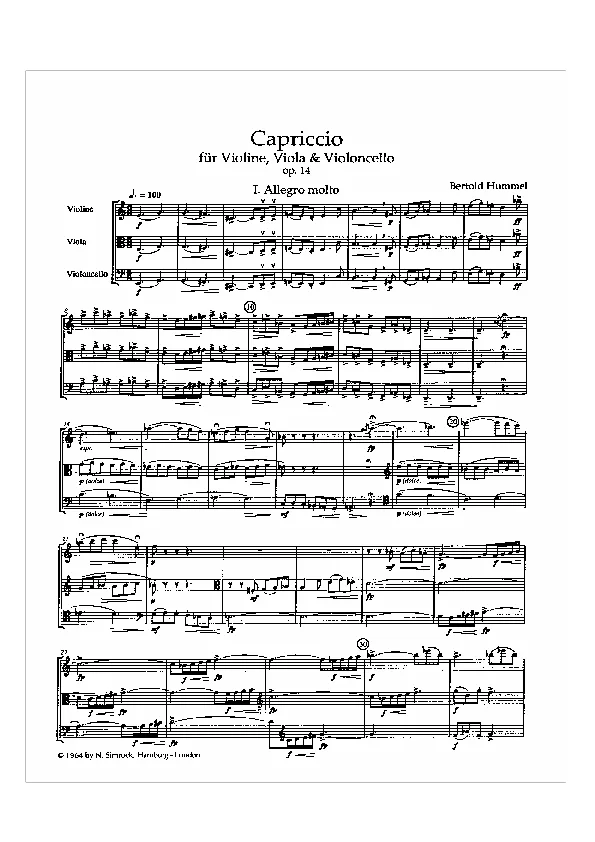
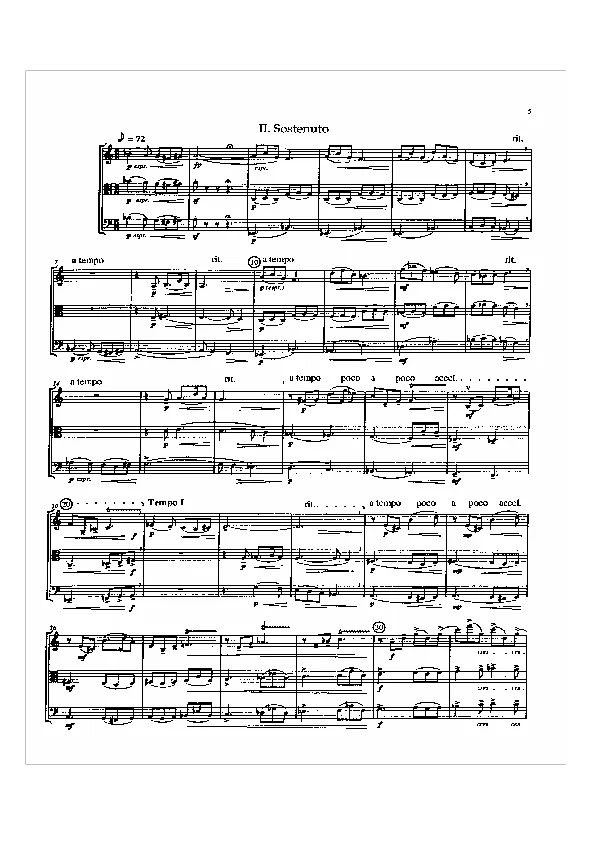
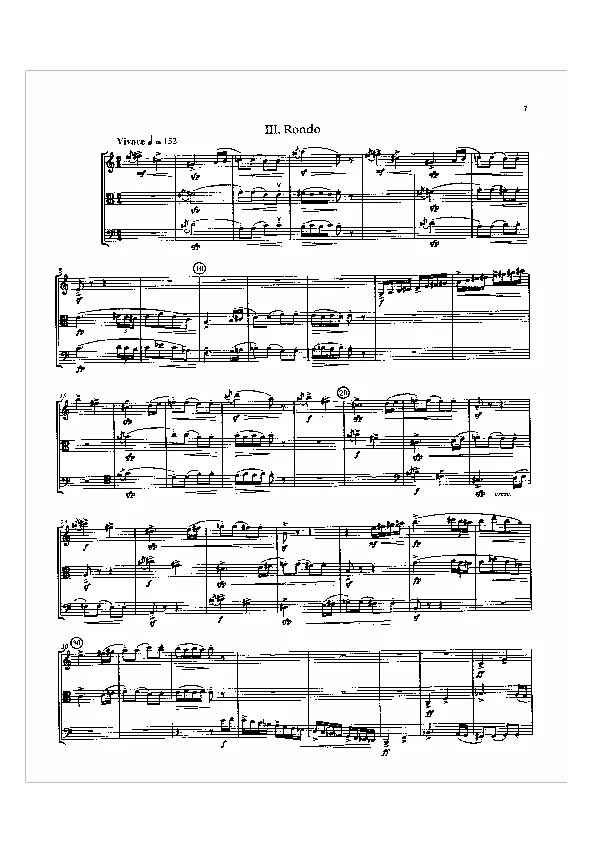
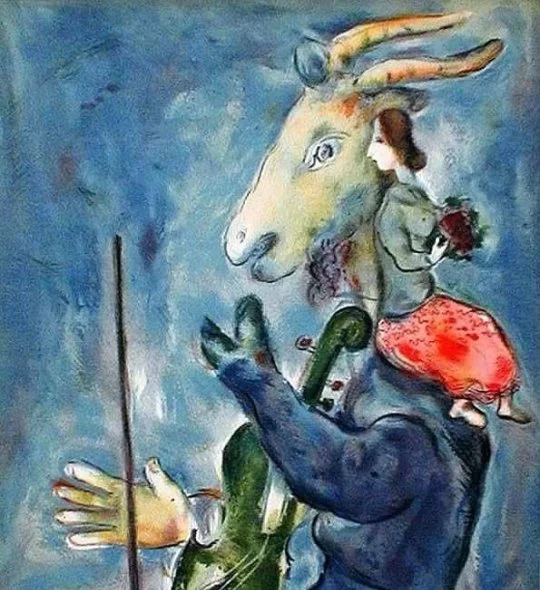
Nobody knows exactly what the Italian word "capriccio" actually means. Perhaps the word comes from "capricorno", the ibex, and then means "leap" or "lechery". However, some also derive the meaning from "capo" (head) and "riccio" (hedgehog), which would then imply a certain spiky-headedness. In any case, "capriccio" has come to mean "whimsy", "quirkiness" or "coarse fun". In music, the "capriccio" has for centuries stood for a special genre of whimsical ideas that subvert the rules but are very entertaining. Bertold Hummel, who supported the Usedom Music Festival in its early days as an advisor and patron, wrote his "Capriccio" for string trio op. 14 as a thirty-three-year-old cantor at St Konrad in Freiburg im Breisgau. The opening in fast six-eighths time might initially suggest a rococo hunting finale if the loud opening in unison did not sound so fierce - quite stubborn and spiky-headed. However, the tone has already softened with the next return of this theme. Artful incidental music unfolds here, pointing back via Paul Hindemith to the animated ensemble sound of the Viennese classics. The second movement is also in six-eighths time, but turns its character - quietly and expressively - almost into a nocturne or lullaby, for example when the violin begins to play the dotted rhythm of a siciliano in the eighth bar. The final rondo in two-four time with its falling fourths in the main theme has the dance-like rhythm of many final movements by Haydn and Beethoven, whereby the short, snapping suggestions before the main notes evoke a certain minstrel-like cheerfulness. The premiere took place on 13 March 1960 in Lörrach. Bertold Hummel himself played the cello alongside Edith Klein on the viola. His wife Inken Hummel played the violin.
Jan Brachmann (in the programme booklet for the master concert at Stolpe Castle with the Wuppertal String Trio on 28 September 2012 as part of the Usedom Music Festival 2012)