Sonata brevis für Violoncello und Klavier (op. 11a, 1955)
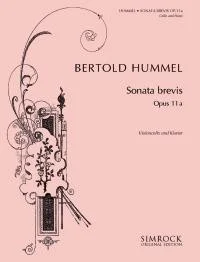
I. Allegro, II. Sostenuto, III. Presto
Violoncello, Klavier
Dauer: 13 Minuten
Bertold Hummel | Virginia Fortescue
Titel: Sonate für Cello + Klavier / Kleine Sonate (1955) für Violoncello + Klavier - Umfang: 28 Seiten - Datierung: I. Satz: 4. März 55 Windhuk II. Satz: 29. III. 55 Omaruru III. Satz: 20. V. 55 Pretoria - Aufbewahrungsort:
N. Simrock Hamburg-London (Boosey & Hawkes) EE 3338 / ISMN M-2211-2078-6
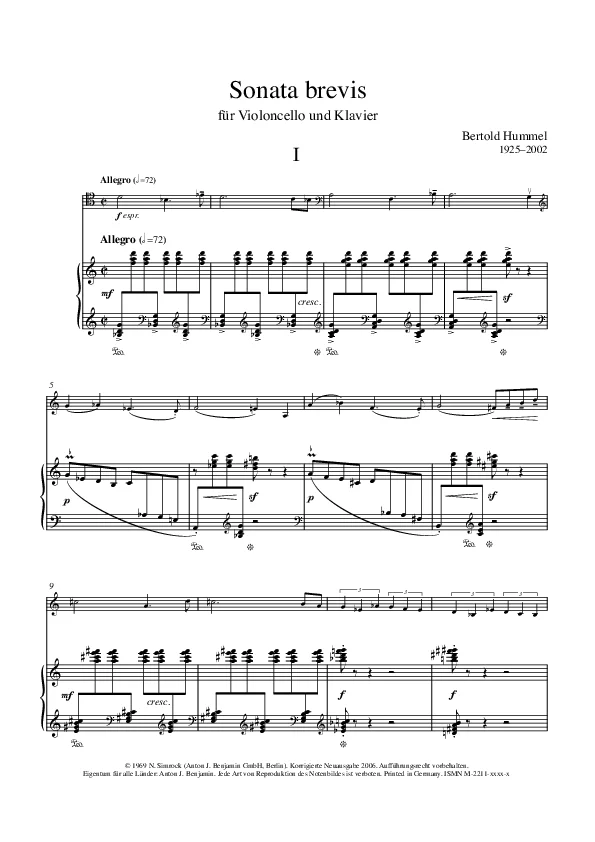

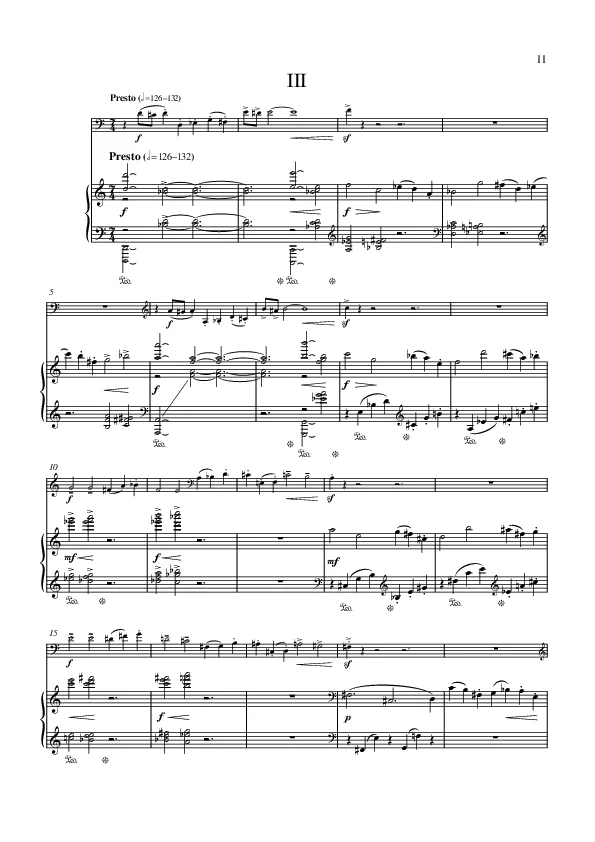
Die Sonata brevis für Violoncello und Klavier aus dem Jahre 1955 verrät den Instrumentalisten, der sich in der Kunst des Möglichen auskennt. Es ist ein Stück, das sich den Dank der Musiker verdienen könnte, und es versagt sich auch dem Ohr nicht, so eigen es geprägt ist.
Literaturliste des Deutschen Musikrates für den Wettbewerb "Jugend musiziert": Schwierigkeitsgrad 3/mittelschwierig (Mittelstufe I)




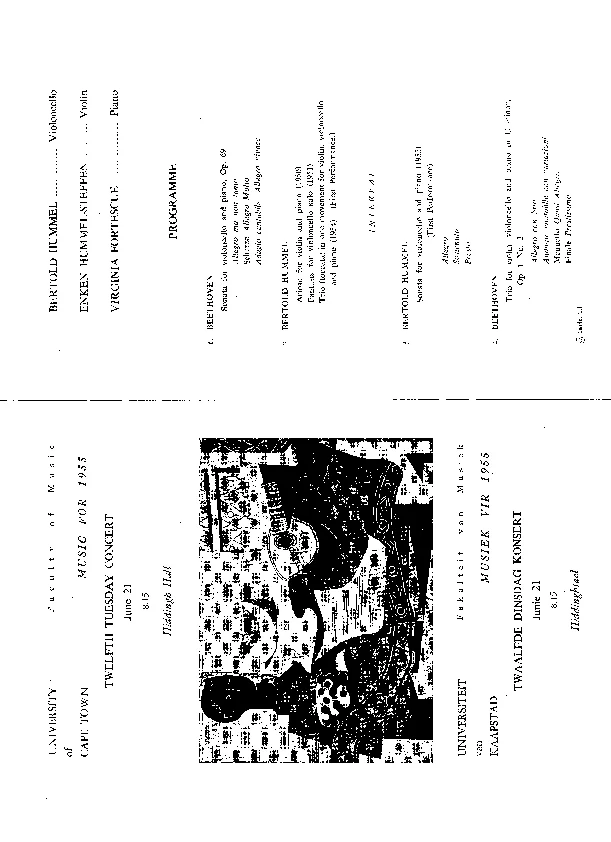
Die Sonata brevis entstand 1955 während einer Konzertreise durch die Südafrikanische Union mit der Absicht die dortigen Ohren sachte an zeitgenössische europäische Musik zu gewöhnen. Thematik und Harmonik sind demzufolge leicht fassbar gestaltet, sowie in in der Instrumentation größte Deutlichkeit angestrebt. Das Stück wurde in Kapstadt uraufgeführt mit dem Komponisten am Cello. Ich hoffe, dass es auch hier - ohne eine analytische Einführung - den Weg direkt zum Hörer findet.
Bertold Hummel (Ansprache am 26. Januar 1965 in einem Konzert des "Studio für Neue Musik" in Würzburg)
Das knapp gefasste 3sätzige Werk gibt dem Soloinstrument reichlich Gelegenheit zu cantabler Entfaltung. Die temperamentvollen Ecksätze umrahmen ein verhaltenes "Arioso". In der formalen Struktur lehnt es sich an klassische Vorbilder an.
Bertold Hummel 1973
Wir hatten damals in Südafrika geheiratet – fern von allen Verwandten – in Swakopmund. Ich hatte dann meiner Frau ein Geschenk gemacht und zwar in Form einer Sonate – die war dann nicht so haarig wie dieses Stück, das sie soeben gehört haben (op. 9), sie war verbindlicher. Dieses Stück hat drei Sätze. Der 1. Satz in einer Sonatensatzform - beachten Sie bitte den Rumbarhythmus im Klavier. Damals hatte ich sehr viel afrikanische Musik gehört und das klingt ein bisschen rein. Europäisch ist der 2. Satz. Er ist eine Arie, ein Arioso. Der 3. Satz ist wieder europäisch und ist ein Rondo. Also viel Spaß beim Hören dieser Sonate und denken Sie daran, dass sie im südlichen Afrika entstanden ist.
Bertold Hummel (Ansprache am 3. Mai 1996 in einem Konzert der Sing- und Musikschule in Kempten)
Vorwort (Simrock EE 3338, 2006)
Bertold Hummel schrieb die Sonata brevis während einer ausgedehnten Südafrika-Tournee im Frühjahr 1955. Anhand seiner Datierungen der einzelnen Sätze lässt sich die Route ablesen, die er mit einer kleinen Musiker- und Theatergruppe aus Deutschland durch das heutige Namibia und Südafrika zurücklegte. So entstand das kraftvolle Thema des ersten Satzes in Windhuk, die weit ausschwingende Cantilene des Sostenuto in Omaruru und das Presto im 7/4-Takt des letzten Satzes in der Hauptstadt Pretoria. An der Universität in Cape Town brachte der 30-jährige Komponist und Violoncellist in einem Kammerkonzert seine Sonata brevis zur Uraufführung.
Seit der Erstveröffentlichung bei Simrock im Jahr 1969 erfreut sich dieses vitale Werk bei Interpreten und Zuhörern großer Beliebtheit und wird mit der vorliegenden sorgfältig revidierten Neuausgabe auch in Zukunft seine Interpreten finden.
Martin Hummel
Das 1955 entstandene Stück verrät ebenso wie die einige Jahre zuvor komponierte Cellosonate op. 2 die enge Vertrautheit Bertold Hummels mit „seinem“ Instrument, das er bei Atis Teichmanis studierte. Spielfreude und fassliche Melodik durchziehen das ganze Werk, bei dem vor allem der fulminante Schlusssatz im 7/4-Takt großen Eindruck hinterlässt. Die neugesetzte und sorgfältig durchgesehene Neuausgabe wird auch für junge Cellistinnen und Cellisten eine interessante Bereicherung ihres Repertoires darstellen.
(Neuerscheinungen 2007 Boosey & Hawkes / Schott)