Asiago für Schlagzeug und Violoncello (op. 107b, 2001)
Widmung
Roberto Brazzale gewidmet
Besetzung
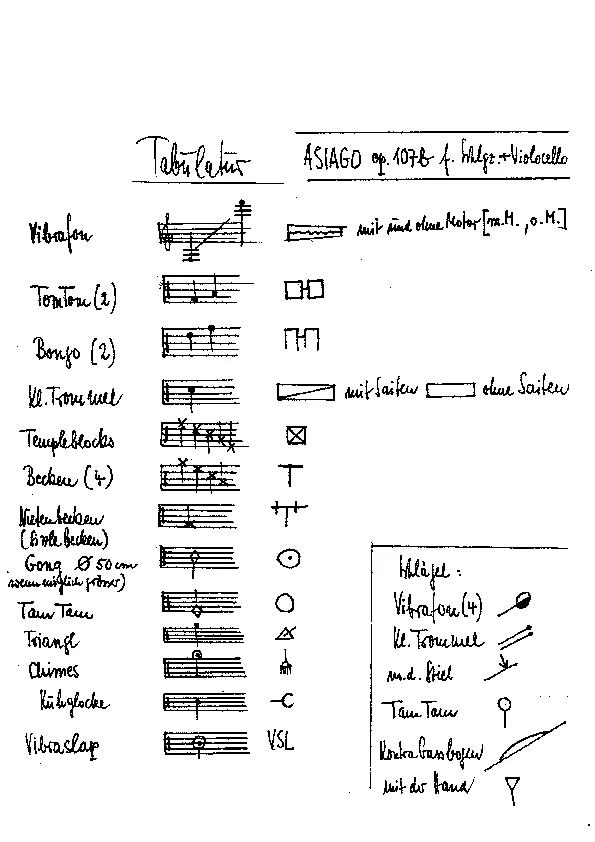
Violoncello, Schlagzeuginstrumentarium: Vibrafon, 2 TomTom, 2 Bongo, Kleine Trommel, Templeblocks, 4 Becken, Nietenbecken, Gong (Durchmesser 50cm, wenn möglich größer), TamTam, Triangel, Chimes, Kuhglocke, Vibraslap
Dauer: 16 Minuten
Uraufführung
5. August 2001,
Asiago (Italien), Duomo di S. Matteo
Julius Berger | Peter Sadlo
Autograph
Titel: ASIAGO für Schlagzeug und Violoncello op. 107b - Umfang: 12 Seiten - Datierung: 9.7.01 - Aufbewahrungsort:
Verlag
Schott Music; Partitur und 2 Stimmen ED 9721 / ISMN M-001-13640-2
op. 107b, Percussion Tabulatur
op. 107b, Anfang
op. 107b, Cadenza und Schluss
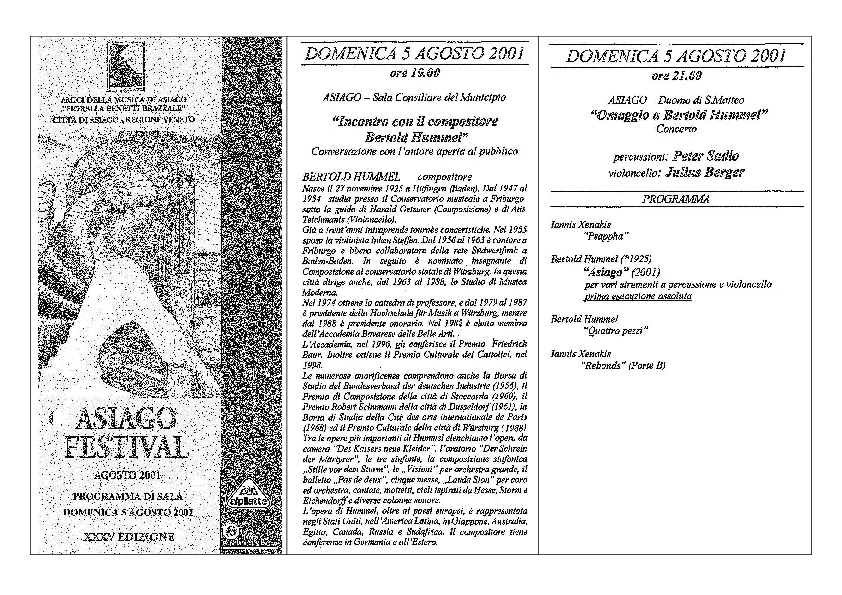
Programm der UA op. 107b




Vorwort (Schott Music)
Im Sommer 2001 komponierte Bertold Hummel das vorliegende Werk als Auftragskomposition des "Asiago Festival" und vereinigte in dieser groß angelegten "Fantasia in einem Satz" - wie er es selbst bezeichnete - zum ersten Mal sein zeitlebens bevorzugtes Instrumentarium.
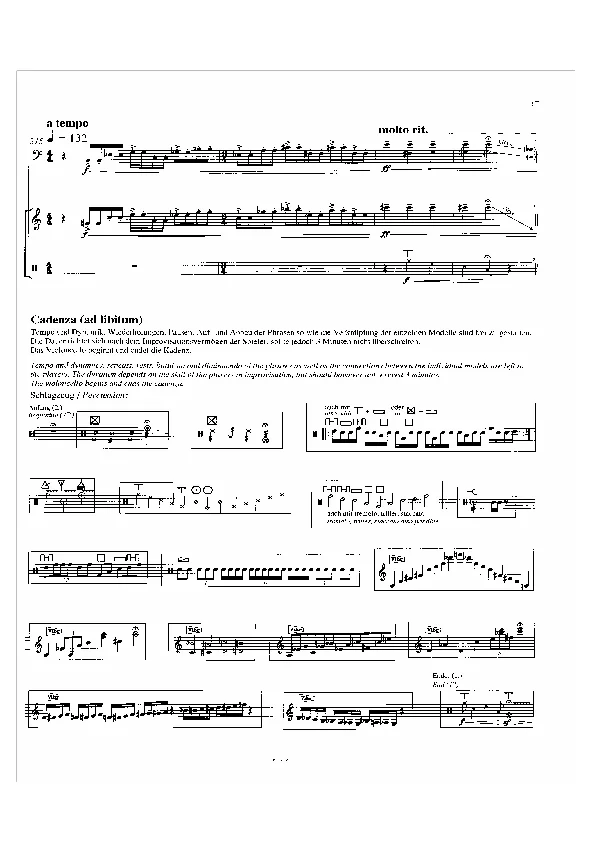
Asiago - die vertonbaren Buchstaben a-s-a-g eröffnen und beschließen das Werk - ist eine gelungene Auseinandersetzung mit den vielfältigen Klangkombinationen von Percussionsinstrumenten und den mystisch-sinnlichen Klängen des Violoncellos, wobei das Streichinstrument zeitweise percussiv, das Schlagwerk wie ein Streichinstrument behandelt wird. Jagende Rhythmen wechseln mit meditativen Momenten. Choralfragmente leiten in eine große Kadenz, bei der die Instrumentalisten auf grund vorgegebener Modelle die Möglichkeit zu freier Improvisation haben.
Die Uraufführung dieses etwa 15minütigen Werkes fand am 5. August 2001 im Duomo di S.Matteo im norditalienischen Asiago statt und lag in den Händen von Peter Sadlo und Julius Berger, die zu den engagiertesten Interpreten der Werke meines Vaters gehören.
Martin Hummel
Ansprache von Bertold Hummel am 5. August vor der UA von ASIAGO im Duomo di S.Matteo in Asiago
In einer Zeit der zunehmenden Säkularisation hat der schöpferische und auch wohl der nachschöpferische Künstler die Aufgabe, seine Mitmenschen auf das Transzendente, auf das Unerklärbare und auch Unbeweisbare hinzuweisen. Die Sprache der Musik - als der vielleicht Weltumfassendsten - kommt hierbei eine besondere Bedeutung zu. Die Darstellung des Leides und Grauens allein kann nicht der immanente Bestandteil eines Kunstwerkes sein. Der Hinweis auf Tröstung und Hoffnung ist unabdingbar. Darüber hinaus geben Leben, Natur und für den Glaubenden auch Gotteserkenntnis genügend Anlass zu Lob und Dank.
Es gibt überhaupt keinen Grund, warum man diese lebensbejahenden Eigenschaften ausschließlich den Meisterwerken der Vergangenheit zuordnen sollte, stehen wir doch unabdingbar (zweifellos) mehr oder weniger auf den Schultern unserer Vorfahren, und war doch zu allen Zeiten menschliches Leid ebenso gegenwärtig wie die Sehnsucht nach dessen Überwindung.
Meine musikalische Sprache ist nachdrücklich geprägt durch meinen frühen Umgang mit dem gregorianischen Choral. Als Sohn eines Kirchenmusikers und Lehrers kam ich in meiner Jugend in engen Kontakt zu Orgel und Chormusik von Palestrina über Bach, die Wiener Klassik, zu Bruckner und die Musik der Gegenwart. Kriegsdienst und Kriegsgefangenschaft (1943-47) waren für mich eine herbe Zäsur! Mein Studium (Violoncello und Komposition) begann ich ab 1947.
Hindemith, Bartok, Strawinski, Schönberg, Wiener Schule (Berg und Webern), Schotakowitsch, Messiaen, Petrassi, Dallapiccola, Nono, Britten, Darmstadt, Paris waren sehr prägend.
Aus der Vielfalt der Anregungen konnte ich einen eigenen Stil entwickeln, dessen Ziel es ist - Musik-Gedanken fassbar zu machen - so meine Meinung - und auf möglichst hohen Level ein Dreieck zwischen Komponist, Interpreten und Hörer zu erstellen. Ein l'art pour l'art -Standpunkt war mir immer suspekt, wie ich auch die Musik Ästetik von Theodor W. Adorno seinerzeit sehr kritisch begleitet habe. Der Intoleranz einer gewissen Avantgarde möchte ich die humane Achtung für alle Wahrheitssucher gegenüberstellen.
Zu der Komposition: "Asiago" lässt sich folgendes sagen: Die Vorgabe war die Besetzung Violoncello -Schlagzeug, ausgeführt von 2 Spielern, die schon lange mit meinem Schaffen vertraut sind. (Die Schlagzeugtabulatur weist 22 Instrumente auf.)
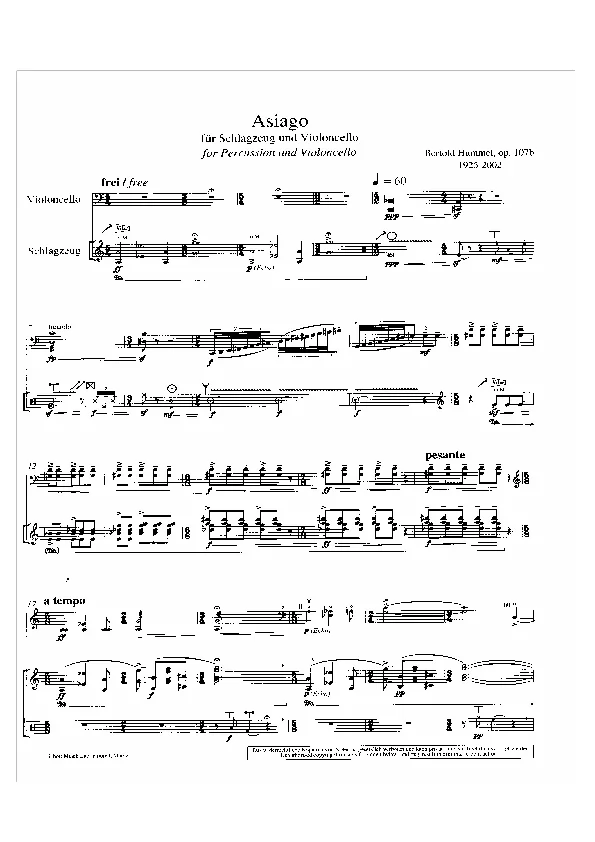
Das Motto dieses Werkes besteht aus den vertonbaren Buchstaben ASiAGo, von diesen 4 Tönen sind die meisten melodischen wie enharmonischen Gebilde abgeleitet. Neben dieser Viertonfolge kamen mir weitere Viertonfolgen in den Sinn, die in meinen Werken immer wieder eine Rolle spielten: B-A-C-H und das Tristan-Motiv von Richard Wagner.
Formal ist das einsätzige Werk gegliedert in 4 Abschnitte, die sich bewegungsmäßig leicht ausmachen dürften (Langsam-schnell-langsam-schnell). Vor einem 5. Schlussteil (langsam-schnell-langsam) einer Coda, ist eine Cadenz der beiden Spieler eingeschoben, in der sie in freier Improvisation die vorgegebenen Modelle verknüpfen können.
Man könnte von einer Fantasie sprechen, die den Instrumentalisten sowohl in rhythmisch dramatischer Hinsicht als auch in melodisch lyrischen Passagen viele Gestaltungsmöglichkeiten anbietet. Vom sog. Bartokpizzikato des Violoncellos bis zum mit dem Kontrabassbogen gestrichenen Vibrafon.
Ich hoffe, dass die bis dato sehr selten gepflegte Instrumentenkombination ihre Feuerprobe bestehen wird, und bin - wie Sie wohl - alle auf die UA sehr gespannt.